Water: The Solvent of Life
From the Chemical Basis of Life Part 2 curriculum
TL;DR
Water is super important in biology because of its unique structure and polarity, allowing it to dissolve many substances. This "universal solvent" property is crucial for all life processes, from transporting nutrients to facilitating chemical reactions. Understanding water's properties helps explain why life exists and functions the way it does.
1. The Mental Model
Think of water as a tiny, slightly lopsided magnet. Its positive and negative ends allow it to pull apart and surround many other molecules, making them dissolve. This magnetic-like behavior is why water is so good at carrying things around and helping reactions happen.
2. The Core Material
Water, chemically known as H₂O, isn't just a simple molecule; it's a bent molecule with a central oxygen atom bonded to two hydrogen atoms. This arrangement, combined with oxygen's strong pull on electrons, creates its defining characteristic: polarity.
2.1 Polarity: The Key to Water's Power

Photo by Raul Ling on Pexels
Oxygen is more "electronegative" than hydrogen, meaning it attracts electrons more strongly. In a water molecule:
- The oxygen atom ends up with a slight negative charge (δ⁻).
- The hydrogen atoms each get a slight positive charge (δ⁺).
This uneven distribution of charge makes water a polar molecule, like a tiny magnet with distinct positive and negative ends.
2.2 Hydrogen Bonds: Water's Sticky Nature
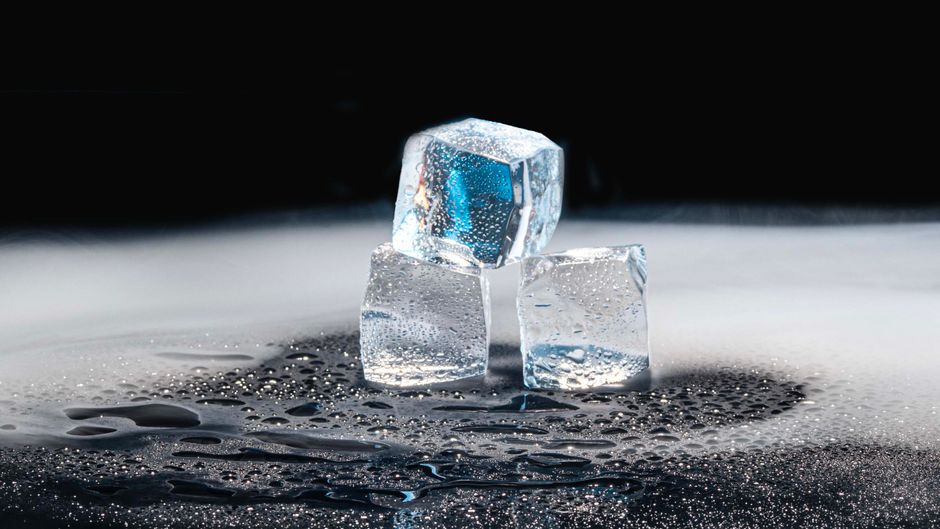
Photo by Ray Suarez on Pexels
Because of their polarity, water molecules are attracted to each other. The δ⁺ hydrogen of one water molecule is attracted to the δ⁻ oxygen of another water molecule. This attraction is called a hydrogen bond. These bonds are relatively weak individually but incredibly strong when many form together.
Hydrogen bonds give water several critical properties:
* Cohesion: Water molecules stick to each other. This creates surface tension (why a bug can walk on water) and allows water to be pulled up trees.
* Adhesion: Water molecules stick to other polar surfaces. This helps water "climb" up narrow tubes (capillary action).
* High Specific Heat: It takes a lot of energy to change water's temperature. This helps regulate temperatures in living organisms and climates.
* High Heat of Vaporization: It takes a lot of energy to turn liquid water into gas. This is why sweating cools you down.
* Density Anomaly: Solid water (ice) is less dense than liquid water, so ice floats. This prevents lakes and oceans from freezing solid from the bottom up, allowing aquatic life to survive.
2.3 The "Universal Solvent"
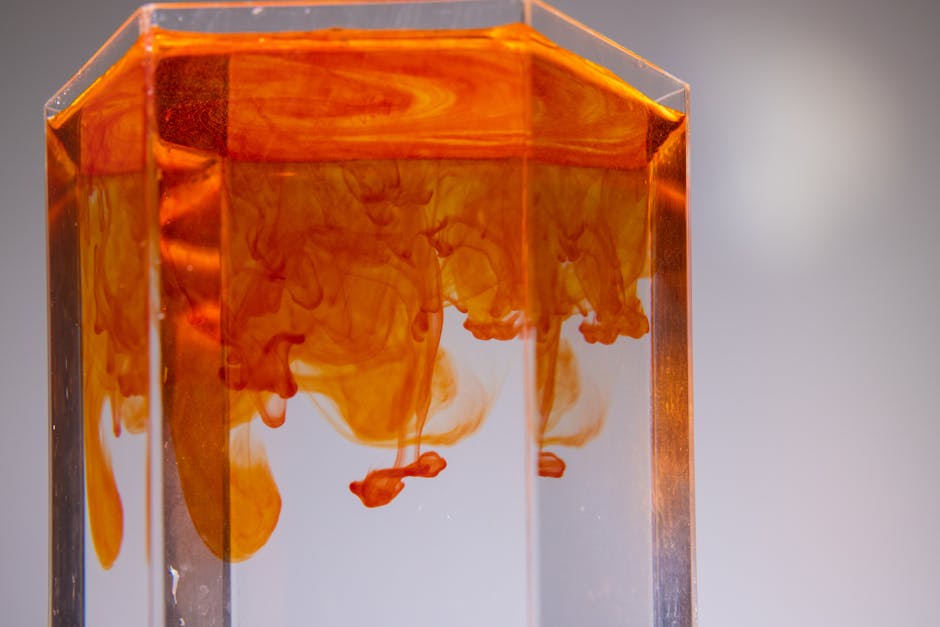
Photo by Jill Burrow on Pexels
Water's polarity and ability to form hydrogen bonds make it an excellent solvent. It can dissolve many other polar and ionic substances.
* Ionic Compounds (like NaCl, table salt): Water molecules surround individual ions. The δ⁺ hydrogens attract the negative chloride ions (Cl⁻), and the δ⁻ oxygen attracts the positive sodium ions (Na⁺), pulling the compound apart.
* Polar Compounds (like sugar, C₆H₁₂O₆): Water forms hydrogen bonds with the polar regions of the sugar molecules, effectively surrounding and separating them.
Substances that dissolve well in water are called hydrophilic ("water-loving"). Substances that don't dissolve well (like oils) are hydrophobic ("water-fearing") because they are nonpolar and can't form favorable interactions with water.
graph TD
    A["Water (H₂O) Molecule"] --> B["Polarity (δ⁺ H, δ⁻ O)"]
    B --> C["Hydrogen Bonding (attraction between water molecules)"]
    C --> D{"Unique Properties"}
    D --> D1["High Specific Heat"]
    D --> D2["High Heat of Vaporization"]
    D --> D3["Cohesion & Adhesion"]
    D --> D4["Ice Floats (density anomaly)"]
    B --> E["Solvent Properties"]
    E --> F["Dissolves Hydrophilic Substances"]
    F --> F1["Ionic Compounds (e.g., NaCl)"]
    F --> F2["Polar Molecules (e.g., Sugar)"]
    E --> G["Does NOT Dissolve Hydrophobic Substances"]
    G --> G1["Nonpolar Molecules (e.g., Oil)"]
3. Worked Example
Imagine you're making a glass of saltwater. When you add table salt (NaCl) to water, here's what happens:
- Salt is an ionic compound, made of positively charged sodium ions (Na⁺) and negatively charged chloride ions (Cl⁻).
- Water molecules, being polar, have partial positive charges on their hydrogens (δ⁺) and a partial negative charge on their oxygen (δ⁻).
- The δ⁺ hydrogens of water molecules are attracted to the negative Cl⁻ ions, pulling them away from the salt crystal.
- The δ⁻ oxygen of water molecules are attracted to the positive Na⁺ ions, pulling them away from the salt crystal.
- Water molecules then surround these individual ions, forming "hydration shells." This keeps the ions separated and dissolved throughout the water, making a uniform solution.
This process is why the salt seems to "disappear" and the water tastes salty all the way through – the ions are evenly distributed.
4. Key Takeaways
- Water is a polar molecule due to oxygen's strong pull on electrons, creating slight positive and negative charges.
- These partial charges allow water molecules to form hydrogen bonds with each other, leading to unique properties.
- Hydrogen bonds are responsible for water's cohesion, adhesion, high heat capacity, and why ice floats.
- Water's polarity makes it an excellent solvent for other polar and ionic substances, earning it the title "universal solvent."
- Substances that dissolve well in water are called hydrophilic, while those that don't are hydrophobic.
- Life relies heavily on water's solvent properties for nutrient transport, waste removal, and biochemical reactions.
Common Mistakes to Avoid:
- Confusing a hydrogen bond (an intermolecular attraction) with a covalent bond (an intramolecular bond within a molecule).
- Thinking water dissolves everything; it only dissolves polar and ionic substances.
- Forgetting that ice floats because it's less dense than liquid water, not because it's simply "frozen."
- Underestimating the collective strength of many weak hydrogen bonds.
5. Now Try It
Think about how sweating cools your body. Using the concepts of water's polarity and hydrogen bonding, explain in your own words how the evaporation of sweat from your skin helps dissipate body heat. What property of water is most directly involved? You should be able to write a short paragraph explaining this.
Frequently asked about Water: The Solvent of Life
Study this next
Get the full Chemical Basis of Life Part 2 curriculum
Clone the complete plan to your dashboard for unlimited AI-generated notes, practice quizzes, and a personalised revision schedule.
Save this course free