Introduction to Anatomy and Basic Cellular/Tissue Organization
From the Anatomy curriculum
TL;DR
Anatomy is the study of your body's structures, from the smallest cell to entire organ systems, often focusing on what you can see. Understanding organization levels from chemical to organismal helps grasp how complex structures work together. Cells are the fundamental units of life, forming tissues with specialized functions, which then build organs and systems.
1. The Mental Model
Think of your body like a incredibly complex building. Anatomy is learning what all the rooms, walls, pipes, and wires are, how they're built, and where they're located. It's about recognizing all the distinct parts that make you, well, you.
2. The Core Material
Anatomy is the science of structure – how the body is built and what its parts look like. It's often studied alongside physiology, which is the science of function – how those parts work. You can't really understand how something works without knowing what it's made of, and vice-versa!
Subdivisions of Anatomy
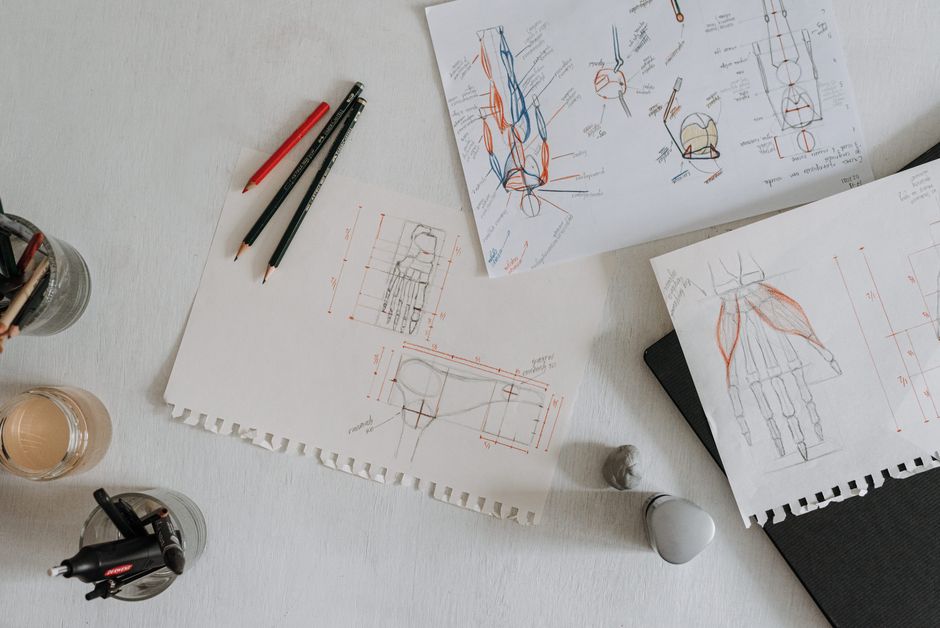
Photo by Anete Lusina on Pexels
You can study anatomy in a few different ways:
- Gross Anatomy: This is what you can see with your naked eye, like organs, bones, and muscles.
- Microscopic Anatomy: You need a microscope for this, to see tiny structures like cells (cytology) and tissues (histology).
- Developmental Anatomy: This looks at how structures change from conception to old age, focusing on early development (embryology).
- Regional Anatomy: You study all the structures (muscles, bones, nerves, blood vessels) in a specific body region, like the head or leg.
- Systemic Anatomy: Here, you study body systems one at a time, like the skeletal system or the nervous system, looking at how structures work together across the whole body.
Levels of Structural Organization

Photo by Pixabay on Pexels
Your body is organized in a hierarchy, starting from the simplest chemical level and building up to the complete organism. It's like building with LEGOs, starting with individual bricks and ending up with a complete model.
graph TD
    A["Chemical Level (Atoms & Molecules)"] --> B["Cellular Level (Cells)"]
    B --> C["Tissue Level (Tissues)"]
    C --> D["Organ Level (Organs)"]
    D --> E["Organ System Level (Organ Systems)"]
    E --> F["Organismal Level (Organism)"]
- Chemical Level: This is the absolute basic. Atoms (like carbon, hydrogen, oxygen) combine to form molecules (like water, proteins, DNA). These are the building blocks.
- Cellular Level: Molecules combine in specific ways to form cells. Cells are the smallest units of life. Think of a muscle cell or a nerve cell. Each cell has specialized parts (organelles) that perform specific jobs.
- Tissue Level: Similar cells that work together to perform a specific function form a tissue. There are four basic types of tissues in your body:
- Epithelial Tissue: Covers body surfaces and lines cavities (like skin or the lining of your stomach). It protects, secretes, and absorbs.
- Connective Tissue: Supports, protects, and binds other tissues together (like bone, cartilage, blood, fat).
- Muscle Tissue: Responsible for movement (like skeletal muscles, heart muscle, or smooth muscle in your gut).
- Nervous Tissue: Carries electrical signals to communicate information throughout the body (like brain, spinal cord, nerves).
- Organ Level: Different types of tissues working together to perform a complex function form an organ. Your heart, stomach, brain, and liver are all organs. For example, your stomach has epithelial tissue for lining, muscle tissue for churning food, and connective tissue for support.
- Organ System Level: Several organs working together to accomplish a major function make up an organ system. The digestive system, for example, includes the stomach, intestines, liver, and pancreas, all working to process food.
- Organismal Level: All the organ systems working together to maintain life make up the entire organism – that's you!
3. Worked Example
Let's trace the organization of a specific part of your body: the small intestine.
- Chemical Level: We have individual carbon, hydrogen, oxygen, and nitrogen atoms forming molecules like glucose, amino acids, and fats. These molecules then combine to form larger structures like proteins and phospholipids.
- Cellular Level: These molecules arrange to form specific cells like columnar epithelial cells (for absorption), goblet cells (for mucus secretion), and smooth muscle cells (for movement).
- Tissue Level:
- Many columnar epithelial cells form the epithelial tissue lining the inner surface, specialized for absorbing nutrients.
- Layers of smooth muscle cells form muscle tissue that helps move food along.
- Various cells like fibroblasts and adipocytes, embedded in an extracellular matrix, form connective tissue that supports the other layers and contains blood vessels and nerves.
- Nerve cells form nervous tissue that regulates contractions and secretions.
- Organ Level: All these different tissues (epithelial, connective, muscle, nervous) are precisely arranged to form the small intestine, an organ whose primary function is nutrient absorption and digestion.
- Organ System Level: The small intestine is part of the digestive system, which also includes the esophagus, stomach, large intestine, liver, pancreas, etc. All these organs work together to break down food, absorb nutrients, and eliminate waste.
- Organismal Level: The digestive system, along with all your other organ systems (circulatory, respiratory, nervous, etc.), functions together to keep you alive and healthy.
4. Key Takeaways
- Anatomy is the study of your body's structures, often focusing on what you can see.
- Gross anatomy deals with visible structures, while microscopic anatomy requires a microscope (cytology for cells, histology for tissues).
- Your body is organized hierarchically from atoms to the complete organism.
- Cells are the fundamental units of life and the smallest level considered alive.
- Tissues are groups of similar cells working together for a specific function.
- Organs are made of different tissues working together, and organ systems are groups of organs performing major bodily functions.
- Understanding these organizational levels helps you grasp how complex biological processes occur.
Common Mistakes to Avoid:
- Don't confuse anatomy (structure) with physiology (function).
- Don't skip levels when thinking about organization; each level builds on the last.
- Remember that "tissue" isn't just one thing; there are four main types with distinct roles.
- Don't think of organs as just one type of cell; they are complex structures made of multiple tissue types.
5. Now Try It
Choose any body part you know (e.g., your brain, a bone, your skin) and try to describe its structural organization from the tissue level up to the organ system level. What types of tissues would you expect to find there, and what larger system is it a part of? Think about what success looks like as you identifying at least two tissue types and correctly placing the organ within its system.
Frequently asked about Introduction to Anatomy and Basic Cellular/Tissue Organization
Study this next
Get the full Anatomy curriculum
Clone the complete plan to your dashboard for unlimited AI-generated notes, practice quizzes, and a personalised revision schedule.
Save this course free