Foreign Exchange Markets and International Finance
From the Financial markets (BSA) curriculum
TL;DR
Foreign exchange markets allow you to exchange one country's currency for another's, crucial for international trade and investment. Exchange rates, determined by supply and demand, dictate how much currency you get. Understanding these markets helps you manage currency risk and evaluate international financial decisions.
1. The Mental Model
Think of foreign exchange as a global marketplace where money itself is the product being bought and sold. Its price, the exchange rate, changes constantly based on who wants what currency and why.
2. The Core Material
Foreign exchange (FX) markets are where currencies are traded. They're the largest and most liquid financial markets globally, operating 24 hours a day, five days a week. You'll encounter FX whenever you travel, import/export goods, or invest internationally.
Spot vs. Forward Rates

Photo by Atlantic Ambience on Pexels
When you exchange currency today for immediate delivery, you're using the spot rate. It's the most common and quoted rate.
A forward rate is an exchange rate agreed upon today for a currency exchange that will happen on a specific future date. This is useful for hedging (reducing risk) if you know you'll need foreign currency in the future.
Exchange Rate Quotations
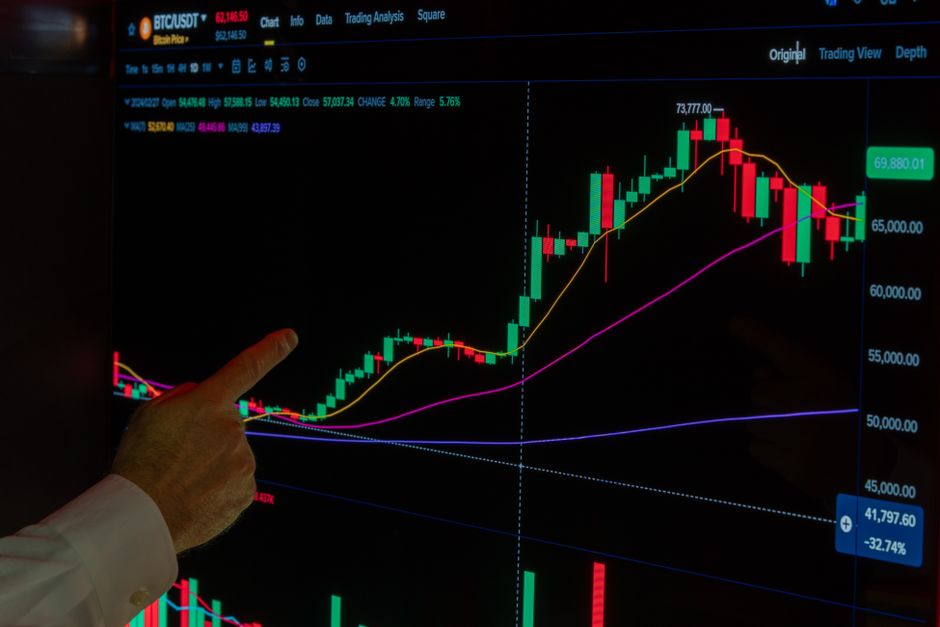
Photo by Rafael Minguet Delgado on Pexels
Exchange rates are quoted in two main ways:
1. Direct quotation: The amount of domestic currency needed to buy one unit of foreign currency (e.g., USD 1.20 / EUR, meaning it costs $1.20 to buy 1 Euro).
2. Indirect quotation: The amount of foreign currency needed to buy one unit of domestic currency (e.g., EUR 0.83 / USD, meaning it costs €0.83 to buy $1).
Most markets use direct quotes for the domestic currency. For example, in the US, you'd usually see EUR/USD 1.08, meaning 1 Euro buys $1.08.
Factors Influencing Exchange Rates
Photo by Niepoddawajsie.pl Luk on Pexels
Exchange rates are incredibly dynamic, influenced by a mix of economic, political, and psychological factors:
* Interest Rate Differentials: Higher domestic interest rates tend to attract foreign capital, increasing demand for the domestic currency, thus strengthening it.
* Inflation Differentials: Countries with lower inflation usually see their currencies appreciate relative to those with higher inflation, as their goods and services become relatively cheaper.
* Economic Performance: Strong economic growth, low unemployment, and stable political environments attract investment, boosting currency demand.
* Balance of Payments: A country's balance of payments summarizes its international transactions. A trade surplus (exporting more than importing) often leads to currency appreciation.
* Government Intervention: Central banks might buy or sell foreign currency to influence their own currency's value.
* Political Stability: Unstable political conditions can lead to capital flight and currency depreciation.
graph TD
    A["Interest Rate Differentials"] --> E["Demand/Supply of Currency"]
    B["Inflation Differentials"] --> E
    C["Economic Performance"] --> E
    D["Political Stability"] --> E
    F["Balance of Payments"] --> E
    G["Government Intervention"] --> E
    E --> H["Exchange Rate Fluctuation"]
Arbitrage
Arbitrage is the simultaneous purchase and sale of an asset to profit from a price difference. In FX, this usually involves three currencies (triangular arbitrage). If the cross-rate (the implied exchange rate between two currencies derived from their rates against a third currency) doesn't match the actual direct rate, an arbitrage opportunity exists. These opportunities are fleeting due to the efficiency of FX markets.
Purchasing Power Parity (PPP)
Photo by Gosia K on Pexels
PPP is a theory suggesting that exchange rates between currencies should adjust so that a basket of goods and services costs the same in both countries.
* Absolute PPP: The exchange rate equals the ratio of the price levels.
* Relative PPP: The change in the exchange rate equals the difference in inflation rates.
PPP often holds true in the long run but deviates significantly in the short run due to non-tradable goods, transport costs, and market imperfections.
3. Worked Example
Let's say you're a US-based company expecting to receive €1,000,000 in three months for a sale. You're worried the Euro might weaken against the US Dollar, reducing the USD amount you'll receive.
Scenario 1: No Hedging (Spot Market in 3 months)
* Current spot rate: EUR/USD 1.0800
* You predict the spot rate in three months might be EUR/USD 1.0500.
* If your prediction is correct, you'd receive €1,000,000 * 1.0500 = $1,050,000.
Scenario 2: Hedging with a Forward Contract
* A bank offers you a 3-month forward rate of EUR/USD 1.0750.
* You enter into a forward contract to sell €1,000,000 in three months at this rate.
* In three months, regardless of the actual spot rate, you will receive €1,000,000 * 1.0750 = $1,075,000.
In this example, hedging with the forward contract locks in a higher USD amount ($1,075,000 vs. a potential $1,050,000), protecting you from the risk of a weakening Euro. The cost of this protection is giving up any potential gains if the Euro strengthens beyond the forward rate (e.g., if the spot rate in 3 months was 1.0900, you'd still get 1.0750).
4. Key Takeaways
- Foreign exchange markets enable global transactions by facilitating currency exchange.
- Exchange rates are prices that constantly adjust based on supply and demand for currencies.
- Spot rates are for immediate exchange, while forward rates are for future exchanges at a locked-in price.
- Interest rates, inflation, economic health, and political stability are major drivers of exchange rate movements.
- Arbitrage profits are rare and fleeting due to market efficiency.
- Purchasing Power Parity suggests exchange rates equalize the price of goods over the long run.
Common Mistakes to Avoid:
- Don't confuse direct and indirect quotes; always clarify which currency is the base and which is the quote.
- Assuming historical exchange rate trends will perfectly predict future movements.
- Underestimating the impact of political events on currency stability.
- Ignoring transaction costs or bid-ask spreads when calculating potential profits or losses.
5. Now Try It
Imagine you're importing goods from Japan worth JPY 5,000,000, payable in one month. The current spot rate is USD/JPY 130.00 (meaning $1 buys 130 Yen). A bank offers you a 1-month forward rate of USD/JPY 131.50. Calculate how many US dollars you would need to pay if you hedge with the forward contract versus if you wait and the spot rate in one month turns out to be USD/JPY 128.00. What's the dollar difference in your payment?
Frequently asked about Foreign Exchange Markets and International Finance
Study this next
Get the full Financial markets (BSA) curriculum
Clone the complete plan to your dashboard for unlimited AI-generated notes, practice quizzes, and a personalised revision schedule.
Save this course free