Advanced Floral Adaptations and Special Topics
From the Flowers curriculum
TL;DR
You'll explore specialized floral structures and their evolutionary reasons, learn about diverse pollination strategies beyond the basics, and discover unusual reproductive tactics flowers use. This topic covers how flowers push the boundaries of typical plant reproduction to survive and thrive.
1. The Mental Model
Think of flowers as highly specialized marketing campaigns. Each adaptation is a feature designed to attract a specific customer (pollinator) or overcome a unique challenge (harsh environment, competitor plants), ensuring the campaign's ultimate success: reproduction.
2. The Core Material
Specialized Floral Structures

Photo by Valeria Boltneva on Pexels
Flowers aren't just petals and stamens; many have evolved unique parts for specific jobs.
- Nectaries: Glands that produce sugary nectar to attract pollinators. They can be located in various parts of the flower, sometimes hidden to encourage specific visitors.
- Spurs: Elongated, tubular outgrowths of petals or sepals that often contain nectar at the tip. They force pollinators to interact with reproductive organs while feeding, like in orchids or columbines.
- Pollinia: In orchids and milkweeds, pollen grains are packaged into coherent masses (pollinia) which are then transferred as a single unit by a pollinator. This ensures a large dose of pollen is delivered at once.
- Traps & Landing Platforms: Some flowers, like certain aroids, have structures that temporarily trap insects to ensure pollen transfer. Others, like composites (daisies), offer broad landing pads.
Advanced Pollination Strategies

Photo by Masood Aslami on Pexels
Beyond wind, water, and general insect/bird pollination, there are highly specific and fascinating methods.
- Deception Pollination: Flowers trick pollinators without offering a reward.
- Sexual Deception: Flowers mimic female insects (visuals, pheromones) to attract males, which attempt to mate with the flower and pick up pollen (e.g., Ophrys orchids).
- Food Deception: Flowers look and smell like food sources (e.g., rotting meat for flies in Rafflesia or Titan Arum) but offer no actual nourishment.
- Trap-line Pollination: Pollinators visit a predictable sequence of flowers, often over a wide area, transferring pollen efficiently between individuals. Hummingbirds and long-tongued bees often do this.
- Coevolutionary Specialization: A tight, reciprocal evolutionary relationship between a specific flower and a specific pollinator.
- Yucca and Yucca Moth: The moth specifically pollinates the Yucca flower, and its larvae feed on a portion of the seeds, but not all. Neither can survive without the other.
- Fig and Fig Wasp: A complex life cycle where wasps lay eggs inside figs, and in return, pollinate the fig's tiny internal flowers.
Unusual Reproductive Strategies
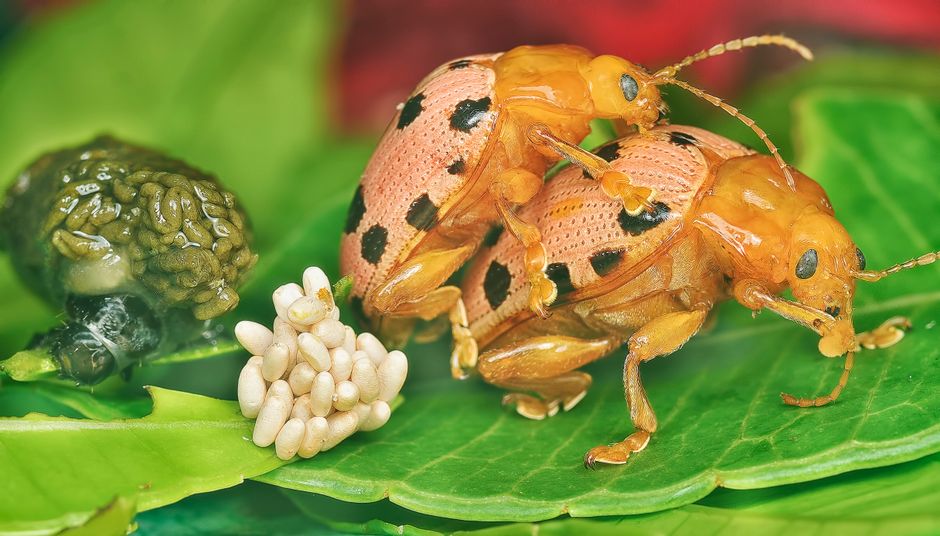
Photo by SweeMing YOUNG on Pexels
Not all plants rely solely on standard sexual reproduction.
- Apomixis: A form of asexual reproduction where seeds are produced without fertilization. The offspring are genetic clones of the parent plant. This can be advantageous in stable environments or when pollinators are scarce.
- Vivipary: Seeds or embryos begin to develop while still attached to the parent plant, often in mangroves where seedlings drop directly into mud.
- Pseudocopulation: As mentioned in sexual deception, the pollinator attempts to mate with the flower, facilitating pollen transfer.
graph TD
    A["Flower Adaptation"] --> B["Pollination Strategy"]
    B --> C["Reproductive Outcome"]

    subgraph Specialized Structures
        S1["Nectaries (Sugar Reward)"] --> P1["Attracts Specific Pollinators"]
        S2["Spurs (Nectar Depth)"] --> P2["Guides Pollinator Action"]
        S3["Pollinia (Pollen Packet)"] --> P3["Efficient Pollen Transfer"]
    end

    subgraph Advanced Pollination
        AP1["Deception Pollination"] --> R1["Pollinator Visits Without Reward"]
        AP2["Trap-line Pollination"] --> R2["Efficient Inter-Flower Transfer"]
        AP3["Coevolution (e.g., Yucca/Moth)"] --> R3["Mutualistic Survival"]
    end

    subgraph Unusual Reproduction
        UR1["Apomixis (Asexual Seed)"] --> RO1["Genetic Clones, No Fertilization"]
        UR2["Vivipary (Live Birth)"] --> RO2["Seeds Germinate on Parent Plant"]
    end

    P1 --> AP1
    P2 --> AP2
    P3 --> AP3

    R1 --> UR1
    R2 --> UR2
    R3 --> C
    RO1 --> C
    RO2 --> C
3. Worked Example
Imagine the Hammer Orchid (Drakaea species) in Australia. Its labellum (a modified petal) looks and smells exactly like a flightless female Thynnid wasp. A male wasp, sensing the pheromones and seeing the shape, attempts to "mate" with the labellum. As it tries to fly off with its "mate," the orchid's hinged labellum swings the wasp into contact with the orchid's pollen-carrying anther and then the stigma, picking up or depositing pollen. This is a classic case of sexual deception pollination, completely relying on the male wasp's instinctual drive for reproduction to achieve its own.
4. Key Takeaways
- Flowers develop highly specialized structures like nectaries, spurs, and pollinia for targeted pollinator interactions.
- Deception pollination tricks pollinators into visiting without offering a reward, often through mimicking sexual partners or food.
- Coevolution creates incredibly tight, interdependent relationships between specific flowers and their pollinators, like the fig and fig wasp.
- Apomixis allows plants to produce seeds without sexual reproduction, yielding genetic clones.
- Vivipary enables seeds to germinate directly on the parent plant, common in challenging environments.
- Floral adaptations are driven by evolutionary pressures to ensure reproductive success in diverse ecological niches.
-
Understanding these advanced strategies reveals the incredible diversity and ingenuity of plant life.
-
Common Mistakes to Avoid:
- Confusing general insect pollination with highly specialized coevolutionary relationships.
- Thinking deception pollination benefits the pollinator (it doesn't, it exploits them).
- Assuming all seed production is sexual; remember apomixis.
- Underestimating the role of environmental pressures in shaping these extreme adaptations.
5. Now Try It
Choose one specific flower known for an advanced adaptation (e.g., Amorphophallus titanum, Coryanthes orchid, Aristolochia species). Research its specific adaptations and outline the step-by-step process of how it achieves pollination using that adaptation. Explain what benefit (or cost) its unique strategy imposes on its primary pollinator. Success means you can clearly describe the mechanism and the interspecies interaction involved.
Frequently asked about Advanced Floral Adaptations and Special Topics
Study this next
Get the full Flowers curriculum
Clone the complete plan to your dashboard for unlimited AI-generated notes, practice quizzes, and a personalised revision schedule.
Create Free Account