Introduction to Cell Biology and Basic Chemistry
From the Basis of cell biology curriculum
Introduction to Cell Biology and Basic Chemistry
TL;DR
You'll learn that life is built from tiny fundamental units called cells, and these cells rely on basic chemical principles to function. Understanding how atoms bond and interact is crucial for grasping how biological molecules work. This foundational knowledge will help you understand all the complex processes happening inside you.
1. The Mental Model
Think of a cell as a tiny, self-contained factory, and chemistry as the instructions and raw materials needed to build and operate that factory. Everything a cell does, from growing to communicating, boils down to chemical reactions.
2. The Core Material
What is Cell Biology?

Photo by Monstera Production on Pexels
Cell biology is the study of cells – the basic building blocks of all living things. From a simple bacterium to a complex human, every organism is made of cells. Cells are incredibly diverse, but they all share common characteristics like a membrane, genetic material, and the ability to carry out life's processes.
Why is Basic Chemistry Important for Cell Biology?
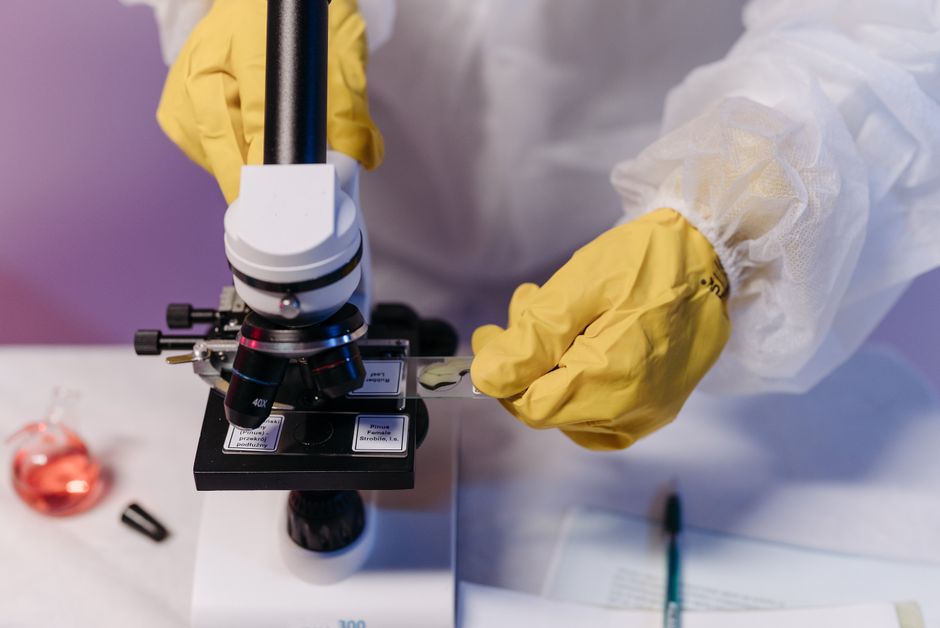
Photo by Pavel Danilyuk on Pexels
You can't understand how a car works without knowing about engines, fuel, and electricity. Similarly, you can't understand cells without knowing basic chemistry. All the molecules that make up a cell (like DNA, proteins, and fats) are built from atoms and obey chemical laws. Chemical reactions power everything cells do.
Atoms: The Fundamental Units

Photo by Steve A Johnson on Pexels
Remember from basic chemistry that everything is made of atoms. Atoms have a nucleus (protons and neutrons) and electrons orbiting it. It's those electrons, especially the ones in the outermost shell, that determine how atoms interact and form bonds.
Chemical Bonds: Holding Things Together
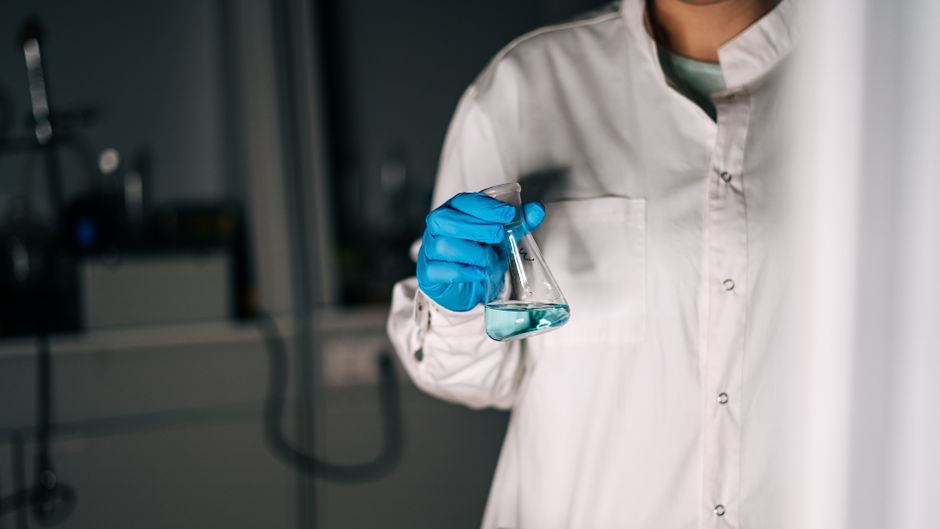
Photo by Daria on Pexels
Atoms "want" to have a stable outer electron shell. They achieve this by forming chemical bonds with other atoms.
- Covalent Bonds: These are strong bonds where atoms share electrons. Think of it like two friends sharing a toy – both get to use it. Many biological molecules (like water, sugars, and proteins) are held together by covalent bonds.
- Ionic Bonds: These bonds form when one atom gives an electron to another, creating charged particles called ions. These oppositely charged ions then attract each other. It's like one friend giving a toy to another, and now they're attracted because one has it and the other needs it. Ionic bonds are important in salts and in some biological interactions.
- Hydrogen Bonds: These are weaker attractions that occur when a hydrogen atom (that's already part of a polar covalent bond) is attracted to another electronegative atom (like oxygen or nitrogen). They're like temporary "sticky notes" that can easily form and break. Hydrogen bonds are super important for things like water's properties and holding DNA strands together.
graph TD
    A["Atom Interaction"] --> B{Stable Outer Electron Shell?};
    B -- Yes --> C[No Bond Needed (Inert)];
    B -- No --> D{How to Achieve Stability?};
    D --> E["Share Electrons?"];
    D --> F["Transfer Electrons?"];
    D --> G["Temporary Attraction?"];
    E --> H["Covalent Bond (Strong)"];
    F --> I["Ionic Bond (Strong attraction of opposites)"];
    G --> J["Hydrogen Bond (Weak, but important)"];
    H --> K[Forms Molecules (e.g., Water, Glucose)];
    I --> L[Forms Salts (e.g., NaCl)];
    J --> M[Influences Water Properties, DNA Structure];
Water: The Essential Solvent
Water (H₂O) is probably the most important molecule for life. It's a polar molecule, meaning it has slightly positive and slightly negative ends due to oxygen's stronger pull on electrons (remember electronegativity?). This polarity allows water to dissolve many substances (it's a great solvent) and form hydrogen bonds, which gives it unique properties essential for life, like high specific heat and cohesive/adhesive forces.
pH: Acidity and Basicity
The pH scale measures how acidic or basic a solution is. It's based on the concentration of hydrogen ions (H⁺).
* Acidic solutions have a high H⁺ concentration (low pH, 0-6.9).
* Basic (or alkaline) solutions have a low H⁺ concentration (high pH, 7.1-14).
* Neutral solutions (like pure water) have a pH of 7.
Cells are very sensitive to pH changes; even small shifts can be damaging. Buffers are chemical systems that help maintain a stable pH by absorbing or releasing H⁺ ions.
3. Worked Example
Let's consider how water's polarity and hydrogen bonding are crucial for dissolving glucose (a sugar) in your blood.
- Glucose structure: Glucose molecules have many -OH (hydroxyl) groups. The oxygen in these -OH groups pulls electrons harder than the hydrogen, making the oxygen slightly negative and the hydrogen slightly positive. So, glucose is also a polar molecule.
- Water's polarity: As you know, water molecules (H₂O) are also polar, with slightly negative oxygen and slightly positive hydrogens.
- Interaction: When you put glucose in water, the slightly negative oxygen atoms of water are attracted to the slightly positive hydrogen atoms of glucose's -OH groups. At the same time, the slightly positive hydrogen atoms of water are attracted to the slightly negative oxygen atoms of glucose.
- Dissolution: These attractions form hydrogen bonds between water molecules and glucose molecules. Because there are so many water molecules, they surround the glucose molecules, pulling them apart from each other and dissolving them. This allows glucose to be transported throughout your body in your blood, which is mostly water.
Without these polar properties and hydrogen bonds, glucose wouldn't dissolve, and your cells wouldn't get the energy they need.
4. Key Takeaways
- Cells are the fundamental units of life, and their functions are rooted in basic chemical principles.
- Atoms form chemical bonds (covalent, ionic, hydrogen) to achieve stability, creating the molecules of life.
- Water's polarity and ability to form hydrogen bonds make it an essential solvent and influence many biological processes.
- The pH scale measures acidity/basicity, and maintaining a stable pH is vital for cell function.
- Buffers help cells resist changes in pH, protecting delicate biological molecules.
- Understanding atomic interactions is key to understanding molecular structure and function in biology.
Common mistakes you should avoid:
- Forgetting that weak bonds, like hydrogen bonds, are incredibly important even though they're not as strong as covalent bonds.
- Underestimating the role of water; it's not just a backdrop for life, it's an active participant.
- Confusing atomic structure (protons, neutrons, electrons) with molecular structure (how atoms bond together).
- Thinking that biology is separate from chemistry; they are deeply intertwined.
5. Now Try It
Imagine you're trying to explain why oil and water don't mix, but sugar dissolves easily in water, to a friend who knows nothing about chemistry. Using only the concepts we just covered (polarity, hydrogen bonds, and types of atoms), draft a short paragraph (2-3 sentences) explaining this phenomenon.
Success looks like: Your explanation clearly distinguishes between polar and nonpolar molecules and uses the concept of hydrogen bonding (or lack thereof) to explain the different solubility behaviors without using any jargon beyond what we've discussed.
Frequently asked about Introduction to Cell Biology and Basic Chemistry
Study this next
Get the full Basis of cell biology curriculum
Clone the complete plan to your dashboard for unlimited AI-generated notes, practice quizzes, and a personalised revision schedule.
Create Free Account