Foundational Concepts of Economics
From the ECONOMICSSS curriculum
Foundational Concepts of Economics
TL;DR
Economics is about how societies deal with scarcity, the basic fact that we have unlimited wants but limited resources. This forces us to make choices, and every choice has an opportunity cost – what you give up by choosing something else. Understanding these concepts helps you think like an economist.
1. The Mental Model
Think of economics as the study of trade-offs. Because we can't have everything, we're constantly choosing. Each choice has a hidden cost: the value of the next best alternative you didn't pick.
2. The Core Material
Scarcity and Choice
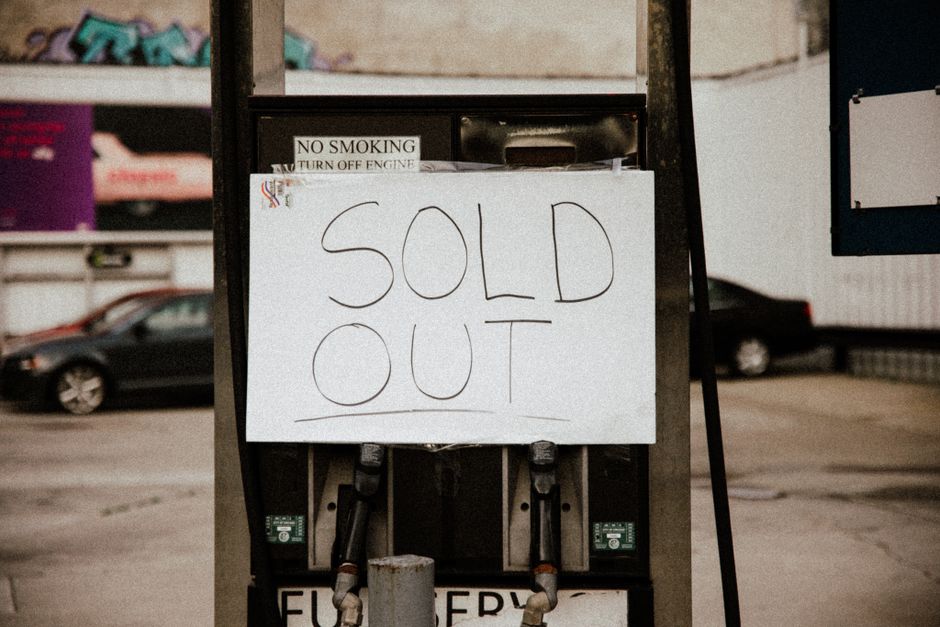
Photo by K on Pexels
The fundamental problem in economics is scarcity. This isn't just about money; it means that all resources (time, land, labor, capital) are limited, while human wants are virtually unlimited. Because of scarcity, you have to make choices. Every decision you make, from what to eat for lunch to how much to save, is driven by scarcity.
Opportunity Cost

Photo by Kindel Media on Pexels
When you make a choice, you're implicitly deciding not to do something else. The opportunity cost of your chosen action is the value of the next best alternative you sacrificed. It's not just the monetary cost; it's the value of what you missed out on.
For example, if you spend an hour studying economics, the opportunity cost isn't just the time itself; it's what you could have done in that hour, like watching a show or working a part-time job, whichever was your next best option.
graph TD
    A["Unlimited Wants"] --> B["Limited Resources (Scarcity)"]
    B --> C["Need to Make Choices"]
    C --> D["Every Choice Has a Cost (Opportunity Cost)"]
    D --> E["Trade-offs Are Inevitable"]
Rational Self-Interest

Photo by SHOX ART on Pexels
Economists often assume people act out of rational self-interest. This doesn't mean you're selfish, but rather that you make decisions that you believe will maximize your own satisfaction or utility, given the information available to you. You weigh the benefits and costs of your actions.
Marginal Analysis
Photo by Kindel Media on Pexels
Most decisions aren't "all or nothing"; they're about "a little more" or "a little less." Marginal analysis involves comparing the additional benefits (marginal benefits) of an activity with the additional costs (marginal costs). You should continue an activity as long as the marginal benefit is greater than or equal to the marginal cost.
For instance, deciding to study for one more hour involves weighing the benefit of a potentially higher grade against the cost of lost sleep or leisure time.
3. Worked Example
Let's say you have \$10 and two choices for lunch: a pizza for \$8 or a sandwich for \$6. You can only buy one.
- Scarcity: Your \$10 is a limited resource, and you can't buy both lunches.
- Choice: You decide to buy the pizza.
- Opportunity Cost: The opportunity cost of buying the pizza is the sandwich you didn't buy. It's the satisfaction or hunger relief you would have gotten from the sandwich. It's not the \$6; it's the value you place on that sandwich.
Now, imagine you're a restaurant owner trying to decide whether to stay open for an extra hour late at night.
- Marginal Benefit: The potential extra revenue from customers during that hour (e.g., \$50).
- Marginal Cost: The additional wages for staff, extra electricity, etc., for that hour (e.g., \$40).
Since the marginal benefit (\$50) is greater than the marginal cost (\$40), it makes sense, based on marginal analysis, to stay open for that extra hour. If the marginal cost was \$60, you wouldn't stay open.
4. Key Takeaways
- Scarcity means resources are limited, but wants are unlimited.
- Choice is necessary because of scarcity.
- Opportunity cost is the value of the next best alternative you give up when making a choice.
- People are assumed to act out of rational self-interest, trying to maximize their own satisfaction.
- Marginal analysis involves comparing the additional benefits and costs of one more unit of something.
- Economics helps explain how societies allocate scarce resources.
- Every decision has an implicit trade-off.
Common Mistakes to Avoid
- Confusing opportunity cost with the monetary price of a good; it's the value of the best alternative forgone.
- Thinking that scarcity only applies to money; it applies to all resources, including time.
- Assuming "rational self-interest" means being greedy; it simply means acting in a way you believe benefits you.
- Ignoring hidden costs or benefits when making decisions.
5. Now Try It
Think about your typical morning routine. For the next 15 minutes, write down at least three choices you make and, for each choice, identify its opportunity cost. For example, if you choose to hit the snooze button, what's the opportunity cost? What if you choose to make coffee at home instead of buying it?
What to do: List three choices you made this morning. For each choice, clearly state the next best alternative you gave up.
What success looks like: You can articulate the opportunity cost for each choice, showing you understand that every decision has a trade-off.
Frequently asked about Foundational Concepts of Economics
Study this next
Get the full ECONOMICSSS curriculum
Clone the complete plan to your dashboard for unlimited AI-generated notes, practice quizzes, and a personalised revision schedule.
Create Free Account