Introduction to Labour Economics
From the Economics curriculum
Introduction to Labour Economics
TL;DR
Labour economics studies how labour markets work, focusing on the interactions between workers and employers. It helps us understand wages, employment, and income distribution. This field examines decisions like whether to work, how much to work, and what skills to acquire.
1. The Mental Model
Think of the labour market like any other market, but instead of trading goods, you're trading your time and skills. Workers are the 'suppliers' of labour, and firms are the 'demanders' of labour. Their interactions determine wages and how many people are employed.
2. The Core Material
Labour economics investigates the supply and demand for labour services. We'll look at what drives individuals' decisions to work and what drives firms' decisions to hire.
2.1 Labour Supply: Your Decision to Work

Photo by kailash kumar on Pexels
Your decision to work, and for how many hours, is a classic trade-off between leisure and income. More income means you can buy more goods and services, but it comes at the cost of less free time.
- Substitution Effect: As wages rise, the "price" of leisure (the income you give up by not working) increases, making you want to substitute leisure for work. You work more.
- Income Effect: As wages rise, your income increases, making you feel richer. You might then demand more of all normal goods, including leisure. You work less.
Usually, the substitution effect dominates at lower wages, leading you to work more. But at very high wages, the income effect can dominate, potentially leading to a backward-bending labour supply curve where higher wages mean you work less because you can afford more leisure.
2.2 Labour Demand: Firms' Hiring Decisions
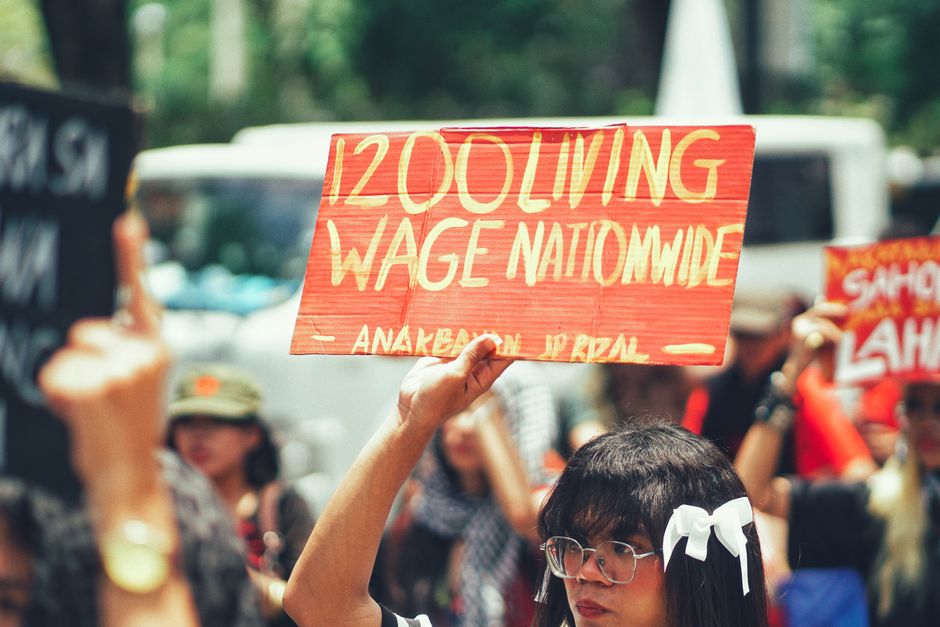
Photo by Mico Medel on Pexels
Firms demand labour because labour is a crucial input in producing goods and services. A firm's decision to hire depends on:
- Productivity of Labour: How much output does an additional worker produce? (e.g., how many widgets can one extra employee make?)
- Product Price: What price can the firm sell that output for?
- Wage Rate: How much does it cost to hire that additional worker?
Firms will hire workers as long as the marginal revenue product of labour (MRPL) – the additional revenue generated by hiring one more worker – is greater than or equal to the marginal expense of labour (MEL) – essentially, the wage rate.
MRPL = Marginal Product of Labour (MPL) * Product Price (P)
2.3 Market Equilibrium

Photo by Pixabay on Pexels
The interaction of labour supply and labour demand determines the equilibrium wage rate and the equilibrium level of employment in a competitive labour market.
Changes in factors like technology, worker skills, government policies (like minimum wage), or consumer preferences can shift these curves, leading to new equilibrium outcomes.
graph TD
    A[Individual's Decision to Work] --> B{Wage Rate Changes?};
    B -- Yes, Wage Rises --> C[Substitution Effect: Work More];
    B -- Yes, Wage Rises --> D[Income Effect: Work Less (more leisure)];
    C --> E[Net Effect on Hours Worked (Labour Supply)];
    D --> E;

    F[Firm's Decision to Hire] --> G{Output Price or Worker Productivity Changes?};
    G -- Yes --> H[Marginal Revenue Product of Labour (MRPL) Shifts];
    H --> I[Compare MRPL to Wage Cost];
    I --> J[Hiring Decision (Labour Demand)];

    E --> K["Labour Market"];
    J --> K;
    K --> L["Equilibrium Wage & Employment"];
    L --> M["Income Distribution"];
3. Worked Example
Imagine you're running a small company that bakes cookies. Each additional baker you hire can produce 50 batches of cookies per day (this is their Marginal Product of Labour, or MPL). You sell each batch of cookies for $10.
- The Marginal Revenue Product of Labour (MRPL) for each baker is MPL * Product Price = 50 batches/day * $10/batch = $500/day. This means each additional baker brings in $500 in revenue.
Now, let's say the going daily wage for a baker in your town is $200.
- Since the MRPL ($500) is greater than the daily wage ($200), hiring another baker is profitable. You'll continue to hire bakers as long as their MRPL is greater than or equal to their wage.
If the wage suddenly jumped to $600/day, you'd find that hiring another baker is no longer profitable (MRPL $500 < Wage $600), so you'd likely reduce your demand for bakers or look for ways to increase their productivity.
4. Key Takeaways
- Labour economics helps us understand why wages differ and how many people are employed.
- Your decision to work involves a trade-off between higher income and more leisure hours.
- Firms hire workers based on how much additional revenue those workers generate compared to their wage cost.
- The interaction of labour supply and demand sets the equilibrium wage and employment levels.
- Factors like technology, education, and government policies significantly influence labour markets.
Common Mistakes to Avoid:
- Don't confuse the substitution effect and income effect; they push in opposite directions.
- Don't forget that firms' demand for labour is a derived demand – it comes from the demand for the goods or services workers produce.
- Don't assume all labour markets are perfectly competitive without considering factors like unions or minimum wage laws.
- Don't forget the importance of human capital (skills, education) in determining an individual's productivity and earning potential.
5. Now Try It
You're a policy analyst. Your city council is considering raising the minimum wage from $10/hour to $15/hour. Based on what you've learned, write a short paragraph (3-4 sentences) outlining two potential effects of this policy on the demand for labour from local businesses and on the supply of labour by individuals, using the concepts of MRPL and your personal leisure-income trade-off. What would success look like for the city council?
Frequently asked about Introduction to Labour Economics
Study this next
Get the full Economics curriculum
Clone the complete plan to your dashboard for unlimited AI-generated notes, practice quizzes, and a personalised revision schedule.
Create Free Account