Introduction to Composite Materials
From the Engineering Notes curriculum
Introduction to Composite Materials
TL;DR
Composite materials combine two or more distinct materials to create a new material with superior properties compared to its individual components. They typically consist of a strong, stiff reinforcement embedded within a matrix that holds it all together. You'll find them everywhere, from airplanes to fishing rods, because they offer excellent strength-to-weight ratios and design flexibility.
1. The Mental Model
Think of reinforced concrete: steel bars (reinforcement) give concrete (matrix) tensile strength it otherwise lacks. Composites apply this idea, but with advanced fibers and resins, creating materials that are often lighter and stronger than traditional metals.
2. The Core Material
A composite material is essentially a team effort. You've got at least two distinct materials working together, each playing a specific role. These roles are usually split into the reinforcement and the matrix.
The reinforcement is what gives the composite its strength and stiffness. Think of it as the "muscle." It's usually in the form of fibers (like glass, carbon, or Kevlar) or particles. These fibers are incredibly strong in tension.
The matrix is the "glue" that holds the reinforcement in place and transfers loads between the fibers. It protects the fibers from environmental damage and abrasion. Common matrix materials are polymers (like epoxy, polyester, or vinyl ester resins), but you can also have metal or ceramic matrices for high-temperature applications.
When you combine them, you get a material that can be much stronger, stiffer, and lighter than either component alone. The properties of the composite depend heavily on:
* The properties of the individual reinforcement and matrix materials.
* The volume fraction (how much reinforcement is there compared to the matrix).
* The orientation of the reinforcement (are the fibers all going the same way, or are they woven?).
You can categorize composites based on their matrix material:
* Polymer Matrix Composites (PMCs): Most common. Use a polymer resin matrix. Examples: fiberglass (glass fibers in polyester resin), carbon fiber (carbon fibers in epoxy).
* Metal Matrix Composites (MMCs): Metal matrix reinforced with ceramic fibers or particles. Used in high-temperature applications.
* Ceramic Matrix Composites (CMCs): Ceramic matrix reinforced with ceramic fibers. Extremely high-temperature capability, very brittle.
Fiber orientation is crucial for design.
graph TD
    A["Composite Material Properties"] --> B["Fiber Type (e.g., Carbon, Glass)"];
    A --> C["Matrix Type (e.g., Epoxy, Polyester)"];
    A --> D["Fiber Volume Fraction (%)"];
    A --> E["Fiber Orientation"];

    E --> E1["Unidirectional (UD): All fibers aligned"];
    E --> E2["Woven: Fibers in multiple directions (e.g., 0°/90°)"];
    E --> E3["Random: Short, chopped fibers"];

    E1 --> P1["High strength/stiffness in fiber direction"];
    E2 --> P2["Good balanced properties in plane"];
    E3 --> P3["Isotropic-like properties, lower strength"];

    D --> D1["Higher Volume Fraction -> Higher Strength/Stiffness"];
    C --> C1["Determines temperature resistance, chemical resistance"];
    B --> B1["Determines ultimate strength and stiffness"];
2.1 Why use composites?

Photo by Ann H on Pexels
- High strength-to-weight ratio: Stronger and stiffer than steel or aluminum for the same weight. This is a huge win for aircraft and automobiles.
- Corrosion resistance: Many polymer matrices don't corrode like metals do.
- Fatigue resistance: Can handle repeated stress cycles better than many metals.
- Design flexibility: You can tailor the material's properties by changing fiber type, orientation, and matrix. Want stiffness in one direction and strength in another? You can do that.
2.2 How are they made?
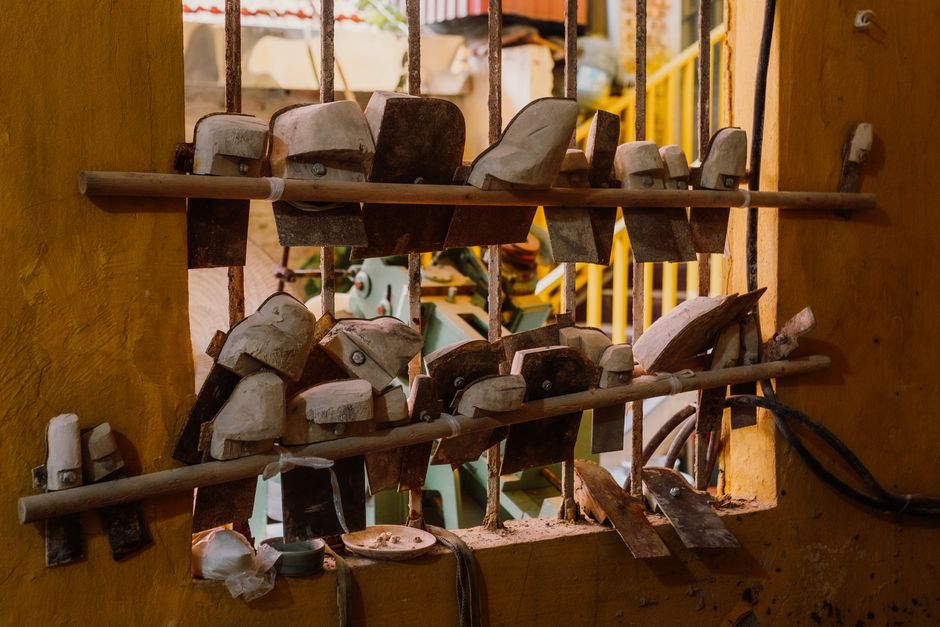
Photo by Viet Vietz on Pexels
Manufacturing methods vary widely but often involve laying up fibers and then impregnating them with resin.
* Hand Lay-up: Manual process, good for prototyping or low-volume.
* Vacuum Bagging: Adds pressure to consolidate layers, reduces voids.
* Autoclave Curing: Uses heat and pressure in an oven-like device for high-performance parts.
* Resin Transfer Molding (RTM): Dry fibers placed in a mold, then resin is injected. Good for complex shapes.
3. Worked Example
Let's say you're designing a drone arm. If you used solid aluminum, it might be too heavy, reducing flight time. A solid plastic arm might be too flexible or break easily.
You decide to use a carbon fiber/epoxy composite.
* Reinforcement: Carbon fibers. These are incredibly strong and stiff. You'd likely use a woven fabric (like a 2x2 twill) for balanced properties, or unidirectional layers if the main load is in one specific direction.
* Matrix: Epoxy resin. This holds the carbon fibers together, protects them, and transfers the load between the fibers. It also allows you to mold the arm into a complex shape.
By carefully orienting the carbon fibers during the manufacturing process (e.g., layering fabric at 0°, +45°, -45°, and 90°), you can create an arm that is exceptionally stiff and strong for its weight, can withstand twisting forces, and won't corrode. The resulting drone arm is much lighter than aluminum but significantly stronger and stiffer than plastic, leading to better drone performance.
4. Key Takeaways
- Composite materials combine a reinforcement (like fibers) and a matrix (like resin) to achieve superior properties.
- The reinforcement provides strength and stiffness, while the matrix binds it, transfers loads, and protects the fibers.
- Polymer Matrix Composites (PMCs) are the most common, using polymer resins like epoxy.
- Key advantages include high strength-to-weight ratio, corrosion resistance, and design flexibility.
- Fiber orientation and volume fraction are critical design parameters that determine the composite's final properties.
- Composites allow engineers to tailor material properties to specific application requirements.
- Manufacturing methods vary from simple hand lay-up to advanced autoclave curing or resin injection.
Common Mistakes to Avoid

Photo by KATRIN BOLOVTSOVA on Pexels
- Assuming isotropic properties: Composites are often anisotropic, meaning their properties change with direction due to fiber orientation. Don't treat them like metals.
- Overlooking manufacturing defects: Voids, delaminations, or improper fiber wet-out can severely degrade performance.
- Ignoring environmental effects: Temperature and moisture can affect the matrix, potentially reducing overall composite strength.
- Incorrectly designing for loads: You need to understand the load path and orient fibers accordingly. Randomly oriented fibers are often not optimal for structural applications.
5. Now Try It
Imagine you need to design a lightweight, stiff car hood. Sketch out which materials you'd choose for the reinforcement and the matrix of a composite solution. Then, describe how you might arrange the reinforcement (e.g., fiber type, orientation) to maximize stiffness in the main load-bearing areas while keeping weight down. What would be one key advantage over a steel hood?
Success looks like: Identifying appropriate fiber and matrix materials, explaining a logical fiber orientation strategy (e.g., why you'd choose unidirectional vs. woven in specific areas), and articulating a clear benefit of the composite over steel for this application.
Frequently asked about Introduction to Composite Materials
Study this next
Get the full Engineering Notes curriculum
Clone the complete plan to your dashboard for unlimited AI-generated notes, practice quizzes, and a personalised revision schedule.
Create Free Account