Properties of Ceramic Materials
From the Engineering Notes curriculum
Properties of Ceramic Materials
TL;DR
Ceramic materials are generally hard, brittle, and excellent insulators due to their strong ionic/covalent bonds. Their unique properties make them ideal for high-temperature and harsh environments. Understanding these properties helps you choose the right ceramic for your engineering application.
1. The Mental Model
Think of ceramics as very stable, stiff structures. Their atoms are tightly locked together, which gives them great strength but makes them reluctant to bend or deform. This atomic stiffness dictates almost all their engineering properties.
2. The Core Material
Ceramics are inorganic, non-metallic materials processed at high temperatures. Their properties are directly tied to the types of atomic bonds present, which are primarily ionic and/or covalent.
2.1 Mechanical Properties

Photo by ClickerHappy on Pexels
You'll find that ceramics are:
* Hard: They resist scratching and indentation. This is great for wear resistance.
* Brittle: Unlike metals that deform plastically before breaking, ceramics tend to fracture suddenly with little to no deformation. Think of dropping a ceramic plate – it shatters, it doesn't bend. This is due to the strong, directional nature of their bonds which makes crack propagation easy once started.
* High Compressive Strength: They can withstand a lot of pushing force.
* Low Tensile Strength: They're relatively weak when pulled. This is a major design consideration.
* High Elastic Modulus (Stiffness): They don't deform much under stress.
2.2 Thermal Properties
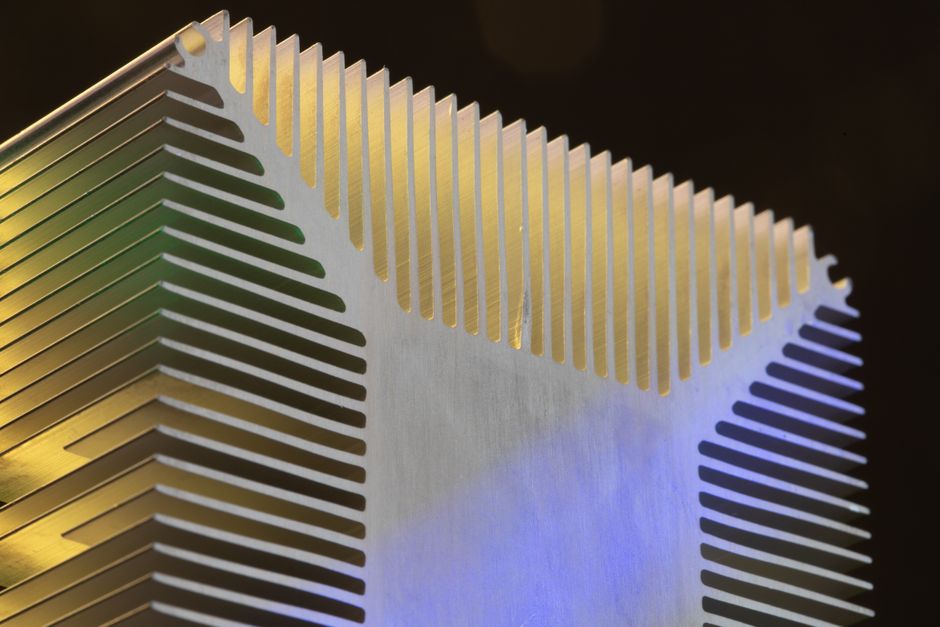
Photo by Nic Wood on Pexels
Ceramics excel in high-temperature applications:
* High Melting Point: They generally melt at much higher temperatures than metals.
* Low Thermal Expansion: They don't change size much when heated or cooled, which is crucial for applications requiring dimensional stability.
* Low Thermal Conductivity: They're excellent insulators, meaning they don't transfer heat easily. This is why ceramic tiles keep your coffee hot!
2.3 Electrical Properties

Photo by mickael ange konan on Pexels
Most ceramics are electrical insulators:
* High Electrical Resistivity: They don't conduct electricity well because their electrons are tightly bound in ionic/covalent bonds and aren't free to move.
* Dielectric Strength: This is their ability to withstand an electric field without breaking down. Many ceramics have high dielectric strength, making them useful in capacitors and electrical components.
* Some Special Cases: While most are insulators, some ceramics can be semiconductors (e.g., silicon carbide) or even superconductors at very low temperatures.
2.4 Chemical Properties

Photo by Pavel Danilyuk on Pexels
- Chemical Stability: Ceramics are generally very resistant to chemical degradation, corrosion, and oxidation, even at high temperatures. This is due to their stable atomic structures.
Here's a simplified breakdown of how bonding influences properties:
graph TD
    A["Ionic/Covalent Bonds (Strong, Directional)"] --> B["High Bond Energy"]
    B --> C1["High Melting Point"]
    B --> C2["High Hardness"]
    B --> C3["High Stiffness (Elastic Modulus)"]
    A --> D["No Free Electrons"]
    D --> E1["Low Electrical Conductivity (Insulator)"]
    D --> E2["Low Thermal Conductivity"]
    A --> F["Limited Slip Planes/Dislocation Movement"]
    F --> G["Brittle Fracture (No Plastic Deformation)"]
    A --> H["Stable Atomic Structure"]
    H --> I["Chemical Inertness"]
3. Worked Example
Let's say you're designing a high-temperature furnace lining. You need a material that can withstand extreme heat, not conduct much heat to the outside, and resist chemical attack from the furnace atmosphere.
- Problem: Choose a material for a furnace lining.
- Requirements: High-temperature resistance, thermal insulation, chemical inertness.
- Why a ceramic is suitable:
- High melting point: Zirconia or Alumina (common ceramics) can handle temperatures exceeding 2000°C, far beyond most metals.
- Low thermal conductivity: Their insulating properties mean heat stays inside the furnace, saving energy and protecting external components.
- Chemical stability: They won't react with hot gases or molten materials inside the furnace, ensuring longevity.
- Downside to consider: Their brittleness means you'd need to design the lining carefully to avoid sudden thermal shock (rapid temperature changes causing stress) or mechanical impacts, as they'll crack rather than bend. You might use specific ceramic formulations or composite designs to mitigate this.
4. Key Takeaways
- Ceramics are characterized by strong ionic/covalent bonds, leading to high stiffness and hardness.
- You'll find ceramics are excellent thermal and electrical insulators because electrons are tightly bound.
- Their high melting points and chemical inertness make them ideal for extreme environments.
- A major design consideration is their inherent brittleness, meaning they shatter rather than deform.
- Ceramics typically have high compressive strength but low tensile strength.
- Their low thermal expansion means they maintain their shape well under temperature changes.
5. Now Try It
Imagine you're designing a cutting tool for machining very hard metals. What properties would you ideally want from your tool material, and based on what you've learned, why might a ceramic (like silicon nitride) be a good candidate? Think about two key mechanical properties and how they relate to the job of cutting. Write a short paragraph explaining your reasoning. What would be a major challenge to overcome with a ceramic cutting tool?
Frequently asked about Properties of Ceramic Materials
Study this next
Get the full Engineering Notes curriculum
Clone the complete plan to your dashboard for unlimited AI-generated notes, practice quizzes, and a personalised revision schedule.
Create Free Account