Introduction to Scientific Exploration and Inquiry
From the Science curriculum
Introduction to Scientific Exploration and Inquiry
TL;DR
Scientific exploration is a systematic way of understanding the world around us. It involves asking questions, testing ideas through observation and experiment, and then refining those ideas based on what you find. This approach helps us build reliable knowledge and solve problems effectively.
1. The Mental Model
Think of scientific exploration like being a detective. You observe a mystery, ask questions about it, gather clues (data), form a theory about what happened, and then test that theory to see if it holds up.
2. The Core Material
Science isn't just a collection of facts; it's a process for understanding how we know those facts. It’s about being curious, questioning things, and finding reliable answers. This process is often called the Scientific Method.
2.1 Asking Good Questions

Photo by Ann H on Pexels
It all starts with a question. Not just any question, but one you can actually investigate. Good scientific questions are specific and measurable. For example, "Why is the sky blue?" is a good question, but "Is blue better than green?" isn't, because "better" is subjective and hard to measure scientifically.
2.2 Forming a Hypothesis
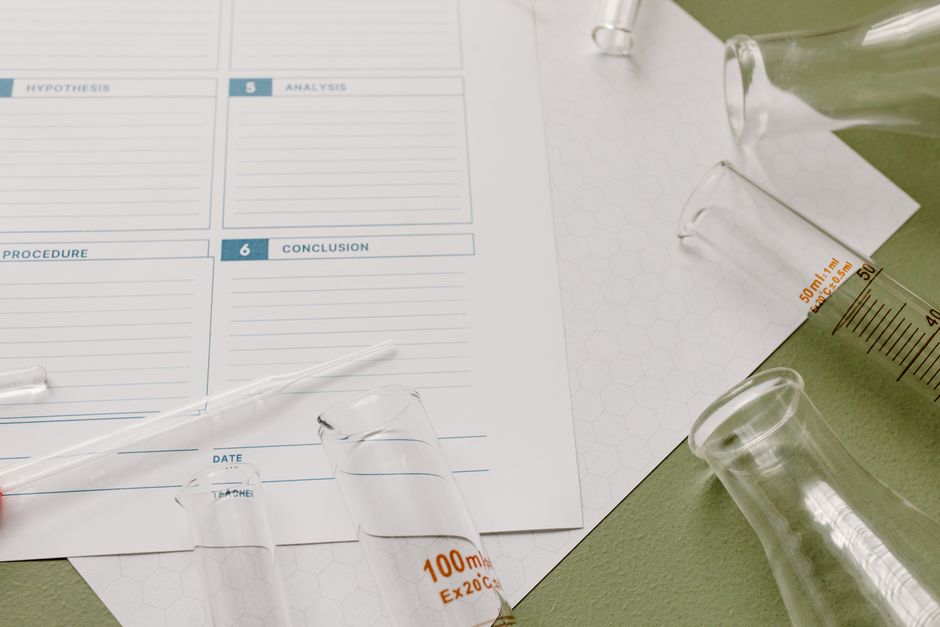
Photo by Tara Winstead on Pexels
Once you have a question, you form a hypothesis. This is a testable explanation or prediction. It's often phrased as an "If... then... because..." statement. For instance, "If I add more fertilizer to a plant, then it will grow taller, because fertilizer provides nutrients for growth." A key feature of a hypothesis is that it must be falsifiable, meaning there must be some way to prove it wrong.
2.3 Designing and Conducting Experiments
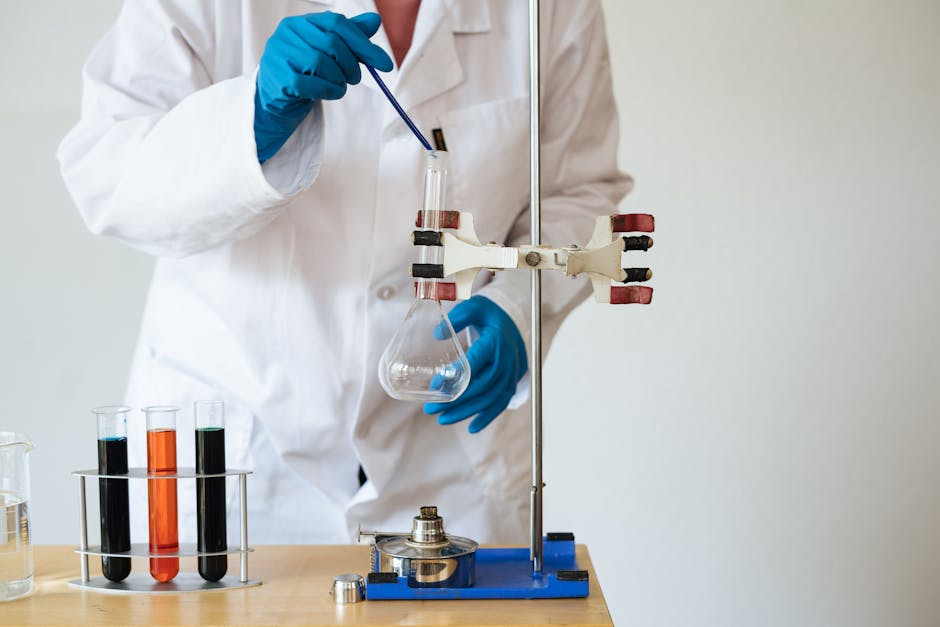
Photo by RF._.studio _ on Pexels
This is where you put your hypothesis to the test. You'll design an experiment to collect data. Good experiments have:
* Independent Variable: The thing you change or manipulate.
* Dependent Variable: The thing you measure that might be affected by your change.
* Controlled Variables: Everything else you keep the same to ensure a fair test.
* Control Group (often): A group that doesn't receive the independent variable, used for comparison.
2.4 Analyzing Data and Drawing Conclusions
Photo by Tara Winstead on Pexels
After collecting data, you'll organize and analyze it. This might involve charts, graphs, or statistical analysis. Based on your analysis, you'll draw a conclusion: Does your data support your hypothesis or not? It's important to be honest with your results, even if they don't match what you expected.
2.5 Communicating Results and Iteration
Scientific findings are shared with others. This allows other scientists to review your work, try to replicate it, and build upon it. Science is rarely a one-shot deal; often, your conclusions lead to new questions, and the cycle of inquiry starts again. This iterative nature is crucial for scientific progress.
Here's a visual representation of this process:
graph TD
    A["Observation/Curiosity"] --> B["Ask a Question"]
    B --> C["Form Hypothesis (Testable Prediction)"]
    C --> D{"Design & Conduct Experiment"}
    D --> E["Collect & Analyze Data"]
    E --> F{"Draw Conclusions (Does data support hypothesis?)"}
    F --> G["Communicate Results"]
    F -- "Hypothesis Not Supported" --> C
    G --> A
3. Worked Example
Let's say you're curious about plant growth.
Observation/Curiosity: You notice some plants grow really tall, and others stay small. You wonder why.
Ask a Question: "Does the amount of sunlight a plant receives affect its height?" (This is specific and measurable.)
Form Hypothesis: "If a plant receives more sunlight, then it will grow taller, because sunlight provides energy for photosynthesis." (This is testable and falsifiable.)
Design & Conduct Experiment:
* You get three identical plants (let's say bean sprouts).
* Independent Variable: Amount of sunlight.
* Dependent Variable: Plant height (measured in cm).
* Controlled Variables: Same type of soil, same amount of water, same pot size, same temperature.
* Groups:
* Plant A: Full sunlight (8 hours/day)
* Plant B: Partial sunlight (4 hours/day)
* Plant C: Low sunlight (1 hour/day - your control group)
* You grow them for three weeks, measuring their height every day.
Collect & Analyze Data: At the end, you find:
* Plant A (full sun) is 15 cm tall.
* Plant B (partial sun) is 10 cm tall.
* Plant C (low sun) is 5 cm tall.
You make a simple bar graph showing these heights.
Draw Conclusions: Your data shows that plants receiving more sunlight did grow taller. So, your data supports your hypothesis.
Communicate Results: You write a report detailing your experiment, data, and conclusion. This might lead you to wonder, "What type of light (e.g., red vs. blue) affects plant height?" – starting the cycle again!
4. Key Takeaways
- Science is a systematic process for understanding the world, not just a collection of facts.
- All scientific inquiry begins with a specific, testable question.
- A hypothesis is a testable prediction that can be proven wrong (falsifiable).
- Experiments are designed to test hypotheses by manipulating one variable and measuring its effect.
- Data analysis helps you determine if your results support your initial hypothesis.
- Scientific knowledge grows through an ongoing cycle of questioning, testing, and refining ideas.
Common Mistakes to Avoid:
- Having a biased hypothesis: Don't only look for evidence that supports what you want to be true.
- Not controlling variables: If too many things change in your experiment, you won't know what caused the outcome.
- Drawing conclusions without enough data: One trial isn't usually enough; repeatability is key.
- Confusing correlation with causation: Just because two things happen together doesn't mean one caused the other.
5. Now Try It
Think about a simple everyday phenomenon you've observed, like why some foods get moldy faster than others, or why certain colors fade in the sun. Formulate one specific, testable question about it. Then, write down a hypothesis in an "If... then... because..." format that attempts to answer your question. Finally, briefly outline how you might design a simple experiment to test your hypothesis, identifying your independent, dependent, and controlled variables. What would success look like?
Frequently asked about Introduction to Scientific Exploration and Inquiry
Get the full Science curriculum
Clone the complete plan to your dashboard for unlimited AI-generated notes, practice quizzes, and a personalised revision schedule.
Create Free Account