Digestion, Absorption, Metabolism, and Energy Balance
From the Food and nutrition curriculum
TL;DR
Digestion breaks food into tiny nutrients, which your body then absorbs for use. Metabolism converts these nutrients into energy or building blocks, while energy balance refers to the relationship between the calories you consume and the calories you burn. Understanding these processes helps you make informed choices about your diet and lifestyle.
1. The Mental Model
Think of your body as a sophisticated factory. Digestion is like the initial breakdown of raw materials, absorption is the loading dock where useful parts enter, and metabolism is the actual factory floor where parts are used or stored. Energy balance is simply keeping track of materials coming in versus materials being used.
2. The Core Material
Your body is amazing at processing food to get all the goodness out of it. It’s a continuous, multi-step process that starts the moment food enters your mouth.
Digestion: Breaking It Down
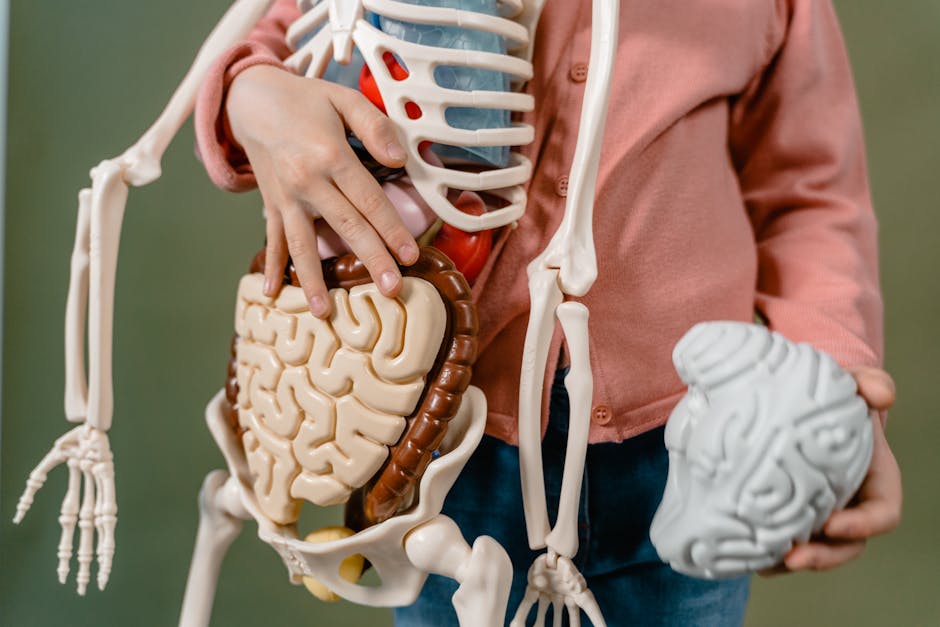
Photo by MART PRODUCTION on Pexels
Digestion is the mechanical and chemical process of breaking down food into smaller molecules that your body can absorb.
- Mechanical Digestion: This involves physical movements like chewing (in your mouth) and churning (in your stomach). It increases the surface area for chemical digestion.
- Chemical Digestion: This uses enzymes to break down large food molecules into their basic building blocks:
- Carbohydrates into simple sugars (like glucose).
- Proteins into amino acids.
- Fats into fatty acids and glycerol.
This process mostly happens in your stomach and small intestine, with help from organs like the pancreas (which produces digestive enzymes) and the liver (which produces bile to help digest fats).
Absorption: Getting It In
Once food is broken down into tiny nutrients, absorption is how these nutrients move from your digestive tract into your bloodstream or lymphatic system.
- Most absorption of nutrients happens in the small intestine. Its inner surface has tiny finger-like projections called villi and even smaller microvilli, which vastly increase the surface area available for absorption.
- Simple sugars, amino acids, and water-soluble vitamins go directly into your bloodstream.
- Fatty acids, glycerol, and fat-soluble vitamins enter the lymphatic system first, eventually making their way to the bloodstream.
- Water and electrolytes are absorbed primarily in the large intestine.
graph TD
    A["Food in Mouth (Chewing)"] --> B["Esophagus (Swallowing)"]
    B --> C["Stomach (Churning & Acid)"]
    C --> D["Small Intestine (Enzymes & Absorption)"]
    D --> E["Nutrients to Bloodstream/Lymph"]
    D --> F["Large Intestine (Water Absorption)"]
    F --> G["Waste Elimination"]
Metabolism: Using and Storing Nutrients

Photo by Markus Winkler on Pexels
Metabolism is the sum of all chemical processes that occur in your body to maintain life. It's essentially how your body uses the absorbed nutrients.
- Catabolism: This is the breaking down of complex molecules (like glucose, fatty acids, amino acids) into simpler ones, releasing energy. Think of it as breaking down a log to release heat.
- Anabolism: This is the building up of complex molecules from simpler ones, which requires energy. Think of it as building a house from bricks – it needs energy (and materials!).
Your body uses the energy released from catabolism for:
* Basal Metabolic Rate (BMR): Energy needed for basic life functions (breathing, circulation, cell maintenance) at rest.
* Thermic Effect of Food (TEF): Energy used to digest, absorb, and metabolize food.
* Physical Activity: Energy expended during movement and exercise.
Energy Balance: Calories In vs. Calories Out

Photo by Spencer Stone on Pexels
Energy balance simply describes the relationship between the energy (calories) you consume from food and beverages, and the energy (calories) your body expends.
- Energy In = Energy Out: You maintain your weight.
- Energy In > Energy Out: You gain weight (excess energy is stored, mainly as fat).
- Energy In < Energy Out: You lose weight (your body uses stored energy).
Understanding energy balance is key to managing your weight. It's not just about what you eat, but also how much you move.
3. Worked Example
Let's imagine you eat a chicken and vegetable stir-fry with rice.
-
Digestion:
- You chew the stir-fry (mechanical digestion).
- In your stomach, enzymes start breaking down the chicken protein and some carbohydrates from the rice.
- In the small intestine, pancreatic enzymes finish breaking down the protein into amino acids, the rice carbohydrates into glucose, and the fats from any oil in the stir-fry into fatty acids and glycerol.
-
Absorption:
- The glucose and amino acids from the chicken and rice quickly pass through the small intestine lining into your bloodstream.
- The fatty acids and glycerol enter the lymphatic system first, then eventually your bloodstream.
- Water and vitamins from the vegetables are also absorbed.
-
Metabolism & Energy Balance:
- Your cells pick up the absorbed glucose. Some is used immediately for energy (catabolism), powering your current activities.
- Any extra glucose might be stored as glycogen in your liver and muscles (anabolism) for later use. If there's still a lot of excess, it can be converted to fat and stored.
- Amino acids are used to build new muscle, repair tissues (anabolism), or create enzymes and hormones. If you ate a lot of protein and don't need it for building, it can also be converted to glucose or fat.
- Fatty acids and glycerol are used for cell membranes, hormone production, or stored as body fat (anabolism) if energy intake exceeds energy expenditure.
If the calories from this meal, combined with all other food you eat that day, are more than the calories you burn through BMR, TEF, and activity, you'll be in positive energy balance and likely gain a little weight over time.
4. Key Takeaways
- Digestion is breaking down food into usable nutrients through mechanical and chemical processes.
- Absorption is how these small nutrients move from your gut into your body systems (bloodstream, lymph).
- Metabolism is the set of chemical reactions that use or store these nutrients for energy and building.
- Catabolism releases energy by breaking down molecules, while anabolism uses energy to build molecules.
- Energy balance is the relationship between the calories you consume and the calories you burn.
- A positive energy balance (more calories in than out) leads to weight gain, while a negative balance leads to weight loss.
Common Mistakes to Avoid:
- Thinking all calories are "bad" – your body needs them for essential functions.
- Believing specific foods don't count towards energy balance; all food contributes.
- Ignoring portion sizes, which are crucial for managing calorie intake.
- Underestimating the energy expended in basic body functions versus intense exercise.
5. Now Try It
For the next 15 minutes, try to mentally trace a typical meal you ate recently (e.g., breakfast or lunch) through the digestion, absorption, and initial metabolic processes. Think about which major nutrients (carbs, proteins, fats) were in the meal, how they would be broken down, where they'd be absorbed, and how your body might use or store them based on your activity level after eating. Success looks like being able to identify at least one example for each stage of digestion and absorption for your chosen meal.
Try it yourself: The digestive system in 3D
Frequently asked about Digestion, Absorption, Metabolism, and Energy Balance
Study this next
Get the full Food and nutrition curriculum
Clone the complete plan to your dashboard for unlimited AI-generated notes, practice quizzes, and a personalised revision schedule.
Save this course free