Structural Loads
From the Fundamentals of Bridge Engineering curriculum
TL;DR
Structural loads are the forces and pressures that a bridge must safely resist throughout its lifespan, categorized primarily into dead loads, live loads, and environmental loads. Understanding these loads is crucial for accurate bridge design, ensuring safety and preventing structural failure. Engineers use design codes and load combinations to account for various load scenarios and predict how a bridge will behave.
1. The Mental Model
Think of a bridge as constantly battling different forces trying to push, pull, or twist it. These forces are the "loads," and your job as an engineer is to make sure the bridge is strong enough to win every battle, every single day, for decades.
2. The Core Material
Structural loads are the backbone of bridge design. You can't design a safe, functional bridge without a thorough understanding of what forces it will experience. We typically categorize loads into three main types:
Dead Loads (DL)
These are the permanent, static loads that never change significantly throughout the bridge's life. They are essentially the weight of the bridge itself and any fixed components.
- Examples:
- Weight of the concrete deck, steel girders, and piers.
- Weight of asphalt pavement, guardrails, and utility lines permanently attached to the bridge.
Live Loads (LL)
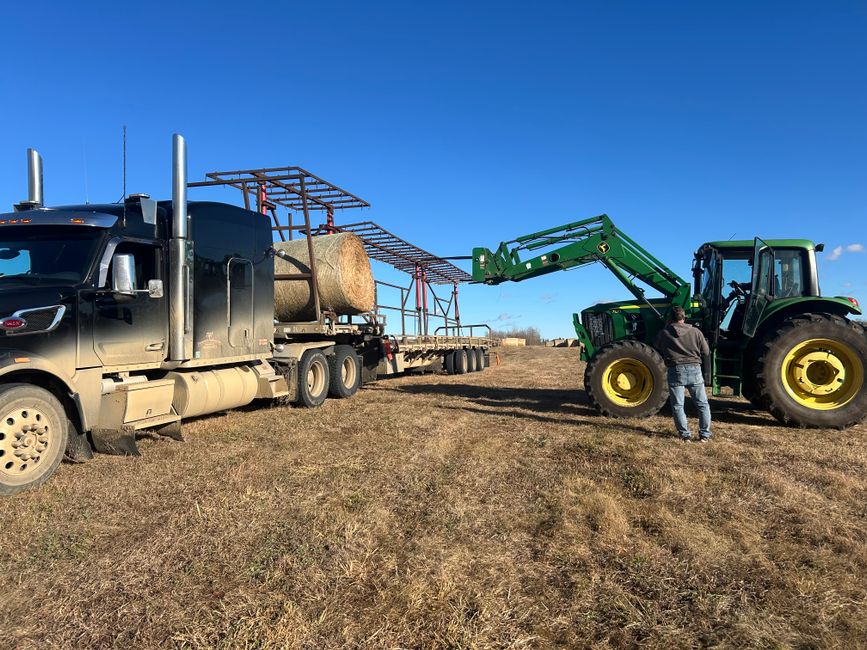
Photo by Shelley on Pexels
These are transient, variable loads that move across or are placed on the bridge. They represent the actual traffic and people the bridge carries. Live loads are dynamic and often cause the most critical design scenarios.
- Examples:
- Vehicles (cars, trucks, trains) – often represented by standardized design trucks or lanes of uniform load.
- Pedestrians.
- Construction equipment during maintenance.
Environmental Loads

Photo by Tom Fisk on Pexels
These loads come from natural phenomena and can be highly variable and sometimes extreme. They're external forces acting on the bridge structure.
- Examples:
- Wind Load (W): Horizontal pressure exerted by wind. Its intensity depends on wind speed, bridge shape, and exposure. Can cause vibrations or even structural instability.
- Seismic Load (EQ): Forces induced by earthquakes, leading to ground acceleration and structural vibrations. Critical in seismically active regions.
- Thermal Loads (T): Expansion and contraction of materials due to temperature changes. Can induce significant stresses if not accommodated by expansion joints.
- Snow and Ice Loads (SN/ICE): Weight of accumulated snow or ice, especially on the deck or cable-stayed elements.
- Water Currents/Hydrodynamic Loads: Forces from flowing water acting on piers, especially during floods.
- Scour: Erosion of soil around bridge foundations due to flowing water, which can undermine support.
Other Less Common (but Important) Loads
- Impact Loads (IM): Dynamic forces from moving vehicles hitting expansion joints or rough surfaces. Usually treated as an amplification of live loads.
- Braking Forces: Longitudinal forces from vehicles accelerating or decelerating on the bridge deck.
- Centrifugal Forces: Lateral forces from vehicles moving along a curved bridge.
- Fatigue Loads: Repeated application of live loads over time can cause material degradation, even if stresses are below the yield strength.
Load Combinations
Because a bridge doesn't experience just one load at a time, engineers use load combinations specified by design codes (like AASHTO LRFD in the US). These combinations specify which loads should be considered simultaneously and with what load factors (multipliers greater than 1.0) to account for uncertainties and ensure a safety margin.
A common simplified principle for load combinations:
graph TD
    A["Identify All Possible Loads"] --> B["Classify Loads (DL, LL, Env, etc.)"]
    B --> C{"Which Loads Act Together?"}
    C -- "Usually DL + LL + Env (e.g., Wind OR Seismic)" --> D["Apply Load Factors (from Codes)"]
    D --> E["Combine Factored Loads"]
    E --> F["Design Bridge for Worst-Case Combination"]
The design process involves calculating the effects (stresses, deflections) of each factored load combination and ensuring the bridge can safely resist the most critical one.
3. Worked Example
Let's consider a simple steel-concrete composite bridge girder supporting a section of deck.
Given:
* Dead Load (DL) from the girder, deck, and railing: 15 kN/m (kilonewtons per meter)
* Live Load (LL) from traffic (equivalent uniform load from AASHTO LRFD for one lane): 9.3 kN/m
* Span length of the girder: 30 m
Goal: Calculate the maximum factored moment at mid-span using a simplified AASHTO LRFD Strength I load combination (for maximum flexure): $1.25 \times DL + 1.75 \times LL$.
Steps:
-
Calculate Factored Dead Load:
$Factored\_DL = 1.25 \times 15 \text{ kN/m} = 18.75 \text{ kN/m}$ -
Calculate Factored Live Load:
$Factored\_LL = 1.75 \times 9.3 \text{ kN/m} = 16.275 \text{ kN/m}$ -
Calculate Total Factored Uniform Load (w_u):
$w_u = Factored\_DL + Factored\_LL = 18.75 \text{ kN/m} + 16.275 \text{ kN/m} = 35.025 \text{ kN/m}$ -
Calculate Maximum Moment (for a simply supported beam with uniform load):
The formula for maximum moment (M) at mid-span for a simply supported beam with a uniform load (w) over a span (L) is $M = (w \times L^2) / 8$.
$M_u = (35.025 \text{ kN/m} \times (30 \text{ m})^2) / 8$
$M_u = (35.025 \text{ kN/m} \times 900 \text{ m}^2) / 8$
$M_u = 31522.5 \text{ kNm} / 8$
$M_u = 3940.3 \text{ kNm}$
This $3940.3 \text{ kNm}$ is the factored moment the girder must be designed to safely resist, representing the combined and amplified effects of the dead and live loads. You'd then compare this value to the girder's moment capacity.
4. Key Takeaways
- Loads are fundamental forces acting on a bridge, categorized as dead, live, and environmental.
- Dead loads are permanent (weight of the bridge itself), while live loads are transient (traffic).
- Environmental loads (wind, seismic, thermal) come from natural phenomena and are often critical.
- Design codes specify load factors and load combinations to account for uncertainties and multiple simultaneous forces.
- Ignoring any significant load or improperly combining them can lead to unsafe or over-designed structures.
Common Mistakes to Avoid:
- Forgetting to apply load factors, which underestimate the design forces.
- Not considering the most critical load combination for a specific structural element.
- Underestimating environmental loads, especially in areas prone to extremes (e.g., high wind, seismic activity).
- Treating dynamic live loads as purely static, neglecting impact or fatigue effects.
5. Now Try It
Imagine you're designing a pedestrian bridge in a snowy, windy area. List at least two specific dead loads, two specific live loads, and two specific environmental loads you'd need to consider. For each load, briefly explain why it's important for this particular bridge type and location. Success means you've identified appropriate loads for a pedestrian bridge in the given environment and justified your choices simply.
Frequently asked about Structural Loads
Study this next
Get the full Fundamentals of Bridge Engineering curriculum
Clone the complete plan to your dashboard for unlimited AI-generated notes, practice quizzes, and a personalised revision schedule.
Save this course free