"timeframe": "Days 1-4",
From the plants curriculum
TL;DR
The first four days are critical for a plant's journey from seed to seedling, primarily focusing on germination and initial root development. During this time, the seed absorbs water, the embryo activates, and the radicle emerges to anchor the plant and seek nutrients. Environmental factors like temperature, water, and light are crucial for successful early growth.
1. The Mental Model
Think of Days 1-4 as a tiny plant's "wakeup call" and first steps. The seed needs to drink water to start growing, then push out its first root to grab onto the soil and find food.
2. The Core Material
The initial days of a plant's life are all about germination – the process where a seed sprouts and develops into a seedling. This isn't a single event but a sequence of physiological changes.
Day 1: Imbibition and Activation
On Day 1, the most crucial event is imbibition. This is when the dry seed rapidly absorbs water from its environment. This water uptake causes the seed to swell. Inside, the embryo (the tiny plant within the seed) begins to activate its metabolic processes. Stored food reserves (like starches, fats, and proteins) start to be broken down into usable energy. You won't see much, if any, external change yet, but a lot is happening internally.
Day 2: Metabolic Activity and Radicle Swelling
With sufficient water absorbed, the seed's metabolic rate increases significantly. Enzymes that were dormant now become active, breaking down stored food even more efficiently. The embryo uses this energy for cell division and growth. You might start to see a very slight swelling or softening of the seed coat, especially if you're observing closely. The radicle, which is the embryonic root, begins to swell and prepare for emergence.
Day 3: Radicle Emergence
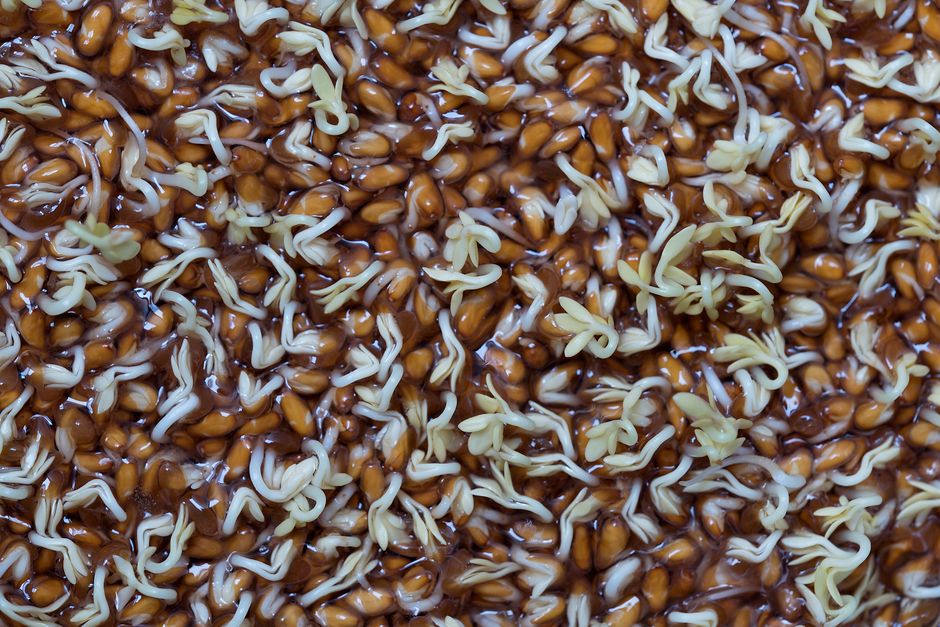
Photo by Fez Brook on Pexels
This is often the most exciting day for visible progress. The swelling of the radicle creates pressure against the seed coat. Eventually, the radicle breaks through the seed coat. This is the official start of germination in many plants. The emerging radicle's primary job is to grow downwards into the soil, anchoring the nascent plant and beginning the search for water and nutrients.
Day 4: Root Growth and Early Hypocotyl Development

Photo by Orsys _tography on Pexels
By Day 4, the radicle is actively growing downwards, establishing the primary root system. This anchorage is vital for the plant's stability. In many dicots (plants with two seed leaves), the hypocotyl (the part of the stem below the cotyledons) also begins to elongate. Depending on the plant species, the hypocotyl might start pushing upwards, carrying the cotyledons (seed leaves) towards the soil surface. Monocots (plants with one seed leaf) often have a slightly different pattern where the coleoptile (a protective sheath) emerges first.
Here's a diagram showing this early sequence:
graph TD
    A["Seed (Day 0)"] --> B["Day 1: Water Absorption (Imbibition)"]
    B --> C["Day 2: Metabolic Activation & Radicle Swelling"]
    C --> D["Day 3: Radicle Emergence"]
    D --> E["Day 4: Primary Root Growth & Hypocotyl Elongation"]
Factors affecting these early days include:
* Water: Essential for imbibition and metabolic activity.
* Temperature: Each seed has an optimal temperature range for germination. Too cold or too hot can prevent or slow it.
* Oxygen: Necessary for aerobic respiration to generate energy.
* Light: While some seeds need light to germinate and others need darkness, many are indifferent during the very early stages.
3. Worked Example
Let's consider planting a bean seed (a common dicot) in moist soil at room temperature.
Day 0 (Planting): You place a dry bean seed about an inch deep in consistently moist potting mix.
Day 1: The bean seed starts absorbing water. It swells, becoming noticeably plumper. Internally, enzymes become active, preparing to break down the stored food.
Day 2: The seed continues to swell. You might notice the seed coat becoming slightly softer or stretched. Energy from stored reserves is being used for cell growth within the embryo, particularly in the radicle.
Day 3: You gently check the seed. A tiny, white tip has pushed through the seed coat. This is the radicle, the primary root, emerging and starting to grow downwards into the soil.
Day 4: The radicle is now several millimeters long, anchoring the seed. You might also notice a slight upward curve or push from the hypocotyl as it starts its journey towards the surface, aiming to pull the cotyledons up.
4. Key Takeaways
- Germination starts with imbibition, where the dry seed absorbs water and swells.
- Water triggers metabolic activity, converting stored food into energy for growth.
- The radicle (embryonic root) is usually the first part to emerge, anchoring the plant.
- The hypocotyl (embryonic stem) often elongates next, pushing towards the surface.
- Consistent moisture, appropriate temperature, and oxygen are vital for success.
- Different plant species have variations in their exact germination timing and needs.
- Many seeds won't show external changes until Day 3 or 4, but active processes are happening.
Common Mistakes to Avoid:
- Too much water: Overwatering can drown seeds by depriving them of oxygen.
- Too little water: Seeds won't imbibe or germinate if the soil dries out.
- Fluctuating temperatures: Inconsistent temperatures can stress the seed or slow germination.
- Disturbing the seed too often: Constantly digging up seeds can damage delicate radicles.
5. Now Try It
Take 3-5 radish seeds and plant them in a small pot with moist potting soil. Plant them about 1/2 inch deep. For the next four days, ensure the soil stays consistently moist (not soggy). On Day 3 and Day 4, carefully and gently (like a surgeon!) use a toothpick to uncover one or two seeds to observe their progress, then re-cover them.
What success looks like: You should observe the seeds swelling by Day 2, and by Day 3 or Day 4, you should see a tiny white root (the radicle) emerging from at least some of the seeds.
Frequently asked about "timeframe": "Days 1-4",
More from plants
Get the full plants curriculum
Clone the complete plan to your dashboard for unlimited AI-generated notes, practice quizzes, and a personalised revision schedule.
Save this course free