Examination Preparation and Practice
From the nche222 curriculum
TL;DR
Preparing for exams isn't just about studying; it's about strategizing how you learn, practice, and manage your time effectively. You'll build confidence by understanding the exam structure, actively practicing with past questions, and refining your answers. A systematic approach helps you cover all bases and perform your best when it counts.
1. The Mental Model
Think of exam prep like training for a marathon. You don't just run on race day; you build stamina, practice pacing, and learn the course over time. Similarly, for exams, you're building your knowledge and skills, practicing under simulated conditions, and learning the "course" (the exam paper) to perform optimally.
2. The Core Material
Preparing for an exam effectively involves several key stages, from understanding what's expected to the final review.
2.1 Understand the Exam

Photo by RDNE Stock project on Pexels
Before you even open a textbook, know what you're up against. Look for:
* Format: Is it multiple-choice, essay, short answer, problem-solving, or a mix?
* Duration: How much time do you have? This directly impacts how much you can write or how many problems you can solve.
* Sections and Weighting: Which topics are more important? Are some sections worth more marks? Prioritize your study time accordingly.
* Topics Covered: Get a clear syllabus or list of topics. This helps you focus your efforts.
* Allowed Materials: Can you bring a calculator, formula sheet, or dictionary?
2.2 Active Recall and Spaced Repetition
Don't just re-read notes. Active recall means actively retrieving information from your memory (e.g., trying to explain a concept without looking at your notes). Spaced repetition involves reviewing material at increasing intervals over time to strengthen memory. Flashcards (physical or digital) are excellent tools for this.
2.3 Practice with Past Papers
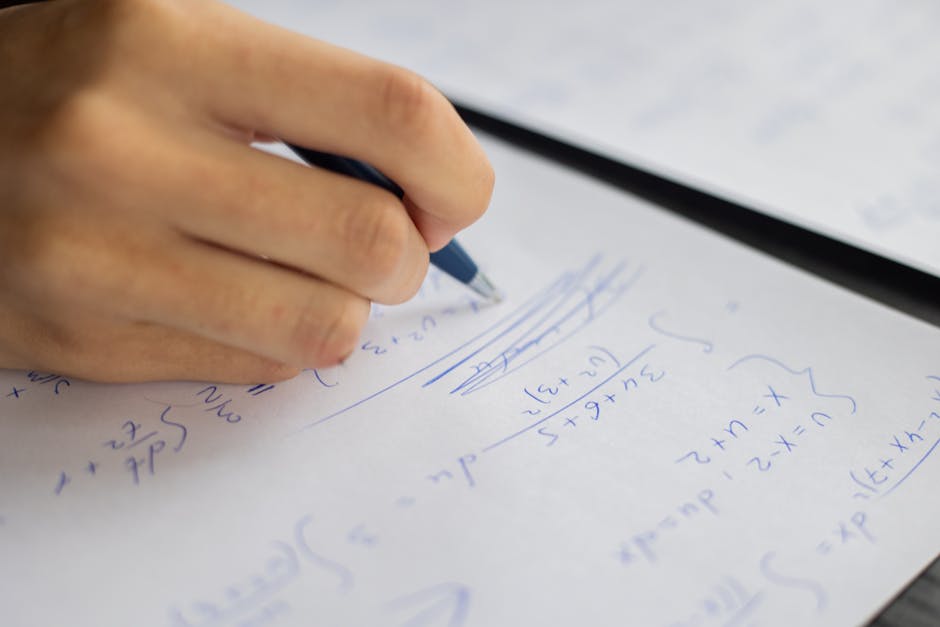
Photo by Monstera Production on Pexels
This is crucial. Past papers reveal common question types, marking schemes, and time constraints.
* Simulate Exam Conditions: Try to do a full past paper within the time limit, without notes. This builds endurance and helps you manage time during the actual exam.
* Review Answers Thoroughly: Don't just check if you got it right or wrong. Understand why your answer was correct or incorrect. Look at model answers if available.
* Identify Weak Areas: If you consistently struggle with a specific topic or question type, that's your cue to revisit those areas.
Here's a simplified process flow for preparing:
graph TD
    A["Understand Exam Structure & Syllabus"] --> B["Create Study Schedule & Goals"]
    B --> C["Active Learning (Notes, Summaries, Flashcards)"]
    C --> D{"Practice with Past Papers?"}
    D -- "Yes, Time Yourself" --> E["Review Answers & Marking Scheme"]
    E --> F{"Identify Weaknesses?"}
    F -- "Yes" --> C
    F -- "No, Confident" --> G["Targeted Revision & Consolidation"]
    G --> H["Final Review (Spaced Repetition)"]
    H --> I["Exam Day Readiness"]
2.4 Time Management during the Exam

Photo by Andy Barbour on Pexels
Once in the exam, your preparation helps you manage the clock.
* Allocate Time per Question: Based on marks, give each question a rough time limit. Stick to it.
* Read All Questions First: Quickly scan the entire paper to grasp the scope and identify easy marks or questions you can answer well.
* Don't Get Stuck: If you're struggling with a question, make a note, move on, and come back to it if you have time. Don't waste valuable minutes.
3. Worked Example
Let's say you have an NCHE222 exam in "Quantitative Methods."
- Understand the Exam: The syllabus states it's a 2-hour exam, 100 marks. Section A: 40 marks (20 MCQs, 2 marks each). Section B: 60 marks (3 long-answer problems, 20 marks each). Topics include Probability, Statistics, and Financial Mathematics, each roughly one-third of the content.
- Study Schedule: You allocate more time to long-answer problem practice, as it's 60% of the paper. You create flashcards for key formulas (e.g., standard deviation, NPV, Z-score).
- Active Learning: You summarize each topic, focusing on problem-solving steps. For probability, you might draw tree diagrams for conditional probability. For financial maths, you practice using your calculator for annuities.
- Practice: You find two past papers.
- Paper 1 (Untimed): You work through it, referring to notes when stuck, focusing on understanding the solutions. You notice you struggle with hypothesis testing problems.
- Paper 2 (Timed): You sit down with a timer, no notes. You allocate:
- 20 MCQs: 30 minutes (1.5 mins/Q)
- 3 Long Answers: 90 minutes (30 mins/Q)
- 15 minutes buffer for review/difficult questions.
You finish the MCQs in 25 minutes, giving you extra time for the long questions. You get stuck on a financial math problem (Q5), spend too long, and only partially complete the last question.
- Review: You check Paper 2 against the solutions. You realize your hypothesis testing errors were due to misinterpreting the null hypothesis. For Q5, you incorrectly applied the formula for an ordinary annuity instead of an annuity due. Your time allocation for long questions was good, but you need to be stricter about moving on.
- Refine: You dedicate a session to practicing hypothesis testing and distinguishing annuity types. You plan to practice time allocation by doing more problems under strict time limits, even if it's just one long question.
4. Key Takeaways
- Start early; consistent, smaller study sessions are more effective than cramming.
- Know your enemy: thoroughly understand the exam format, duration, and marking scheme.
- Active recall and spaced repetition are your best friends for cementing knowledge.
- Practice under timed conditions using past papers to build endurance and identify weak spots.
- Review your practice answers critically; understand why you made mistakes.
- Develop a strategy for managing your time effectively during the actual exam.
- Prioritize topics based on their weighting in the exam.
Common Mistakes to Avoid:
- Passive reading: Just re-reading notes without engaging with the material won't stick.
- Ignoring past papers: Missing out on crucial insights into exam style and common questions.
- Not practicing under timed conditions: Leading to poor time management and unfinished papers on exam day.
- Cramming: Overloading your brain just before the exam leads to poor retention and high stress.
- Focusing only on strengths: Neglecting weak areas will cost you marks.
5. Now Try It
Take one topic from your NCHE222 syllabus that you find challenging. For this topic, spend 15 minutes doing the following:
1. Active Recall: Without looking at your notes, write down everything you remember about the topic (key definitions, formulas, steps).
2. Self-Assessment: Compare what you wrote with your actual notes. Identify 1-2 specific areas where your recall was weak or inaccurate.
3. Targeted Practice: Find one practice question related to those weak areas. Attempt it, aiming to apply the correct understanding you just reinforced.
Success looks like: You've accurately identified a gap in your knowledge for that challenging topic and have taken a concrete step to address it through targeted practice.
Frequently asked about Examination Preparation and Practice
More from nche222
Get the full nche222 curriculum
Clone the complete plan to your dashboard for unlimited AI-generated notes, practice quizzes, and a personalised revision schedule.
Save this course free