Introduction to Human Skeleton and Musculature
From the nursing curriculum
TL;DR
Your skeleton is the sturdy framework of your body, providing support, protection, and movement. Muscles attach to bones and contract to create all your movements, from walking to breathing. Together, the skeletal and muscular systems enable you to interact with the world around you.
1. The Mental Model
Think of your body like a complex machine. Your bones are the frame, giving it shape and holding everything together. Your muscles are like the motors and ropes that pull on the frame, making it move.
2. The Core Material
The human body has two amazing systems that work hand-in-hand: the skeletal system and the muscular system.
The Skeletal System
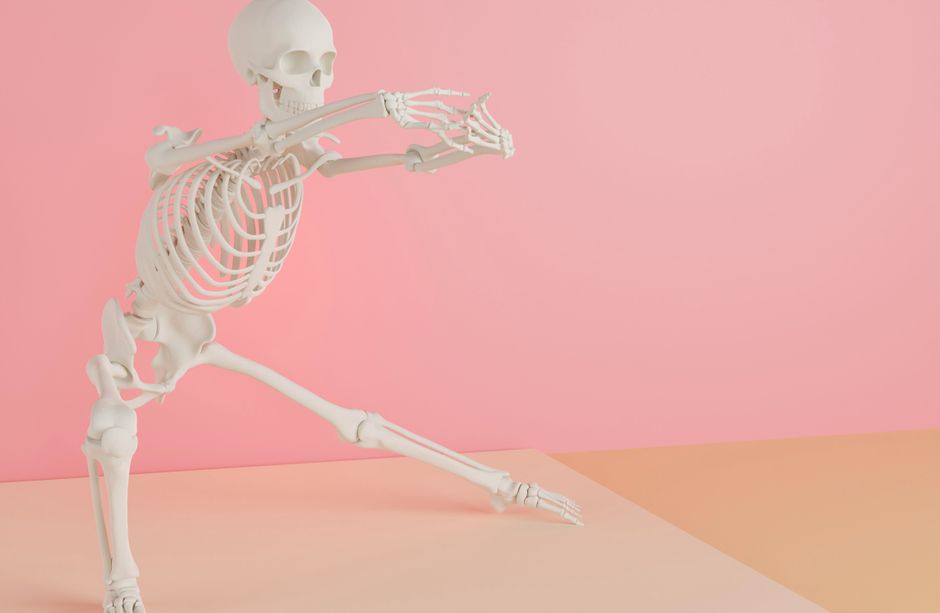
Photo by dada _design on Pexels
Your skeleton is made up of 206 bones (in adults). It has several vital jobs:
* Support: It's your body's internal scaffold, keeping you upright.
* Protection: It shields your delicate organs (e.g., your skull protects your brain, your ribs protect your heart and lungs).
* Movement: Bones act as levers, with joints as fulcrums, allowing movement when muscles pull on them.
* Blood Cell Production: Bone marrow inside some bones produces red blood cells, white blood cells, and platelets.
* Mineral Storage: Bones store important minerals like calcium and phosphate.
Bones come in different shapes:
* Long bones: Like those in your arms and legs (femur, humerus).
* Short bones: Cube-shaped, like those in your wrist and ankle (carpals, tarsals).
* Flat bones: Thin, flattened, and often curved, like your skull bones or ribs.
* Irregular bones: Complex shapes, like your vertebrae or hip bones.
Joints are where two or more bones meet. They allow different degrees of movement and are classified by their structure and how much movement they permit:
* Fibrous joints: Don't move much (e.g., sutures in your skull).
* Cartilaginous joints: Allow limited movement (e.g., between vertebrae).
* Synovial joints: Allow a lot of movement and are the most common type (e.g., knee, shoulder). These have a joint capsule filled with synovial fluid to lubricate movement.
The Muscular System
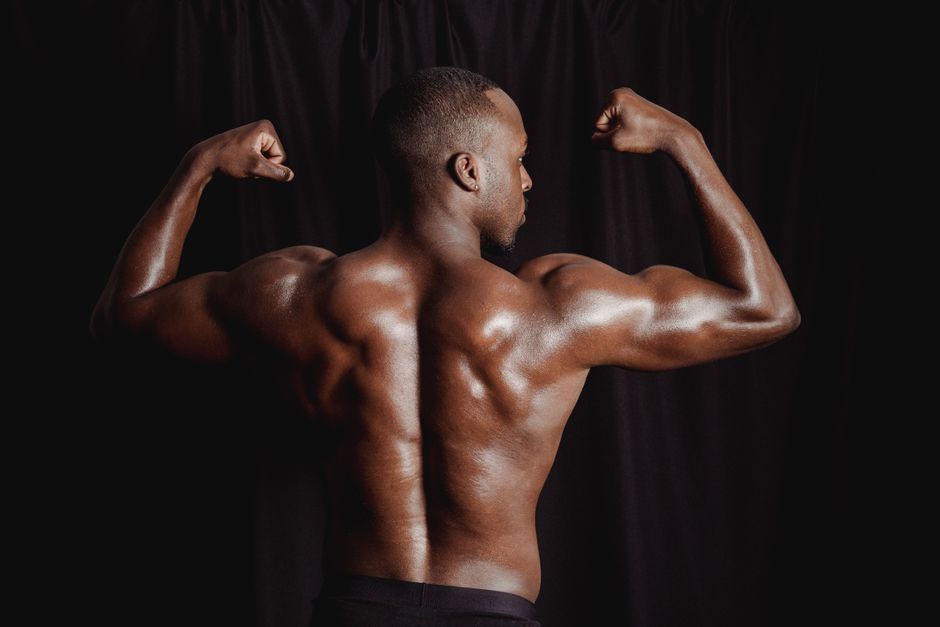
Photo by Mike Jones on Pexels
Your muscles are the engines of your body, responsible for all movement. There are three types of muscle tissue:
* Skeletal muscle: These are the muscles you can consciously control (voluntary). They attach to bones via tendons and are responsible for moving your limbs, posture, and facial expressions. They look striped (striated) under a microscope.
* Smooth muscle: Found in the walls of internal organs like your stomach, intestines, and blood vessels. You can't consciously control these (involuntary). They help with processes like digestion and regulating blood flow.
* Cardiac muscle: Found only in your heart. It's also involuntary and striated, but specialized to pump blood continuously.
Skeletal muscles work by contracting (shortening) and relaxing (lengthening). They often work in pairs: one muscle contracts while its opposite relaxes to produce movement (e.g., your biceps contracts to bend your arm, while your triceps relaxes; to straighten your arm, the triceps contracts and the biceps relaxes).
Here's how these two systems work together:
graph TD
    A["Brain & Spinal Cord (Nervous System)"] --> B["Send Signals"];
    B --> C["Skeletal Muscles"];
    C --> D["Contract/Relax"];
    D --> E["Pull on Tendons"];
    E --> F["Move Bones at Joints"];
    F --> G["Body Movement"];
    G --> H["Proprioception (Feedback to Brain)"];
    H --> A;
3. Worked Example
Imagine you want to pick up a pen from your desk.
1. Your brain sends a signal down your nerves to the muscles in your arm and hand.
2. Specific skeletal muscles (like your biceps and forearm muscles) receive these signals and contract.
3. Their tendons (strong, cord-like tissues) pull on the bones of your forearm and fingers.
4. Your elbow joint and finger joints act as pivot points, allowing your forearm to bend and your fingers to grasp.
5. The bones provide the rigid levers that actually move.
6. You successfully pick up the pen, a coordinated effort between your skeletal and muscular systems, all directed by your nervous system.
4. Key Takeaways
- Your skeleton provides support, protection, and allows for movement.
- Bones also store minerals and produce blood cells.
- Joints are crucial connections between bones that enable different types of movement.
- Muscles generate force through contraction, pulling on bones to create movement.
- There are three types of muscle: skeletal (voluntary), smooth (involuntary, internal organs), and cardiac (involuntary, heart).
- Skeletal muscles attach to bones via tendons and often work in opposing pairs.
Common mistakes to avoid:
* Confusing tendons (muscle to bone) with ligaments (bone to bone).
* Forgetting that bones are living tissues, not just inert structures.
* Thinking that muscles push bones; they always pull.
* Not recognizing the role of the nervous system in controlling muscle movement.
5. Now Try It
Take a few minutes to identify some major bones and muscles on yourself. Touch your humerus (upper arm bone), radius and ulna (forearm bones), and your femur (thigh bone). Then, try flexing your biceps (front of upper arm) and triceps (back of upper arm). Feel how they contract. Imagine how the different types of joints (like your knee or shoulder vs. your skull) allow different movements. What movements do your hand bones (carpals, metacarpals, phalanges) and muscles allow you to do right now?
Frequently asked about Introduction to Human Skeleton and Musculature
Study this next
Get the full nursing curriculum
Clone the complete plan to your dashboard for unlimited AI-generated notes, practice quizzes, and a personalised revision schedule.
Save this course free