Government Intervention in Markets and Market Failures
From the intro to eco curriculum
TL;DR
Sometimes free markets don't allocate resources efficiently, leading to "market failures." Governments can step in to correct these failures or pursue other goals, but intervention also has potential downsides. Understanding when and how governments intervene helps us analyze economic policy.
1. The Mental Model
Think of the economy as a complex machine. Usually, it runs pretty well on its own (the invisible hand), but sometimes a gear slips or a part breaks down (market failure). That's when a mechanic (the government) might step in to fix it.
2. The Core Material
Markets are generally good at allocating resources efficiently, but they're not perfect. Market failure occurs when the free market fails to produce an efficient outcome. This means resources aren't being used in a way that maximizes overall societal welfare.
Common Types of Market Failure

Photo by Ann H on Pexels
-
Externalities: These are costs or benefits of production or consumption that affect a third party not directly involved in the transaction.
- Negative Externalities: When production or consumption imposes a cost on a third party. Think pollution from a factory (cost to society) or loud music from a neighbor (cost to you). The market tends to overproduce goods with negative externalities because the producers don't pay the full social cost.
- Positive Externalities: When production or consumption provides a benefit to a third party. Think vaccination (protects others too) or education (benefits society broadly). The market tends to underproduce goods with positive externalities because the producers/consumers don't capture the full social benefit.
-
Public Goods: These goods are both non-rivalrous (one person's consumption doesn't reduce another's ability to consume it) and non-excludable (it's hard to prevent people from consuming it even if they don't pay). Examples include national defense, street lighting, or clean air. Because of non-excludability, people can "free ride," leading to under-provision by the market.
-
Asymmetric Information: This happens when one party in a transaction has more or better information than the other.
- Adverse Selection: Occurs before a transaction, where one party has private information that, if known, would affect the terms of the deal. (e.g., a sick person being more likely to buy health insurance).
- Moral Hazard: Occurs after a transaction, where one party changes their behavior because they're protected from the full consequences of their actions (e.g., someone with car insurance driving less carefully).
-
Monopoly Power / Imperfect Competition: When a single firm or a small group of firms has significant control over a market. This can lead to higher prices, lower output, and reduced innovation compared to a competitive market, as these firms don't face enough competitive pressure.
Government Interventions to Address Market Failures
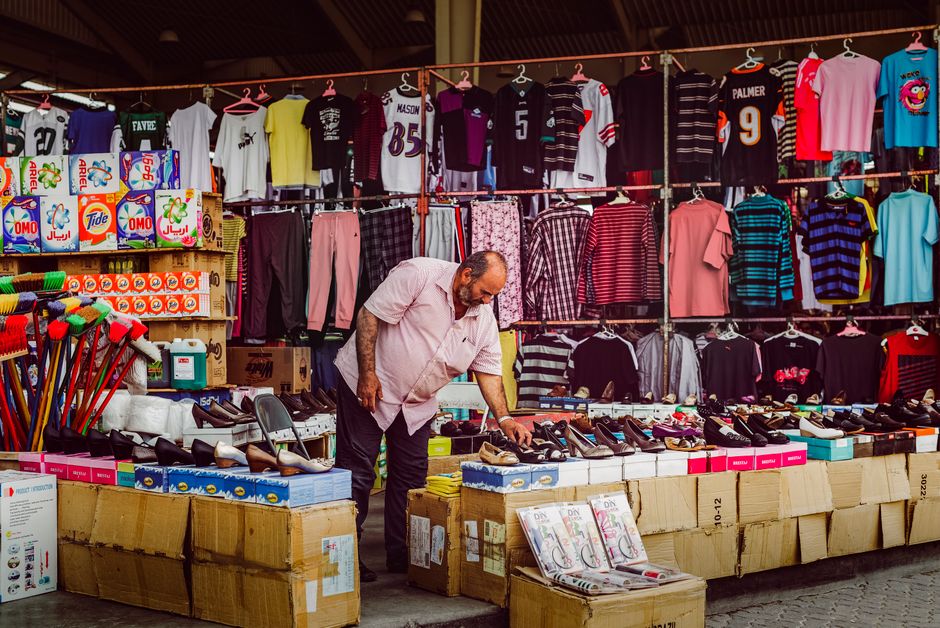
Photo by Quintin Gellar on Pexels
Governments have various tools to try and correct market failures:
-
Taxes and Subsidies:
- Taxes: Can be used to discourage activities with negative externalities (e.g., a carbon tax on pollution). This internalizes the external cost, making producers/consumers pay the true social cost.
- Subsidies: Can be used to encourage activities with positive externalities (e.g., subsidies for education or renewable energy). This lowers the cost, encouraging more production/consumption.
-
Regulation:
- Direct rules and laws (e.g., environmental standards, safety regulations, minimum wage laws). These can directly limit negative externalities or ensure certain quality/safety standards.
-
Provision of Public Goods:
- Governments often directly provide public goods like national defense, roads, and parks, funded through taxes, because the private market won't provide them efficiently.
-
Information Provision:
- Governments can provide information to consumers to correct for asymmetric information (e.g., food labeling, warning labels on products, public health campaigns).
-
Antitrust Laws:
- To prevent monopolies and promote competition (e.g., breaking up cartels, reviewing mergers).
Other Reasons for Government Intervention (Beyond Market Failure)
Even when markets are efficient, governments might intervene for other reasons:
- Income Redistribution: To reduce inequality through progressive taxation, welfare programs, unemployment benefits.
- Stabilization: To manage macroeconomic issues like inflation, unemployment, and economic growth through fiscal and monetary policy.
- Promoting Desirable Social Outcomes: For example, ensuring access to healthcare or education, regardless of ability to pay.
Government Failure

Photo by Markus Winkler on Pexels
It's important to remember that government intervention isn't always perfect either. Government failure occurs when government intervention leads to a less efficient or less desirable outcome than the market would have produced. This can happen due to:
- Information Problems: Governments might lack the full information needed to make optimal decisions.
- Lobbying and Special Interests: Policy can be influenced by powerful groups seeking benefits for themselves rather than for broader society.
- Bureaucracy and Inefficiency: Government programs can sometimes be slow, wasteful, or poorly managed.
- Unintended Consequences: Policies can have unforeseen negative effects.
Here's a diagram illustrating the decision-making process for government intervention:
graph TD
    A["Is there a Market Failure?"] --> B{What kind of Market Failure?};
    B --> C{Externalities};
    B --> D{Public Goods};
    B --> E{Asymmetric Info};
    B --> F{Monopoly Power};

    C --> C1["Negative: Pollution, Congestion"];
    C --> C2["Positive: Vaccinations, Education"];

    D --> D1["Non-rival, Non-excludable"];

    E --> E1["Adverse Selection, Moral Hazard"];

    F --> F1["High Prices, Low Output"];

    A --> G{Are there Other Policy Goals?};
    G --> G1["Equity, Stability, Social Welfare"];

    C1 --> H["Gov Tools: Taxes, Regulations"];
    C2 --> H;
    D1 --> H["Gov Tools: Direct Provision, Subsidies"];
    E1 --> H["Gov Tools: Info Provision, Regulations"];
    F1 --> H["Gov Tools: Antitrust Laws, Regulation"];
    G1 --> H;

    H --> I["Evaluate Potential for Government Failure"];
    I --> J{Implement or Reconsider?};
3. Worked Example
Let's consider the market for plastic single-use bags.
-
Market Failure: These bags create a negative externality. Their production uses resources and their disposal (often in landfills or oceans) causes significant environmental damage and litter, impacting society beyond the direct cost to the bag user or producer. The private cost of using a bag is low, so people tend to use many.
-
Government Intervention: Many governments have intervened with taxes (fees) or bans.
-
Tax/Fee: Imagine a city imposes a 10-cent fee on each single-use plastic bag.
- Impact: This increases the private cost of using a plastic bag. Consumers are now incentivized to bring their own reusable bags or simply use fewer bags. The fee "internalizes" some of the external environmental cost into the price the consumer pays.
- Outcome: We'd expect a decrease in plastic bag consumption, leading to less litter and environmental damage. The revenue from the tax could even be used for environmental clean-up.
-
Ban: Alternatively, a government might simply ban single-use plastic bags altogether.
- Impact: This completely eliminates the use of these bags, forcing consumers and businesses to adopt alternatives.
- Outcome: Similar to a tax, but more absolute. While effective for the specific problem, it might cause inconvenience or slightly higher costs for consumers initially as they adapt.
-
-
Potential for Government Failure:
- Information Problems: Is 10 cents the "correct" fee to perfectly internalize the environmental cost? It's hard to know precisely.
- Unintended Consequences: A ban might lead to increased use of paper bags (which have their own environmental footprint) or heavier, reusable plastic bags that are discarded less frequently but have a larger environmental impact per bag if not reused enough times.
This example shows how an intervention aims to shift market behavior away from an inefficient outcome and towards a more socially desirable one, while also highlighting the practical challenges.
4. Key Takeaways
- Market failures occur when free markets don't efficiently allocate resources, often due to externalities, public goods, asymmetric information, or monopoly power.
- Government intervention aims to correct market failures, redistribute income, stabilize the economy, or achieve social goals.
- Common tools for intervention include taxes, subsidies, regulations, direct provision of goods, and antitrust laws.
- Externalities are costs/benefits affecting third parties; taxes discourage negative ones, subsidies encourage positive ones.
- Public goods (non-rival, non-excludable) are often underprovided by the market, so governments step in.
- Government failure is when intervention leads to worse outcomes, often due to information gaps, special interests, or inefficiency.
- Policy analysis requires weighing the benefits of intervention against potential government failures.
Common Mistakes to Avoid
- Assuming all market outcomes are efficient; always look for signs of market failure.
- Believing that government intervention is always the answer; it has its own costs and potential for failure.
- Confusing market failure with social inequality; while related, they are distinct concepts.
- Overlooking unintended consequences of government policies.
5. Now Try It
Think about air pollution from cars.
1. Identify the market failure involved.
2. Suggest two different government interventions that could address this failure, explaining how each would work.
3. For each intervention, briefly consider one potential positive and one potential negative consequence (i.e., opportunity for government success or failure).
Success looks like clearly identifying the negative externality, proposing concrete and distinct interventions (like a pollution tax or emission standards), and critically evaluating their likely effects.
Frequently asked about Government Intervention in Markets and Market Failures
Study this next
Get the full intro to eco curriculum
Clone the complete plan to your dashboard for unlimited AI-generated notes, practice quizzes, and a personalised revision schedule.
Save this course free