Introduction to Economic Principles and Scarcity
From the Economics curriculum
TL;DR
Economics is about how societies manage their limited resources to satisfy unlimited wants. Scarcity is the fundamental problem, forcing choices and trade-offs in what to produce, how, and for whom. These choices drive economic principles like opportunity cost and resource allocation.
1. The Mental Model
Think of economics as the study of difficult choices. We have many desires but not enough of everything to fulfill them all, so we constantly have to decide what to do without. This basic reality shapes how societies organize themselves.
2. The Core Material
At its heart, economics grapples with scarcity. This isn't just about money; it's about anything desirable that isn't available in infinite quantities. Time, natural resources, even clean air – they're all scarce.
Because resources are scarce, we're forced to make choices. Every choice has a cost, not just in money, but in what you give up. This leads to several core economic principles:
Scarcity and Choices

Photo by K on Pexels
Scarcity means that our wants and needs exceed the resources available to satisfy them. If everything were abundant, there'd be no need for economics! But since it's not, individuals, businesses, and governments must decide:
* What to produce? Should we make more cars or more hospitals?
* How to produce it? Should we use more machines or more labor?
* For whom to produce? Who gets to enjoy the goods and services produced?
Opportunity Cost

Photo by https://kaboompics.com/ on Pexels
This is one of the most crucial concepts. The opportunity cost of any choice is the value of the next best alternative you gave up. It's not just the money you spent, but what you could have had instead. For example, if you spend an hour studying economics, the opportunity cost might be the hour you could have spent working to earn money, or relaxing with friends.
Resources (Factors of Production)
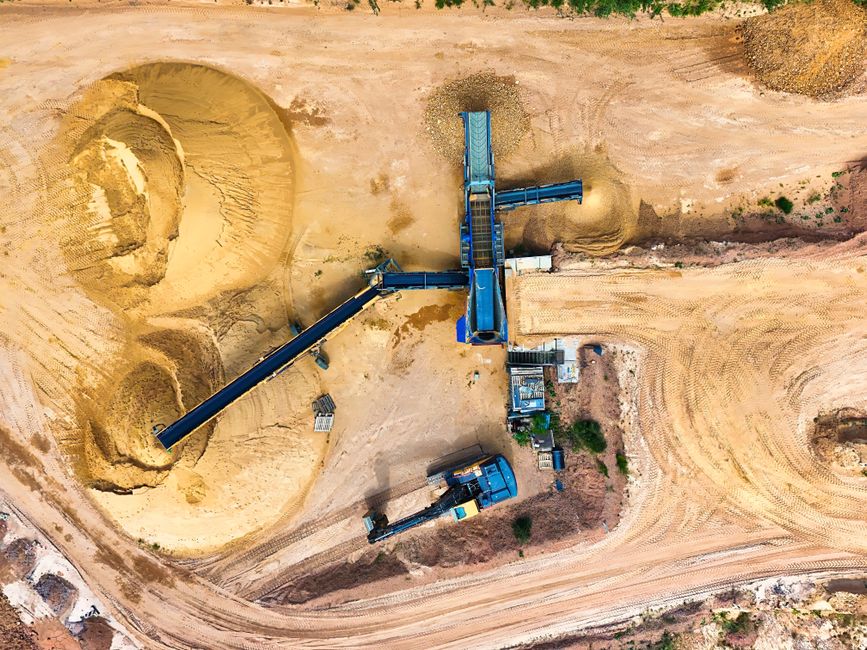
Photo by Volker Braun on Pexels
Economists classify resources into four main categories, often called factors of production:
1. Land: Natural resources like actual land, water, oil, minerals, forests.
2. Labor: The physical and mental effort people contribute to production.
3. Capital: Manufactured goods used to produce other goods and services (e.g., machinery, factories, computers). This isn't just money; it's physical capital.
4. Entrepreneurship: The special skill of combining the other three factors, taking risks, and innovating to create new products or processes.
Production Possibilities Frontier (PPF)

Photo by Adem Albayrak on Pexels
The PPF is a simple model that illustrates scarcity, trade-offs, and opportunity cost. It shows the maximum possible combinations of two goods or services that an economy can produce given its available resources and technology.
Let's say an economy can produce only two goods: "Cars" and "Computers".
graph LR
    A["Limited Resources & Technology"] --> B{Decisions on Production}
    B --> C["Produce Cars"]
    B --> D["Produce Computers"]
    C -- "More Cars" --> E["Fewer Computers (Opportunity Cost)"]
    D -- "More Computers" --> F["Fewer Cars (Opportunity Cost)"]
    E & F -- "Scarcity & Trade-offs" --> G["Production Possibilities Frontier"]
- Points on the PPF: Represent efficient production – the economy is using all its resources fully.
- Points inside the PPF: Indicate inefficient production or underutilization of resources.
- Points outside the PPF: Are currently unattainable given present resources and technology. To reach them, the economy needs more resources or better technology.
- Moving along the PPF: Shows the trade-off. To produce more of one good, you must produce less of the other, illustrating opportunity cost. The bowed-out shape often reflects increasing opportunity costs as resources aren't perfectly adaptable.
Economic Systems
Different societies address scarcity through various economic systems:
* Market Economy: Resources are primarily allocated through the decentralized decisions of many firms and households interacting in markets. Prices play a key role.
* Command Economy: Resources are primarily allocated by central planning authorities (the government).
* Mixed Economy: Most economies are a blend of market and command elements.
3. Worked Example
Imagine a small island nation called "Aconia" that only produces two things: fish and coconuts.
* If Aconia uses all its resources (boats, labor, nets) to fish, it can catch 100 fish per day, but zero coconuts.
* If it uses all its resources (climbers, tools) to gather coconuts, it can gather 50 coconuts per day, but zero fish.
* If it splits its resources evenly, it can catch 80 fish and gather 20 coconuts.
Let's look at the opportunity cost:
1. Moving from 100 fish/0 coconuts to 80 fish/20 coconuts:
* Aconia gains 20 coconuts.
* Aconia gives up 20 fish (100 - 80).
* The opportunity cost of these 20 coconuts is 20 fish (or 1 fish per coconut).
- Moving from 80 fish/20 coconuts to 0 fish/50 coconuts:
- Aconia gains 30 coconuts (50 - 20).
- Aconia gives up 80 fish (80 - 0).
- The opportunity cost of these 30 coconuts is 80 fish (or approximately 2.67 fish per coconut).
Notice how the opportunity cost of coconuts increases as Aconia produces more of them. This is typical because resources are specialized; it gets harder to switch resources from fishing to coconut gathering without a larger drop in fish production.
4. Key Takeaways
- Scarcity is the fundamental problem in economics: wants exceed available resources.
- Because of scarcity, every choice involves a trade-off.
- Opportunity cost is the value of the next best alternative forgone when making a choice.
- Resources (land, labor, capital, entrepreneurship) are limited, dictating production possibilities.
- The Production Possibilities Frontier (PPF) graphically shows scarcity, trade-offs, and opportunity cost.
- Efficiency means operating on the PPF, using all resources optimally.
- Economic systems (market, command, mixed) are different ways societies organize to address scarcity.
Common mistakes to avoid:
- Confusing scarcity with poverty; even wealthy individuals face scarcity of time or certain unique goods.
- Thinking opportunity cost is only about money; it's about the best alternative given up.
- Believing economic growth (shifting the PPF outward) eliminates scarcity; it only expands possibilities.
- Assuming capital in economics means money; it specifically refers to physical tools and machinery.
5. Now Try It
Think about a personal decision you've made recently, like how to spend your Saturday evening.
1. Identify at least three possible activities you could have done (e.g., study, work, watch a movie, exercise).
2. Choose the activity you actually did.
3. What was the opportunity cost of that choice? (i.e., what was the single best alternative you gave up?)
4. Write a short paragraph explaining how scarcity (of time, energy, etc.) influenced your decision and why you chose what you did despite the opportunity cost.
Success looks like clearly identifying the best alternative you didn't choose as your opportunity cost, and explaining how limited resources forced that choice.
Frequently asked about Introduction to Economic Principles and Scarcity
Study this next
Get the full Economics curriculum
Clone the complete plan to your dashboard for unlimited AI-generated notes, practice quizzes, and a personalised revision schedule.
Save this course free