Economic Growth and Fluctuations
From the basic macroeconomics curriculum
TL;DR
Economic growth refers to the long-term increase in an economy's output of goods and services, driven by factors like technology and capital accumulation. Economic fluctuations, or business cycles, are the short-term ups and downs around this long-term growth trend. Understanding both helps us analyze an economy's health and potential policy interventions.
1. The Mental Model
Think of a steadily climbing staircase representing long-term economic growth. Business cycles are like bouncing a ball up these stairs – sometimes it jumps higher, sometimes it dips, but the overall trend is upward.
2. The Core Material
Economic growth and fluctuations are two sides of the same coin when looking at how an economy performs over time.
Understanding Economic Growth
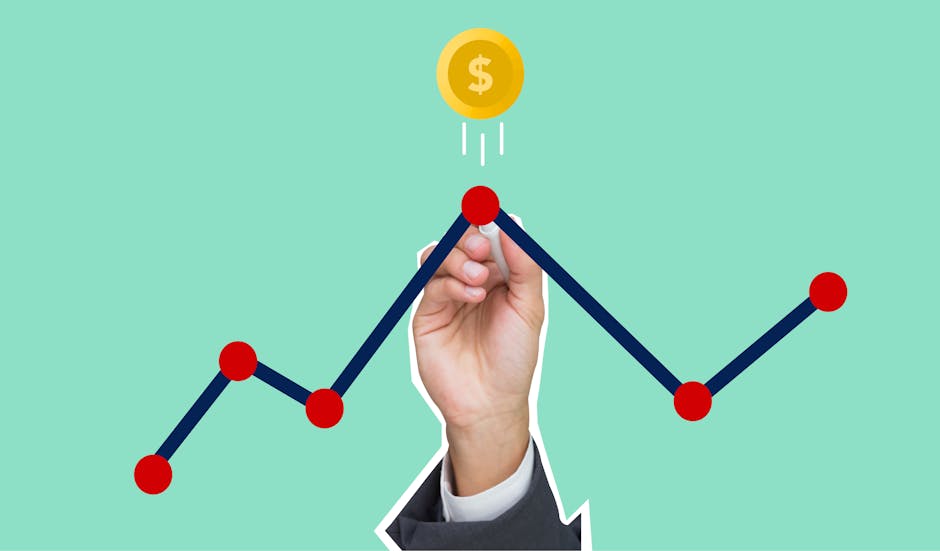
Photo by Monstera Production on Pexels
Economic growth is primarily measured by the increase in Real Gross Domestic Product (GDP) per capita over extended periods. It means an economy is producing more goods and services, leading to higher living standards.
The main drivers of long-run economic growth include:
* Capital Accumulation: Investing in physical capital (like factories, machines, infrastructure) and human capital (education, skills).
* Technological Progress: Innovations that allow us to produce more output with the same amount of inputs, or new products altogether. This is often considered the most important driver.
* Labor Force Growth: An increase in the number of workers available.
* Natural Resources: Availability and efficient use of land, raw materials, etc.
* Institutional Framework: Stable political systems, property rights, rule of law, and a robust financial system encourage investment and innovation.
Understanding Economic Fluctuations (Business Cycles)

Photo by Rafael Minguet Delgado on Pexels
While economies grow over the long term, they don't grow smoothly. They experience short-term ups and downs known as business cycles. These cycles are characterized by changes in economic activity over a few months or years.
A typical business cycle has four phases:
1. Expansion/Recovery: Economic activity is increasing. GDP is growing, unemployment is falling, and consumer and business confidence are high.
2. Peak: The highest point of economic activity in the cycle. Growth starts to slow down.
3. Contraction/Recession: Economic activity is decreasing. GDP is falling for at least two consecutive quarters, unemployment is rising, and confidence is low. A severe and prolonged recession is called a depression.
4. Trough: The lowest point of economic activity in the cycle. Economic decline stops, and the economy is poised for recovery.
These fluctuations are driven by various factors, including:
* Aggregate Demand Shocks: Changes in overall spending in the economy (consumer spending, investment, government spending, net exports). For example, a sudden drop in consumer confidence can lead to a recession.
* Aggregate Supply Shocks: Events that impact the economy's ability to produce goods and services (e.g., oil price shocks, natural disasters, technological breakthroughs).
* Monetary Policy: Central bank actions (like changing interest rates) that influence borrowing costs and money supply.
* Fiscal Policy: Government decisions on spending and taxation.
Here's a visual representation of how growth and fluctuations relate:
graph TD
    A["Long-Term Economic Growth"] --> B["Increased Living Standards"]
    A --> C["Productivity Improvements"]
    C --> D["Technological Progress"]
    C --> E["Capital Accumulation"]
    A --"Influenced by"--> F["Government Policies"]
    A --"Experienced through"--> G["Business Cycles (Fluctuations)"]

    G --> H["Expansion"]
    G --> I["Peak"]
    G --> J["Contraction (Recession)"]
    G --> K["Trough"]

    H --> I
    I --> J
    J --> K
    K --> H

    D & E & F --> A
    H & I & J & K --> B
3. Worked Example
Let's consider a country, "Economia," over a decade.
- Year 1-3 (Expansion): Economia experiences strong economic growth. Real GDP grows by 3-4% annually, unemployment falls from 7% to 4%, and businesses invest heavily in new technology. This is driven by strong consumer spending and low interest rates encouraging borrowing.
- Year 4 (Peak): Growth slows slightly to 2%, but the economy is operating at full capacity. Inflation starts to tick up as demand outstrips supply, leading the central bank to raise interest rates to cool down the economy.
- Year 5-6 (Contraction/Recession): Higher interest rates reduce investment and consumer spending. A global economic slowdown also hits Economia's exports. Real GDP shrinks for two consecutive quarters (e.g., -1.5% then -0.5%), and unemployment rises back to 6%. Businesses cut back on production and lay off workers.
- Year 7 (Trough): The economy bottoms out. GDP growth is flat (0%), but the rate of decline has stopped. Consumer confidence is low, but the central bank starts to lower interest rates to stimulate recovery.
- Year 8-10 (New Expansion): With lower interest rates and renewed confidence, investment picks up. Technological innovations introduced during the previous expansion start to bear fruit, boosting productivity. Real GDP starts growing again at 2.5-3% annually, and unemployment steadily declines.
Throughout this entire decade, despite the ups and downs, Economia's underlying potential to produce goods and services (its long-term growth trend) might still be rising due to continuous investment in education and research. The fluctuations are movements around this upward trend.
4. Key Takeaways
- Economic growth is the long-run increase in an economy's output, primarily measured by Real GDP per capita.
- Key drivers of long-term growth include capital accumulation, technological progress, and institutional quality.
- Economic fluctuations, or business cycles, are the short-term ups and downs around this long-term growth trend.
- Business cycles consist of four phases: expansion, peak, contraction (recession), and trough.
- Both aggregate demand and aggregate supply shocks can trigger business cycle movements.
- Government policies (monetary and fiscal) are often used to manage these fluctuations, aiming to stabilize the economy.
- A healthy economy needs both long-term growth and stable, mild fluctuations.
Common Mistakes to Avoid:
- Don't confuse short-term growth rates in an expansion with the long-term trend of economic growth.
- Don't assume that economic growth always means everyone is equally better off; distribution matters.
- Don't think that recessions are necessarily bad if they lead to necessary adjustments and set the stage for stronger future growth.
- Don't forget that economic data points (like quarterly GDP figures) are part of a larger cycle and trend.
5. Now Try It
Think about the current economic news you've heard. Identify whether the reports mostly describe elements of long-term economic growth (e.g., new technologies, education spending, infrastructure projects) or short-term economic fluctuations (e.g., recent inflation rates, quarterly GDP changes, unemployment figures this month). Explain why each news item fits into one category or the other, and how it relates to the current phase of the business cycle (if applicable). What would success look like? You'd be able to clearly distinguish between news impacting the economy's productive capacity versus its current level of activity.
Frequently asked about Economic Growth and Fluctuations
More from basic macroeconomics
Get the full basic macroeconomics curriculum
Clone the complete plan to your dashboard for unlimited AI-generated notes, practice quizzes, and a personalised revision schedule.
Save this course free