Foundational Physics: Earth, Force, and Energy
From the talentex curriculum
TL;DR
Physics helps us understand how the Earth moves, why things fall, and how we can do work. We'll explore fundamental concepts like gravity, different types of forces, and the various forms of energy. Grasping these basics is key to understanding the physical world around us.
1. The Mental Model
Imagine everything around you, from a ball falling to a car moving, has a hidden set of rules. These rules are physics, explaining why things happen and how they move, focusing on Earth's influence, pushes and pulls (forces), and the ability to do things (energy).
2. The Core Material
Foundational physics for Earth, force, and energy boils down to understanding motion and interactions.
Earth's Influence: Gravity
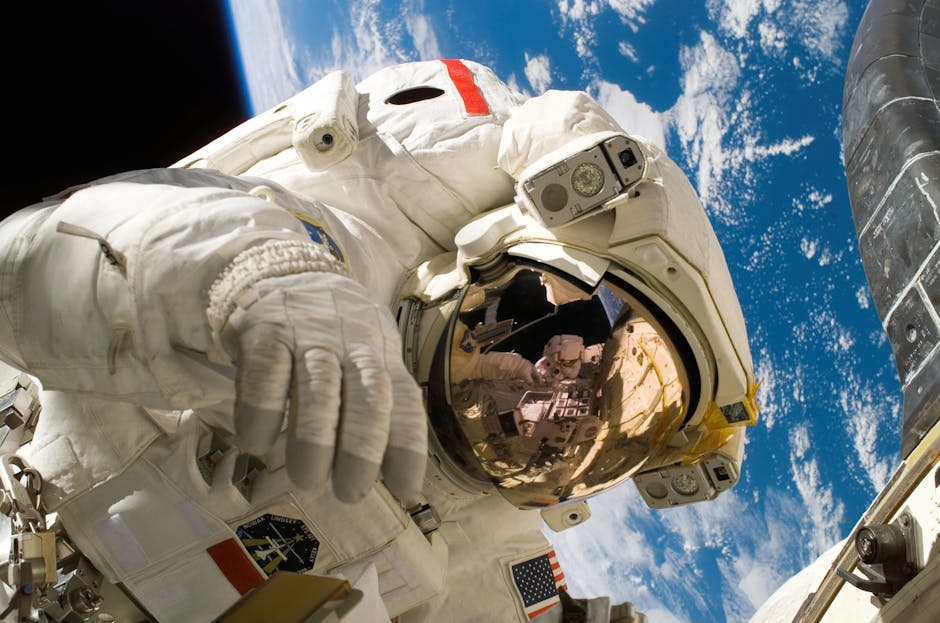
Photo by Pixabay on Pexels
The most apparent influence of Earth is gravity. It's the force that pulls everything towards the center of the Earth. This is why things fall down, and why you stay on the ground.
* Weight vs. Mass: Your mass is the amount of 'stuff' you're made of (measured in kilograms, kg), and it stays the same everywhere. Your weight is the force of gravity pulling on your mass (measured in Newtons, N). So, on the Moon, your mass is the same, but your weight is less because the Moon's gravity is weaker.
* Acceleration due to Gravity (g): Near Earth's surface, all objects fall with the same acceleration, about 9.8 m/s² (meters per second squared), ignoring air resistance. This means their speed increases by 9.8 m/s every second they fall.
Forces: The Pushes and Pulls

Photo by cottonbro studio on Pexels
A force is a push or a pull that can change an object's motion (its speed or direction). Forces have both magnitude (how strong) and direction. We measure force in Newtons (N).
- Net Force: Often, multiple forces act on an object. The net force is the overall force acting on it. If the net force is zero, the object either stays still or moves at a constant velocity. If the net force is not zero, the object will accelerate.
- Types of Forces:
- Gravitational Force: The pull between any two objects with mass. On Earth, we usually mean Earth's pull on an object.
- Normal Force: When an object rests on a surface, the surface pushes back up perpendicular to it. This prevents the object from falling through the surface.
- Friction: A force that opposes motion or attempted motion between two surfaces in contact. It always acts in the opposite direction of motion.
- Applied Force: A direct push or pull by a person or object.
- Tension: The force transmitted through a string, rope, cable, or wire when it is pulled tight by forces acting from opposite ends.
Energy: The Ability to Do Work

Photo by 정규송 Nui MALAMA on Pexels
Energy is the capacity to do work. Work, in physics, means applying a force to an object and causing it to move a distance in the direction of the force. We measure energy and work in Joules (J).
- Forms of Energy:
- Kinetic Energy (KE): Energy of motion. An object moving has kinetic energy. The faster or heavier it is, the more KE it has.
- Potential Energy (PE): Stored energy due to an object's position or state.
- Gravitational Potential Energy (GPE): Energy stored due to an object's height above a reference point. The higher an object is, the more GPE it has.
- Elastic Potential Energy: Energy stored in a stretched or compressed spring or elastic band.
- Other Forms: Thermal (heat), chemical, electrical, nuclear, sound, light.
- Conservation of Energy: A fundamental principle states that energy cannot be created or destroyed, only transformed from one form to another. For example, a falling ball loses GPE but gains KE.
Here's a look at how forces can act on an object:
graph TD
    A["Object (e.g., a book on a table)"] --> B{"Forces Acting On It"};
    B --> C["Downward: Gravitational Force (Weight)"];
    B --> D["Upward: Normal Force"];
    B --> E{"If Pushed (Applied Force)"};
    E --> F["Horizontally: Applied Force"];
    E --> G["Opposite Direction: Frictional Force"];
3. Worked Example
Let's consider a 10 kg box sitting on a flat floor. You push it with a force of 50 N horizontally. The frictional force opposing its motion is 20 N.
-
Calculate the Net Force:
- Applied Force = 50 N (forward)
- Frictional Force = 20 N (backward)
- Net Force = Applied Force - Frictional Force = 50 N - 20 N = 30 N (forward)
-
Calculate the Acceleration:
- We use Newton's Second Law: Force = mass × acceleration (F = ma)
- Net Force = 30 N
- Mass (m) = 10 kg
- Acceleration (a) = Net Force / mass = 30 N / 10 kg = 3 m/s²
So, the box will accelerate at 3 meters per second squared in the direction you're pushing it. This means its speed will increase by 3 m/s every second.
4. Key Takeaways
- Gravity is Earth's pull, giving objects weight and causing them to accelerate downwards at about 9.8 m/s².
- A force is a push or pull that changes an object's motion; common types include gravity, normal force, and friction.
- Net force determines an object's acceleration: if it's zero, motion is constant; if not, the object accelerates.
- Energy is the ability to do work, measured in Joules, and comes in forms like kinetic (motion) and potential (stored).
- The Law of Conservation of Energy states that energy transforms but is never created or destroyed.
- Work is done when a force causes an object to move a distance in the force's direction.
Common Mistakes to Avoid:
- Confusing mass (amount of matter) with weight (gravitational force on mass).
- Forgetting that friction always opposes motion, not aids it.
- Thinking that an object needs a continuous force to keep moving at a constant speed (it only needs a force to change its speed).
- Assuming energy is "lost" when it changes form, instead of being transformed (often into heat).
5. Now Try It
Imagine you're standing on a ladder holding a 2 kg bowling ball at a height of 3 meters.
1. Calculate the ball's Gravitational Potential Energy (GPE) relative to the ground. (Hint: GPE = mgh, where g ≈ 9.8 m/s²).
2. If you drop the ball, what can you say about its Kinetic Energy (KE) just before it hits the ground compared to its initial GPE, ignoring air resistance?
3. What force brings the ball to a stop when it hits the ground?
Success looks like correctly calculating the GPE, explaining the energy transformation, and identifying the force that stops the ball.
Frequently asked about Foundational Physics: Earth, Force, and Energy
Study this next
Get the full talentex curriculum
Clone the complete plan to your dashboard for unlimited AI-generated notes, practice quizzes, and a personalised revision schedule.
Save this course free