Structure and Properties of Matter
From the chimie curriculum
TL;DR
Matter is anything that has mass and occupies space. Its structure affects its properties and behavior. Understanding the types of matter helps explain the world around us.
1. The Mental Model
Think of matter as everything you can touch or see. It's structured in different ways, affecting its characteristics. The more you understand these structures, the better you'll grasp how materials interact with each other.
2. The Core Material
2.1 What is Matter?

Photo by Ann H on Pexels
Matter is defined as anything that has mass and takes up space. It includes solids, liquids, gases, and plasma.
2.2 States of Matter
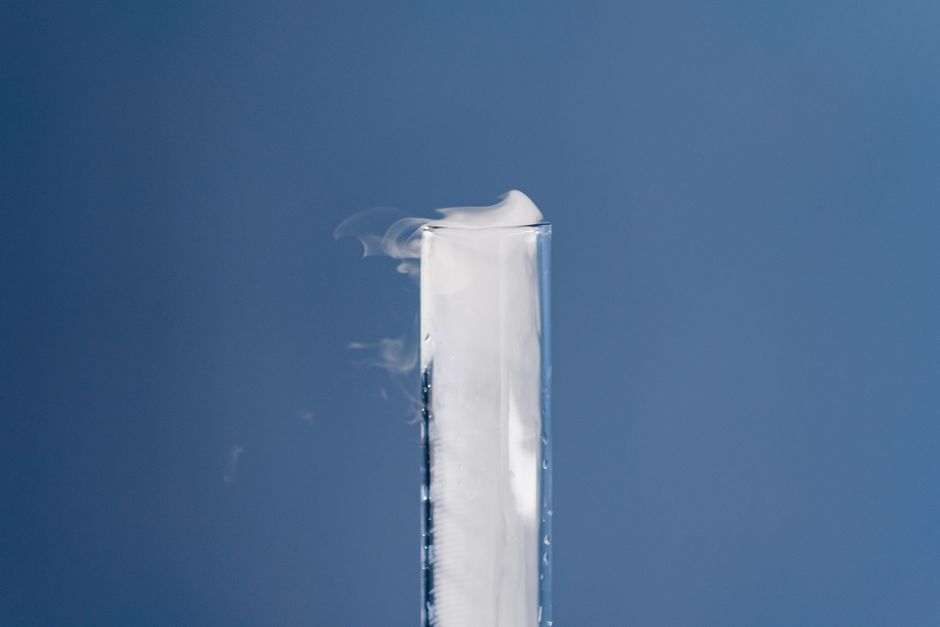
Photo by Ron Lach on Pexels
Matter can exist in four primary states: solid, liquid, gas, and plasma. Each state has distinct properties:
- Solid: Fixed shape and volume. Molecules are closely packed.
- Liquid: Fixed volume but no fixed shape. Molecules are close but can move past each other.
- Gas: No fixed shape or volume. Molecules are far apart and move freely.
- Plasma: Ionized gas with free electrons and ions. Found in stars and lightning.
2.3 Atomic Structure

Photo by Steve A Johnson on Pexels
Atoms are the basic building blocks of matter, consisting of:
- Protons: Positively charged particles in the nucleus.
- Neutrons: Neutral particles in the nucleus.
- Electrons: Negatively charged particles orbiting the nucleus.
2.4 Atomic Models
Photo by Steve A Johnson on Pexels
Different models explain atomic structure, from Dalton’s solid sphere to the quantum mechanical model. The most accepted model is the quantum mechanical model, where electrons exist in probability clouds around the nucleus.
2.5 Properties of Matter
Properties of matter can be classified into two categories:
- Physical properties: Characteristics that can be observed without changing the substance (e.g., color, boiling point, melting point).
- Chemical properties: Characteristics that describe how a substance interacts with other substances (e.g., flammability, reactivity with acid).
2.6 Mixtures vs. Pure Substances
- Pure substances: Matter that has a uniform and definite composition (e.g., water, gold).
- Mixtures: Combinations of two or more substances that maintain their individual properties (e.g., air, salad).
2.7 Intermolecular Forces
Molecules are held together by intermolecular forces, which affect the state and properties of matter:
- Dipole-Dipole: Attraction between polar molecules.
- London Dispersion Forces: Weak attractions due to temporary dipoles.
- Hydrogen Bonds: Stronger attractions involving hydrogen and electronegative atoms (e.g., O, N).
2.8 Mermaid Diagram: States and Properties of Matter
graph TD;
    A["States of Matter"] --> B["Solid"];
    A --> C["Liquid"];
    A --> D["Gas"];
    A --> E["Plasma"];
    B --> F["Fixed shape and volume"];
    C --> G["Fixed volume, no fixed shape"];
    D --> H["No fixed shape or volume"];
    E --> I["Ionized gas with free electrons"];
3. Worked Example
Let's look at the properties of water (H₂O) as an example of a pure substance:
- State: Liquid at room temperature.
- Physical Properties:
- Melting point: 0°C
- Boiling point: 100°C
- Color: Colorless
- Density: 1 g/cm³
- Chemical Properties:
- Reacts with sodium (Na) to produce sodium hydroxide (NaOH) and hydrogen gas (H₂).
When water is heated from 0°C to 100°C, it remains a liquid until it reaches its boiling point, after which it turns into gas (steam) at 100°C.
4. Key Takeaways
- Matter is anything with mass and volume.
- States of matter include solid, liquid, gas, and plasma, each with unique properties.
- Atoms are made of protons, neutrons, and electrons.
- Properties are categorized as physical or chemical.
- Pure substances differ from mixtures by composition and uniformity.
Common Mistakes to Avoid
- Confusing mixtures with pure substances.
- Overlooking the importance of temperature when discussing state changes.
- Ignoring how intermolecular forces influence properties.
- Misunderstanding the role of protons, neutrons, and electrons in atomic structure.
5. Now Try It
Spend 15 minutes researching the physical and chemical properties of a common substance, like table salt (NaCl). Write down its state at room temperature, melting point, boiling point, and any chemical reactions it undergoes. Success looks like a concise summary of its properties on a single page.
============================================================
Frequently asked about Structure and Properties of Matter
Study this next
Get the full chimie curriculum
Clone the complete plan to your dashboard for unlimited AI-generated notes, practice quizzes, and a personalised revision schedule.
Save this course free