Dharmic Religions: Hinduism and Buddhism
From the Religion curriculum
TL;DR
Hinduism and Buddhism are ancient Indian religions sharing common concepts like karma and reincarnation, but they differ significantly in their origins, ultimate goals, and paths to liberation. Hinduism is a diverse tradition with many gods and scriptures, while Buddhism originated with the teachings of Siddhartha Gautama and focuses on suffering and its cessation. Understanding their shared roots and unique developments helps clarify their distinct worldviews.
1. The Mental Model
Think of Dharmic religions as branches from the same ancient philosophical tree in India. Hinduism is the vast, ancient trunk with many deep roots and branches, while Buddhism is a distinct, later branch that grew from the same soil, sharing some foundational nutrients but developing its own unique fruits.
2. The Core Material
Dharmic religions are those that originated in India and share fundamental concepts like Dharma (cosmic law, duty), Karma (action and consequence), Samsara (the cycle of rebirth), and Moksha or Nirvana (liberation from Samsara). While they share these, their interpretations and paths differ.
Hinduism: A Diverse Tradition
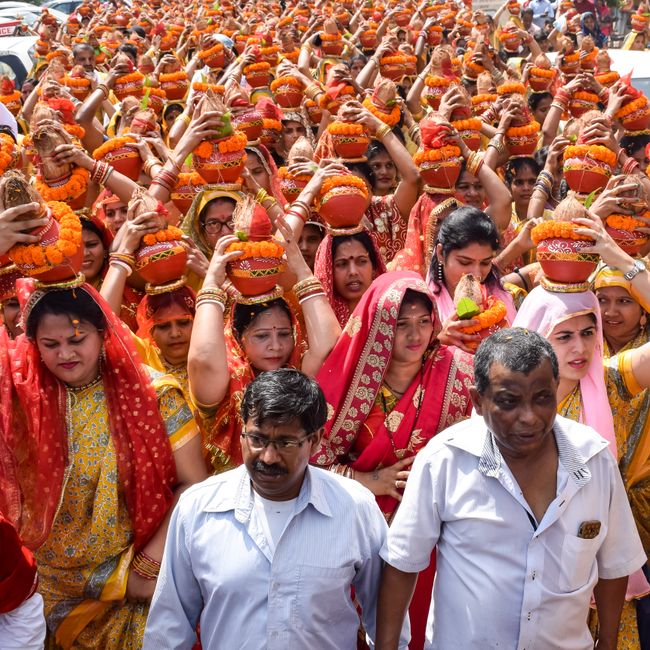
Photo by Rahul Sapra on Pexels
Hinduism isn't a single unified religion but rather a family of diverse traditions, philosophies, and deities. It has no single founder, no single creed, and an immense body of sacred texts, including the Vedas, Upanishads, Puranas, and epic poems like the Ramayana and Mahabharata (which includes the Bhagavad Gita).
Key concepts in Hinduism:
* Brahman: The ultimate reality, the universal spirit or consciousness from which everything originates.
* Atman: The individual soul or self, which is believed to be identical with Brahman. The goal is to realize this unity.
* Deities: Hindus worship many gods and goddesses, often seen as manifestations of Brahman (e.g., Vishnu, Shiva, Devi).
* Moksha: Liberation from Samsara, achieved through various paths (Yogas) like knowledge (Jnana Yoga), devotion (Bhakti Yoga), action (Karma Yoga), or meditation (Raja Yoga).
* Varna (Caste System): Traditionally, a social hierarchy, though its role and interpretation vary widely today.
Buddhism: The Path of Siddhartha Gautama

Photo by Meaw Zara on Pexels
Buddhism originated with Siddhartha Gautama (the Buddha) in ancient India around the 6th century BCE. Unlike Hinduism, it has a single, identifiable founder and a more focused set of core teachings.
Key concepts in Buddhism:
* Four Noble Truths: The foundational teachings:
1. Life is suffering (Dukkha).
2. The cause of suffering is craving/attachment (Trishna).
3. Suffering can cease.
4. The path to the cessation of suffering is the Eightfold Path.
* Eightfold Path: The practical guide to liberation, including right understanding, thought, speech, action, livelihood, effort, mindfulness, and concentration.
* Anatta (No-Self): A core Buddhist doctrine stating that there is no permanent, unchanging self or soul (Atman), unlike the Hindu concept.
* Nirvana: The ultimate goal, the cessation of suffering and the cycle of rebirth, achieved by extinguishing craving and attachment.
* Karma: Actions driven by intention lead to consequences in this or future lives.
Comparing Hinduism and Buddhism
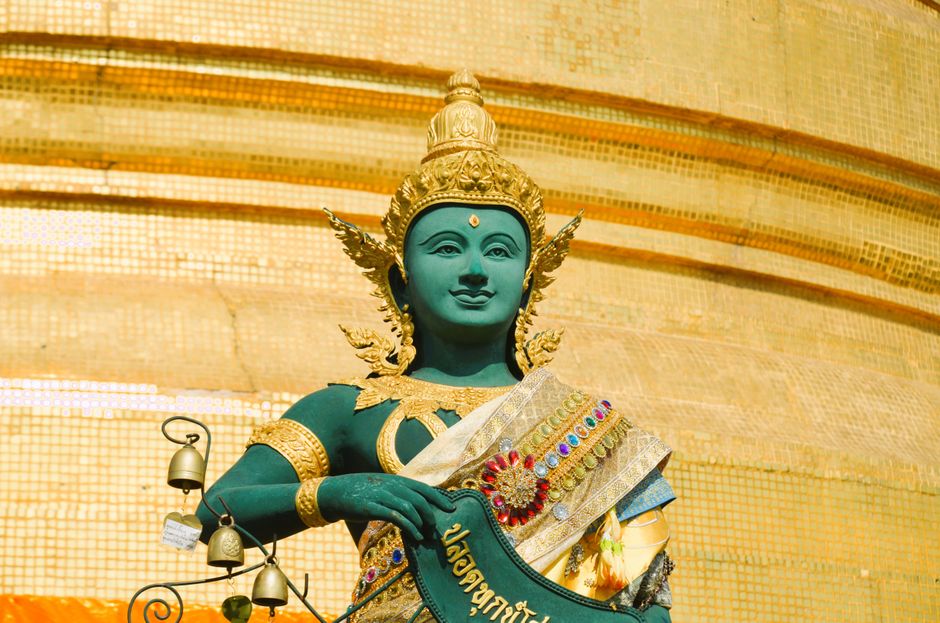
Photo by Meaw Zara on Pexels
Here's a diagram summarizing key differences:
graph TD
    A["Dharmic Religions"] --> B["Hinduism"]
    A --> C["Buddhism"]

    B --> B1["Origins: No single founder, ancient Vedic traditions"]
    B --> B2["Sacred Texts: Vedas, Upanishads, Bhagavad Gita, Puranas"]
    B --> B3["Concept of Self: Atman (individual soul) is Brahman (universal soul)"]
    B --> B4["Deities: Polytheistic, many gods/goddesses as manifestations of Brahman"]
    B --> B5["Goal: Moksha (liberation from Samsara, unity with Brahman)"]
    B --> B6["Path: Various Yogas (Karma, Bhakti, Jnana, Raja)"]

    C --> C1["Origins: Siddhartha Gautama (the Buddha)"]
    C --> C2["Sacred Texts: Tripitaka (Pali Canon), Sutras"]
    C --> C3["Concept of Self: Anatta (no permanent self/soul)"]
    C --> C4["Deities: Focus on human experience, no central creator god; Buddha revered as teacher"]
    C --> C5["Goal: Nirvana (cessation of suffering, extinguishing craving)"]
    C --> C6["Path: Eightfold Path"]
Both believe in Karma and Samsara, but the "what" that reincarnates differs. For Hindus, it's the Atman; for Buddhists, it's a chain of causes and effects, with no permanent entity moving from one life to the next.
3. Worked Example
Imagine two individuals, one Hindu and one Buddhist, both seeking liberation from suffering and rebirth.
A Hindu Devotee (Bhakti Yogi):
Radha, a Hindu, believes in the ultimate reality of Brahman and that her individual soul (Atman) is part of it. She dedicates her life to worshipping Krishna, an incarnation of Vishnu, through daily prayers, offerings, and singing devotional songs. She believes that by intensely loving and surrendering to Krishna, she can purify her karma and achieve Moksha, ultimately reuniting her Atman with Brahman. Her path emphasizes devotion and the grace of her chosen deity.
A Buddhist Practitioner (Eightfold Path follower):
Tenzin, a Buddhist, acknowledges suffering (Dukkha) as an inherent part of existence due to craving. He doesn't pray to a god for liberation but focuses on his own actions and mental states. He meditates daily to cultivate mindfulness and concentration, practices ethical conduct by speaking truthfully and kindly, and works to understand the nature of reality (including the concept of Anatta, no-self). His goal is to follow the Eightfold Path to extinguish craving and attachment, thereby reaching Nirvana and ending his cycle of rebirth. His path emphasizes self-effort and wisdom.
While both seek an end to suffering and rebirth, their methods, foundational beliefs about the self and divinity, and ultimate vision of liberation are distinct.
4. Key Takeaways
- Hinduism is a diverse set of traditions with no single founder, centered on concepts like Brahman, Atman, and Moksha through various Yogas.
- Buddhism originated with Siddhartha Gautama (the Buddha) and focuses on the Four Noble Truths and the Eightfold Path to achieve Nirvana.
- Both religions share foundational concepts like Karma and Samsara, but interpret them differently, especially regarding the nature of the self.
- Hindus believe in Atman (the individual soul) which is one with Brahman (universal soul), while Buddhists teach Anatta (no-self).
- Hinduism typically involves the worship of many gods and goddesses, while Buddhism focuses on human effort and wisdom to overcome suffering.
- Moksha in Hinduism is often described as union with Brahman, while Nirvana in Buddhism is the cessation of craving and suffering.
Common Mistakes to Avoid:
- Don't assume Hinduism is monolithic; it's incredibly diverse.
- Don't confuse Atman (Hindu soul) with Anatta (Buddhist no-soul). They are opposing concepts.
- Don't think Buddhism is atheistic; it simply doesn't center on a creator god in the way many other religions do.
- Avoid thinking that karma in both religions means the exact same thing; its implications for what is reborn differ.
5. Now Try It
Spend 15 minutes researching a specific festival from Hinduism (e.g., Diwali) and a specific Buddhist practice (e.g., Vipassana meditation). For each, briefly describe its purpose and how it reflects one of the core teachings you've learned today (e.g., a Hindu festival's connection to a deity, or a Buddhist meditation's connection to the Eightfold Path). Success looks like clearly articulating how the practice or festival directly relates to the distinct doctrines of each religion.
Frequently asked about Dharmic Religions: Hinduism and Buddhism
Study this next
Get the full Religion curriculum
Clone the complete plan to your dashboard for unlimited AI-generated notes, practice quizzes, and a personalised revision schedule.
Save this course free