Abrahamic Religions: Islam
From the Religion curriculum
TL;DR
Islam is a monotheistic religion originating in the 7th century CE in the Arabian Peninsula, centered on the belief in one God, Allah, and guided by the teachings of the Prophet Muhammad. Its holy book, the Qur'an, is considered the direct word of God, providing a complete way of life for its followers. Muslims strive to live according to the Five Pillars of Islam, which are foundational practices of their faith.
1. The Mental Model
Think of Islam as a comprehensive guide for living, revealed by God to humanity through His final prophet. It's not just a set of beliefs but a complete worldview and a practical system for daily life, aiming for peace and submission to God's will.
2. The Core Material
Islam, meaning "submission" to God, is the second-largest religion globally. Its followers, called Muslims, believe in Allah (the Arabic word for God) as the one and only God.
Prophet Muhammad and the Revelation of the Qur'an

Photo by Defrino Maasy on Pexels
The central figure in Islam is Prophet Muhammad, born in Mecca (present-day Saudi Arabia) around 570 CE. Muslims believe he is the last in a line of prophets that includes Adam, Noah, Abraham, Moses, and Jesus, all sent by God to guide humanity.
Around 610 CE, Muhammad began receiving revelations from God through the Angel Gabriel. These revelations, spanning approximately 23 years, were compiled into the Qur'an (sometimes spelled Koran), Islam's holy book. Muslims believe the Qur'an is the literal word of God, unaltered and complete, providing guidance on all aspects of life – faith, morality, law, and social conduct.
Key Beliefs of Islam

Photo by Vasilis V. on Pexels
- Tawhid (Oneness of God): This is the foundational principle. Muslims believe in one indivisible God, Allah, who has no partners, no children, and is unique in His essence and attributes. This rejects polytheism and any form of idolatry.
- Angels: Belief in angels as purely spiritual beings created by God to carry out His commands.
- Holy Books: Belief in all divine revelations, including the Torah (given to Moses), the Psalms (given to David), and the Gospels (given to Jesus), but Muslims believe the Qur'an is the final and preserved revelation.
- Prophets: Belief in all prophets sent by God throughout history to guide humanity, with Muhammad being the final prophet.
- Day of Judgment: Belief in a final day when all humanity will be resurrected and judged by God for their deeds, leading to either Paradise or Hell.
- Divine Decree (Qadar): Belief that God has knowledge and control over all things, but also that humans have free will and are accountable for their choices.
The Five Pillars of Islam
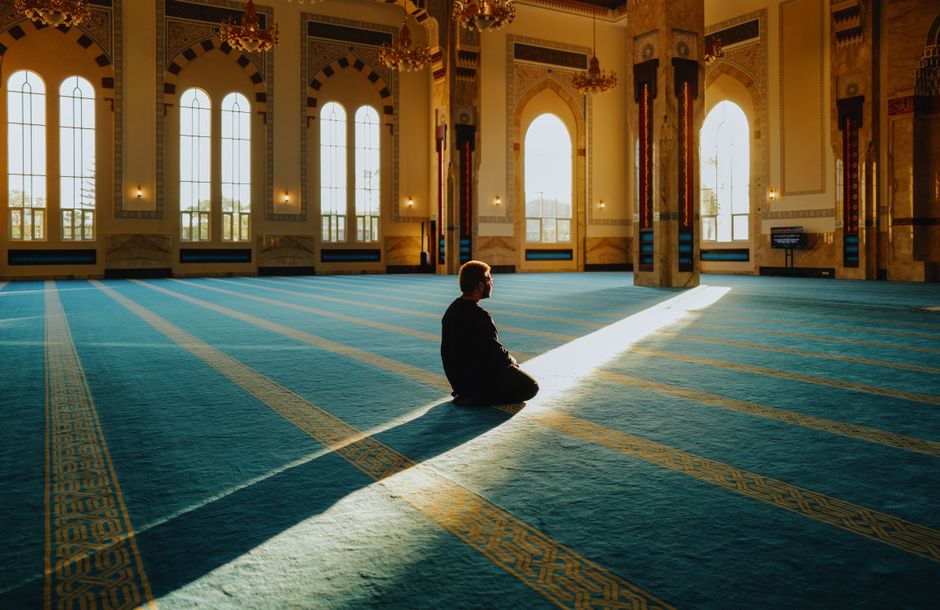
Photo by Mohammed Alim on Pexels
These are the fundamental practices that form the framework of Muslim life and are obligatory for all able-bodied Muslims.
graph TD
    A["Islam"] --> B["Shahada (Declaration of Faith)"]
    A --> C["Salat (Prayer)"]
    A --> D["Zakat (Charity)"]
    A --> E["Sawm (Fasting)"]
    A --> F["Hajj (Pilgrimage)"]

    B -- "Professing belief in Allah as one God and Muhammad as His Prophet" --> G["Foundation of all other Pillars"]
    C -- "Five daily prayers facing the Kaaba in Mecca" --> H["Direct connection with God"]
    D -- "Obligatory annual donation to the needy" --> I["Purification of wealth, social justice"]
    E -- "Fasting during the month of Ramadan from dawn to sunset" --> J["Spiritual reflection, self-discipline"]
    F -- "Pilgrimage to Mecca, if able, once in a lifetime" --> K["Unity of Muslims, seeking God's forgiveness"]
- Shahada (Declaration of Faith): The verbal declaration: "There is no god but Allah, and Muhammad is His messenger." This is the cornerstone of Islam, affirming monotheism and the prophethood of Muhammad.
- Salat (Prayer): Muslims perform five ritual prayers a day at specific times (dawn, noon, mid-afternoon, sunset, night), facing the Kaaba in Mecca. Prayer is a direct link between the worshipper and God, fostering discipline and spiritual awareness.
- Zakat (Charity): An obligatory annual donation (typically 2.5% of one's savings and wealth) given to the poor and needy. It's seen as a purification of wealth and a means of social justice.
- Sawm (Fasting): Muslims fast during the entire month of Ramadan, abstaining from food, drink, and marital relations from dawn until sunset. It's a time for spiritual reflection, self-discipline, empathy for the less fortunate, and increased worship.
- Hajj (Pilgrimage): The pilgrimage to the Kaaba in Mecca, Saudi Arabia, which every Muslim must undertake at least once in their lifetime if they are physically and financially able. It's a journey of deep spiritual significance, symbolizing unity and devotion.
Sharia Law

Photo by Pixabay on Pexels
Sharia is the Islamic legal system derived from the Qur'an and the Sunnah (the teachings, sayings, and practices of Prophet Muhammad). It provides guidance on a wide range of matters, from personal ethics and worship to criminal justice and economic transactions. It's not a single codified law, but rather a body of principles and interpretations.
3. Worked Example
Imagine a Muslim individual named Aisha who wants to live her life fully according to Islamic principles.
First, Aisha fundamentally believes in Tawhid – the absolute oneness of God. This means she doesn't worship any idols or associate partners with God. Her entire worldview is built on this singular belief.
Next, she fulfills the Five Pillars:
* She recites the Shahada regularly, reaffirming her faith.
* She performs her Salat five times a day, taking breaks from her work or studies to pray, ensuring she maintains her spiritual connection.
* At the end of the year, she calculates her eligible savings and gives her Zakat to local charities that support the poor, understanding it's a right of the needy to a portion of her wealth.
* During Ramadan, she fasts from dawn to sunset, using the time for extra prayer, reading the Qur'an, and reflecting on her blessings.
* When she finally has the means, she undertakes the Hajj to Mecca, joining millions of other Muslims from around the world in a profound act of worship and community.
Beyond these pillars, Aisha also tries to live by the broader principles of Sharia, such as striving for honesty in business, showing kindness to neighbors, and dressing modestly, all guided by the teachings found in the Qur'an and the Sunnah of the Prophet Muhammad.
4. Key Takeaways
- Islam is a monotheistic religion centered on the worship of one God, Allah, as revealed through Prophet Muhammad.
- The Qur'an is considered the direct, unaltered word of God and the primary source of Islamic law and guidance.
- The Shahada (declaration of faith) is the foundational belief, affirming God's oneness and Muhammad's prophethood.
- The Five Pillars of Islam are obligatory practices that structure Muslim life: Shahada, Salat (prayer), Zakat (charity), Sawm (fasting), and Hajj (pilgrimage).
- Sharia law is a comprehensive legal and ethical system derived from the Qur'an and the Sunnah, guiding all aspects of life.
- Muslims believe in a Day of Judgment where all individuals will be held accountable for their actions.
Common Mistakes to Avoid:
- Don't confuse the terms "Islam" (the religion) and "Muslim" (a follower of Islam).
- Avoid thinking of Sharia as a monolithic, unchanging legal code; it's a broad framework with diverse interpretations.
- Don't assume all Muslims practice their faith identically; there's cultural diversity and varying levels of observance.
- Don't confuse the Prophet Muhammad with God; Muslims worship God alone.
5. Now Try It
Take 15 minutes to research and list three specific examples of how the concept of Tawhid (the oneness of God) might influence a Muslim's daily life or ethical decisions, beyond just the Five Pillars. For instance, consider its impact on art, finance, or social interactions. Success looks like clearly articulating how the belief in one unique God shapes practical choices in different aspects of life.
Frequently asked about Abrahamic Religions: Islam
Study this next
Get the full Religion curriculum
Clone the complete plan to your dashboard for unlimited AI-generated notes, practice quizzes, and a personalised revision schedule.
Save this course free