Introduction to Biological Classification
From the biological classification curriculum
TL;DR
Biological classification is how we organize living things into groups based on their shared characteristics. This system helps us understand relationships between organisms and makes studying life much more manageable. We use a hierarchical structure, moving from broad categories to very specific ones, to classify everything from bacteria to blue whales.
1. The Mental Model
Think of biological classification like organizing your closet. You wouldn't just throw all your clothes into one pile. Instead, you'd group them by type (shirts, pants, socks), then maybe by season, and then by color. Classification does the same for living things, creating a clear, nested system for all organisms.
2. The Core Material
Biological classification, also known as taxonomy, is the science of naming, defining, and classifying groups of biological organisms on the basis of shared characteristics. The primary goal is to organize the vast diversity of life on Earth in a logical and consistent way.
Why Classify?

Photo by Ann H on Pexels
Imagine trying to study over 8.7 million species without any organization! It would be chaos. Classification helps us:
* Understand relationships: It reveals how different organisms are related through evolution.
* Identify species: It provides a universal system for naming and recognizing species.
* Communicate effectively: Scientists worldwide can use the same names, avoiding confusion.
* Predict characteristics: If you know an organism belongs to a certain group, you can often predict some of its traits.
The Hierarchical System

Photo by Ann H on Pexels
The most widely used classification system is the Linnaean system, developed by Carl Linnaeus. It's a hierarchy, meaning it has several levels, with each level nested within the one above it, becoming more specific as you go down.
Here are the main ranks, from broadest to most specific:
- Domain: The highest and most inclusive rank, grouping organisms by fundamental differences in cellular structure. There are three domains: Bacteria, Archaea, and Eukarya.
- Kingdom: A broad category within a domain. For Eukarya, common kingdoms include Animalia (animals), Plantae (plants), Fungi (fungi), and Protista (a diverse group of single-celled and simple multicellular eukaryotes).
- Phylum: A major group within a kingdom, often defined by distinct body plans or structural features.
- Class: A subdivision within a phylum.
- Order: A subdivision within a class.
- Family: A subdivision within an order, containing closely related genera.
- Genus: A group of closely related species.
- Species: The most specific rank, consisting of organisms that can interbreed and produce fertile offspring. This is often considered the basic unit of classification.
Let's look at this hierarchy with a diagram:
graph TD
    A["Life"] --> B["Domain (e.g., Eukarya)"]
    B --> C["Kingdom (e.g., Animalia)"]
    C --> D["Phylum (e.g., Chordata)"]
    D --> E["Class (e.g., Mammalia)"]
    E --> F["Order (e.g., Primates)"]
    F --> G["Family (e.g., Hominidae)"]
    G --> H["Genus (e.g., Homo)"]
    H --> I["Species (e.g., Homo sapiens)"]
Binomial Nomenclature
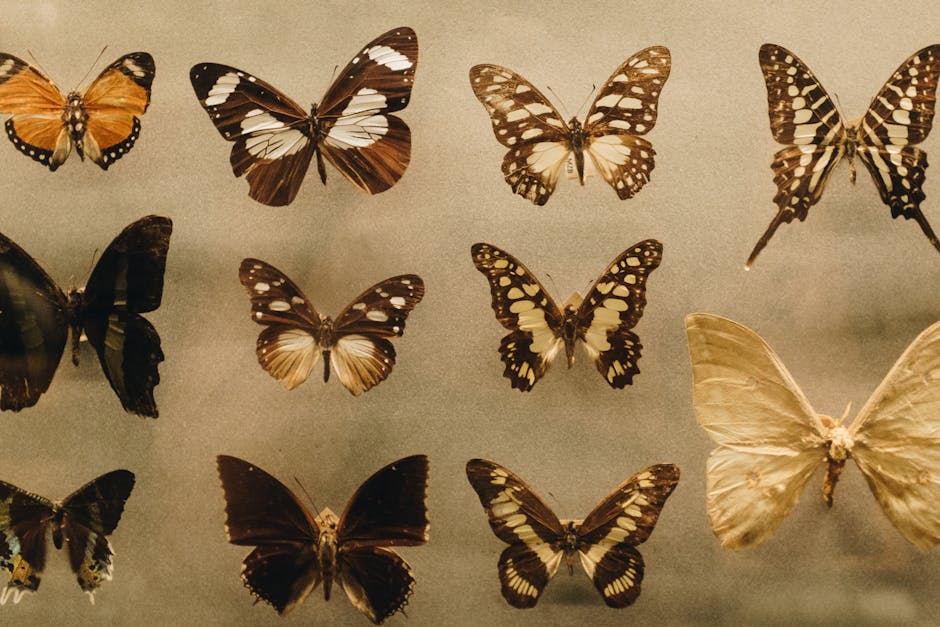
Photo by Cátia Matos on Pexels
Carl Linnaeus also introduced binomial nomenclature, which is a two-part naming system for each species. This scientific name consists of the Genus name (capitalized) and the species epithet (lowercase), both italicized. For example, humans are Homo sapiens. This provides a unique, universally recognized name for every known species.
Modern Classification
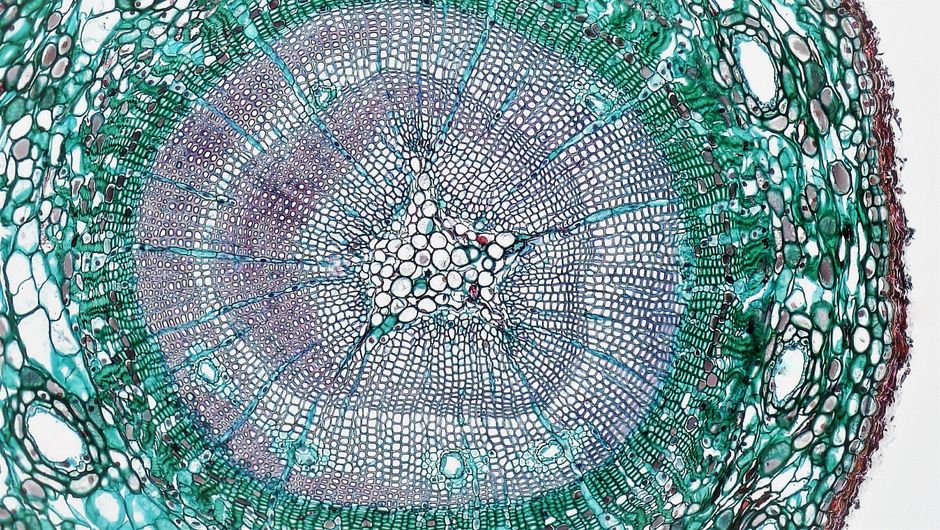
Photo by Fayette Reynolds M.S. on Pexels
While the Linnaean system is still fundamental, modern classification often incorporates phylogenetics. This is the study of evolutionary relationships among organisms. Scientists now use DNA analysis, fossil records, and anatomical similarities to build phylogenetic trees (also called cladograms) that show how species have diverged over evolutionary time. This often refines or changes traditional classifications as new evidence emerges.
3. Worked Example
Let's classify a common organism: a domestic cat.
- Domain: Eukarya (because its cells have a nucleus)
- Kingdom: Animalia (it's multicellular, heterotrophic, and moves)
- Phylum: Chordata (it has a notochord, which develops into a backbone)
- Class: Mammalia (it has fur, mammary glands, and gives live birth)
- Order: Carnivora (it's a meat-eater with specialized teeth for tearing flesh)
- Family: Felidae (it's a "cat" — large or small, with retractile claws, etc.)
- Genus: Felis (a genus including small to medium-sized cats)
- Species: Felis catus (the domestic cat species)
So, its scientific name is Felis catus. No matter what language you speak, Felis catus refers to the exact same animal.
4. Key Takeaways
- Biological classification organizes organisms into groups based on shared characteristics.
- It helps us understand evolutionary relationships and manage biodiversity.
- The Linnaean system uses a hierarchy from Domain (broadest) to Species (most specific).
- Binomial nomenclature provides each species with a unique, two-part scientific name (Genus species).
- Modern classification incorporates phylogenetic evidence to show evolutionary history.
- The main hierarchical ranks are Domain, Kingdom, Phylum, Class, Order, Family, Genus, Species.
- Each successive rank in the hierarchy contains fewer, more closely related organisms.
Common Mistakes to Avoid
- Don't confuse the hierarchy; remember that a Class is within a Phylum, not the other way around.
- Always capitalize the Genus name and use lowercase for the species epithet, and italicize both when writing a scientific name.
- Don't assume that only physical similarities determine classification; genetic evidence is crucial for modern taxonomy.
- Don't think classification is static; it can change as new scientific evidence becomes available.
5. Now Try It
Take an animal you know well, like a dog (Canis familiaris) or a common plant, and try to classify it through the hierarchical ranks (Domain to Species). You can use a reliable online source like Wikipedia or a biology textbook to find the correct classification for each level. What success looks like is correctly listing all eight hierarchical ranks and the proper binomial name for your chosen organism.
Frequently asked about Introduction to Biological Classification
Study this next
Get the full biological classification curriculum
Clone the complete plan to your dashboard for unlimited AI-generated notes, practice quizzes, and a personalised revision schedule.
Save this course free