Introduction to Classification and Living Organisms
From the science curriculum
TL;DR
Classification is how scientists organize the incredible diversity of life on Earth, grouping organisms based on shared characteristics. This system helps us understand relationships between different species and simplifies studying them. Living organisms share key traits like growth, reproduction, and response to their environment, distinguishing them from non-living things.
1. The Mental Model
Think of classification like organizing your closet: you group shirts with shirts, pants with pants, and then maybe by color or season. Scientists do the same with living things, putting similar organisms together to make sense of the vast biological world.
2. The Core Material
Life on Earth is incredibly diverse, with millions of different species. To study and understand this diversity, scientists use a system called classification, or taxonomy. This system organizes organisms into hierarchical groups based on their shared characteristics.
Why Classify?

Photo by Magda Ehlers on Pexels
- Organization: It helps us manage and make sense of the vast number of different species.
- Understanding Relationships: It shows us how different organisms are related to each other evolutionarily.
- Identification: It provides a standardized way to name and identify new or unknown organisms.
- Communication: It allows scientists worldwide to communicate clearly about specific organisms.
Characteristics of Living Organisms

Photo by Monstera Production on Pexels
Before we classify, we need to know what makes something living. All living organisms share several key characteristics:
- Made of Cells: All living things are composed of one or more cells, the basic unit of life.
- Growth and Development: They increase in size and complexity over their lifespan.
- Reproduction: They produce offspring, ensuring the continuation of their species.
- Response to Stimuli: They react to changes in their environment (e.g., plants growing towards light).
- Homeostasis: They maintain a stable internal environment (e.g., regulating body temperature).
- Metabolism: They obtain and use energy to carry out life processes (e.g., eating and digesting food).
- Adaptation: They evolve over time to better suit their environment.
Levels of Classification (Taxonomic Hierarchy)
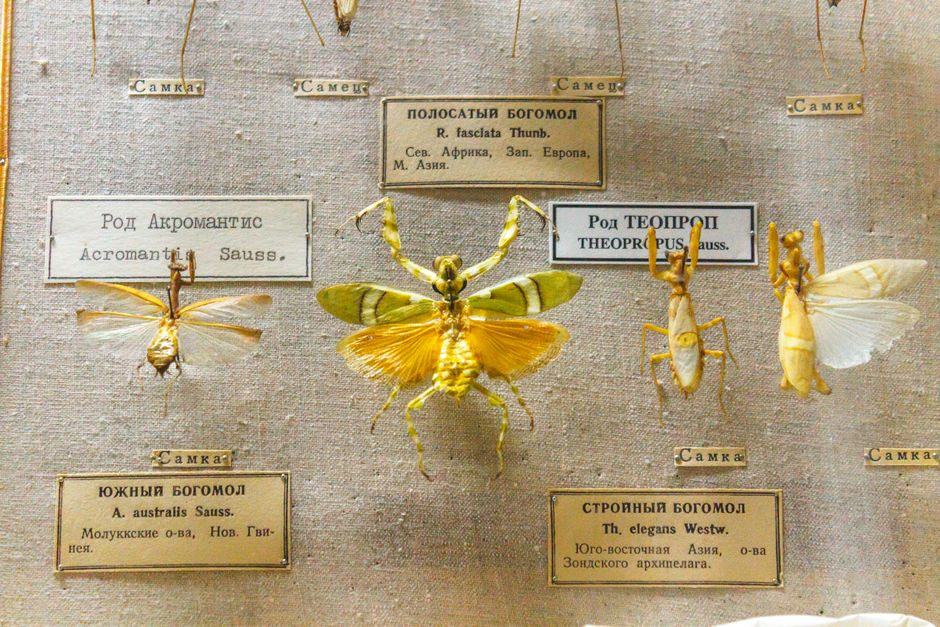
Photo by Tamula Aura on Pexels
The most common system for classifying organisms uses a hierarchy of ranks, from broad to specific. This system was largely developed by Carl Linnaeus.
graph TD
    D["Domain (Broadest)"] --> K["Kingdom"];
    K --> P["Phylum"];
    P --> C["Class"];
    C --> O["Order"];
    O --> F["Family"];
    F --> G["Genus"];
    G --> S["Species (Most Specific)"];
- Domain: The broadest category, currently three domains (Bacteria, Archaea, Eukarya).
- Kingdom: A large group within a domain (e.g., Animals, Plants, Fungi).
- Phylum: A major division within a kingdom (e.g., Chordata for animals with backbones).
- Class: A smaller group within a phylum (e.g., Mammalia for mammals).
- Order: A group of related families.
- Family: A group of related genera.
- Genus: A group of closely related species.
- Species: The most specific group; organisms that can interbreed and produce fertile offspring.
When we talk about an organism's scientific name, we use binomial nomenclature, which means a two-part name: the Genus and the species. For example, humans are Homo sapiens. The genus name is always capitalized, and the species name is lowercase, and both are italicized.
3. Worked Example
Let's classify a common house cat, Felis catus, to see how the hierarchy works:
- Domain: Eukarya (cells have a nucleus)
- Kingdom: Animalia (multicellular, heterotrophic, no cell walls)
- Phylum: Chordata (have a notochord/spinal cord)
- Class: Mammalia (have fur/hair, produce milk)
- Order: Carnivora (meat-eating mammals)
- Family: Felidae (cat family)
- Genus: Felis (small cats)
- Species: catus (domesticated house cat)
So, the scientific name for a house cat is Felis catus.
4. Key Takeaways
- Classification organizes living organisms into hierarchical groups based on shared traits.
- The main purpose of classification is to understand relationships, identify, and communicate about organisms effectively.
- All living organisms share key characteristics like being made of cells, growing, reproducing, and having metabolism.
- The classification hierarchy goes from Domain (broadest) down to Species (most specific).
- Binomial nomenclature uses the genus and species name to give each organism a unique scientific name, like Homo sapiens.
Common Mistakes to Avoid:

Photo by KATRIN BOLOVTSOVA on Pexels
- Don't confuse the characteristics of life with specific traits of one organism; all living things share the fundamental characteristics.
- Forgetting to italicize or incorrectly capitalizing scientific names (Genus species, not genus Species or Genus Species).
- Mixing up the order of the taxonomic ranks; remembering the hierarchy from broad to specific is crucial.
- Thinking that organisms in different phyla are more closely related than organisms in different families; the lower the rank they share, the more closely related they are.
5. Now Try It
Choose two very different living organisms (e.g., a mushroom and an oak tree, or a spider and a dolphin). For each organism, try to list its classification down to the family level using online resources (like Wikipedia or specialized biology sites). Then, identify at least three shared characteristics of life that both organisms possess, despite their differences.
What success looks like: You'll have two lists of taxonomic classifications (Domain to Family) for your chosen organisms, and a short explanation of three common characteristics of life applicable to both.
Frequently asked about Introduction to Classification and Living Organisms
Study this next
Get the full science curriculum
Clone the complete plan to your dashboard for unlimited AI-generated notes, practice quizzes, and a personalised revision schedule.
Save this course free