Environmental and Sustainable Development
From the DEVELOPMENT STUDIES curriculum
TL;DR
Environmental and sustainable development focuses on meeting present needs without compromising future generations' ability to meet their own, balancing environmental protection, social equity, and economic viability. It recognizes that environmental degradation disproportionately affects vulnerable populations and undermines long-term development progress. Achieving sustainability requires integrated policies, global cooperation, and a shift towards more responsible consumption and production patterns.
1. The Mental Model
Think of sustainable development like managing a shared household budget over a very long time. You can't spend all your savings today and expect your kids to have enough for their future needs; you need to balance spending, saving, and investing wisely, making sure everyone in the household benefits fairly, and that the house itself (our planet) is maintained.
2. The Core Material
Environmental and sustainable development isn't just about "being green"; it's a holistic approach to development that integrates economic prosperity, social equity, and environmental protection. These three pillars are interdependent, meaning you can't truly achieve one without considering the others.
2.1 The Three Pillars of Sustainability

Photo by Stanislav Kondratiev on Pexels
- Environmental Protection: This involves conserving natural resources, reducing pollution, protecting biodiversity, and mitigating climate change. It's about maintaining the planet's life-support systems.
- Social Equity: Focuses on human well-being, including poverty reduction, access to education and healthcare, gender equality, and fair distribution of resources. It ensures that development benefits everyone, especially the most vulnerable.
- Economic Viability: Aims for economic growth that is inclusive, provides decent work, and doesn't deplete natural capital. It's about creating prosperity without undermining the other two pillars.
2.2 Key Concepts

Photo by Jakub Zerdzicki on Pexels
- Intergenerational Equity: The idea that current generations have a responsibility to manage resources in a way that doesn't compromise the ability of future generations to meet their own needs. This is the core principle articulated in the Brundtland Commission Report (1987).
- Intragenerational Equity: Deals with fairness among people alive today, recognizing that environmental burdens often fall disproportionately on marginalized communities, while the benefits of resource exploitation go to others.
- Carrying Capacity: The maximum population size that a given environment can sustain indefinitely. This concept helps us understand the limits of our planet's resources.
- Ecological Footprint: A measure of human demand on the Earth's ecosystems, representing the amount of biologically productive land and sea area required to support a given population or activity.
- Circular Economy: A model of production and consumption that aims to keep products, components, and materials at their highest utility and value at all times, differentiating from the traditional linear "take-make-dispose" model.
graph TD
    A["Environmental and Sustainable Development"] --> B["Three Pillars"]
    B --> B1["Environmental Protection"]
    B --> B2["Social Equity"]
    B --> B3["Economic Viability"]

    B1 --> C1["Resource Conservation"]
    B1 --> C2["Pollution Reduction"]
    B1 --> C3["Biodiversity Protection"]

    B2 --> D1["Poverty Alleviation"]
    B2 --> D2["Access to Education/Healthcare"]
    B2 --> D3["Gender Equality"]

    B3 --> E1["Inclusive Growth"]
    B3 --> E2["Decent Work"]
    B3 --> E3["Sustainable Consumption/Production"]

    A --> F["Key Principles"]
    F --> F1["Intergenerational Equity"]
    F --> F2["Intragenerational Equity"]
    F --> F3["Carrying Capacity"]
    F --> F4["Ecological Footprint"]
2.3 Challenges to Sustainable Development
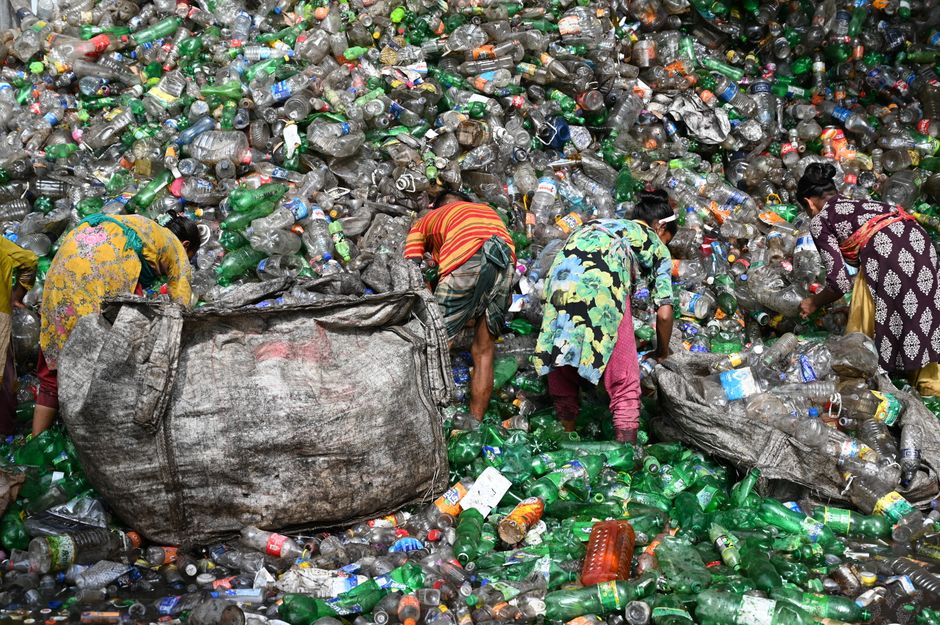
Photo by Mumtahina Tanni on Pexels
- Climate Change: A major threat, impacting all three pillars through extreme weather, resource scarcity, and displacement.
- Resource Depletion: Over-extraction of natural resources like water, forests, and minerals.
- Pollution: Air, water, and soil pollution harming ecosystems and human health.
- Inequality: Deep disparities in wealth and access to resources, often exacerbated by environmental degradation.
- Policy and Governance Gaps: Lack of effective policies, enforcement, and international cooperation.
3. Worked Example
Imagine a developing country with a rapidly growing urban population. The government wants to provide affordable housing and boost the local economy.
Traditional Approach (Unsustainable):
The government might clear a large forested area on the city's outskirts, build cheap concrete apartment blocks quickly, and establish a factory nearby that processes raw materials using polluting methods. This creates jobs and housing but leads to:
* Environmental Impact: Deforestation, loss of biodiversity, increased air/water pollution from the factory, higher carbon emissions from construction.
* Social Impact: Relocation of indigenous communities or farmers, potential health issues for residents near the factory, increased traffic congestion.
* Economic Impact: Initial economic boost, but long-term costs due to environmental damage (e.g., healthcare for pollution-related illnesses, loss of ecosystem services like flood control from forests).
Sustainable Development Approach:
Instead, the government could adopt an integrated plan:
1. Urban Planning: Revitalize existing urban areas or build on previously developed land to avoid clearing natural habitats. Prioritize green building materials and energy-efficient designs.
2. Circular Economy Principles: Attract businesses that use local recycled materials, minimize waste, and offer green jobs (e.g., waste management, renewable energy installation, eco-tourism).
3. Social Inclusion: Involve local communities in planning, ensure fair wages and safe working conditions, provide access to public transport, schools, and healthcare within the new developments.
4. Renewable Energy: Invest in solar panels on buildings and public spaces to power the new developments, reducing reliance on fossil fuels.
5. Ecosystem Services: Protect and restore urban green spaces, plant trees, and develop public parks, which improve air quality, manage stormwater, and provide recreational benefits.
This sustainable approach still creates jobs and housing, but it does so in a way that protects the environment, enhances social well-being, and ensures long-term economic resilience.
4. Key Takeaways
- Sustainable development integrates environmental protection, social equity, and economic viability.
- Intergenerational equity ensures present actions don't harm future generations' ability to meet their needs.
- Intragenerational equity addresses fairness and resource distribution among people living today.
- The concept of carrying capacity highlights the Earth's limits to sustain human activity.
- A circular economy promotes resource efficiency by minimizing waste and maximizing material reuse.
- Sustainable development requires holistic policies, not just isolated environmental initiatives.
- Global cooperation is essential to address transboundary issues like climate change.
Common mistakes to avoid:
- Viewing sustainable development as solely an environmental issue, ignoring social and economic dimensions.
- Focusing only on short-term gains without considering long-term environmental and social costs.
- Assuming technology alone will solve all sustainability challenges without changes in behavior or policy.
- Believing that economic growth is always incompatible with environmental protection; it's how growth occurs that matters.
5. Now Try It
Think about a specific development project in your local area (e.g., a new shopping mall, a housing estate, or an agricultural initiative). Spend 15 minutes outlining how that project could be redesigned or improved using the three pillars of sustainable development. What specific changes would you propose to enhance its environmental protection, social equity, and economic viability?
Frequently asked about Environmental and Sustainable Development
More from DEVELOPMENT STUDIES
Get the full DEVELOPMENT STUDIES curriculum
Clone the complete plan to your dashboard for unlimited AI-generated notes, practice quizzes, and a personalised revision schedule.
Save this course free