Hire-Purchase and Instalment Purchase Systems
From the financial accounting curriculum
TL;DR
Hire-purchase lets you use an asset by paying in installments, eventually owning it after the last payment. Instalment purchase is similar, but you own the asset from the start and pay off a debt. The key difference lies in when ownership transfers and how risks are managed.
1. The Mental Model
Think of hire-purchase like renting with an option to buy, where each rent payment builds towards ownership. Instalment purchase is more like taking out a loan to buy something immediately, then paying back the loan in parts.
2. The Core Material
When you acquire an asset without paying the full price upfront, you're likely entering into either a hire-purchase (HP) agreement or an instalment purchase (IP) agreement. Both involve regular payments, but their legal and accounting treatments differ significantly due to the timing of ownership transfer.
Hire-Purchase System
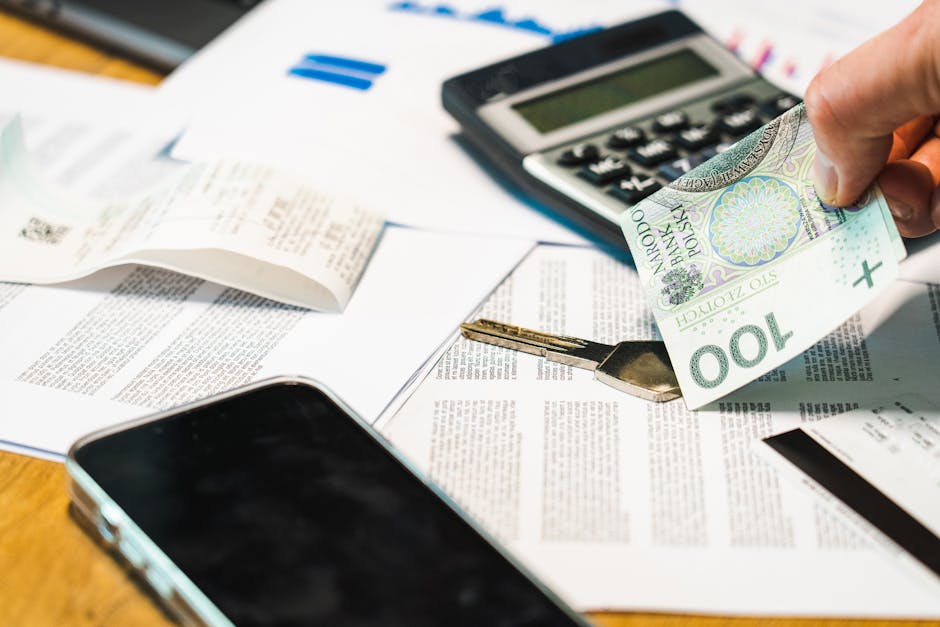
Photo by Jakub Zerdzicki on Pexels
Under a hire-purchase agreement, you, as the hirer, get immediate possession and use of an asset. However, the owner (the seller) retains legal ownership until you've paid all the agreed installments. Each payment is considered a "hire charge" until the final one, at which point ownership legally transfers to you.
Key features of Hire-Purchase:
* Ownership: Transfers only after the final installment is paid.
* Right to return: As the hirer, you can typically return the asset before paying all installments, though you might forfeit previous payments or be subject to penalties.
* Risk: Until ownership transfers, the owner bears risks like loss or damage, though the agreement usually makes the hirer responsible for maintenance.
* Repossession: If you default on payments, the owner can repossess the asset without legal proceedings (subject to specific legal thresholds in some jurisdictions).
* Accounting: The asset is initially recorded on the owner's books. You, as the hirer, record "hire charges" as an expense or, more commonly, accrue the asset and a liability once the agreement is signed, reflecting its true economic substance.
Instalment Purchase System

Photo by https://kaboompics.com/ on Pexels
In an instalment purchase agreement, you acquire the asset immediately, and ownership transfers to you at the time of the agreement. You essentially take out a loan (often from the seller or a third party) to buy the asset, which you then pay back in installments.
Key features of Instalment Purchase:
* Ownership: Transfers immediately upon signing the agreement.
* Right to return: Generally, you cannot return the asset just because you change your mind; you've already bought it.
* Risk: You, as the buyer, bear all risks (loss, damage) from the moment of purchase.
* Repossession: If you default, the seller would need to go through legal processes (like foreclosure) to reclaim the asset, similar to how a bank would with a mortgage.
* Accounting: The asset is recorded on your books immediately, along with a corresponding liability for the unpaid purchase price.
Accounting Treatment Differences

Photo by Pixabay on Pexels
Let's simplify the accounting view for the buyer/hirer:
flowchart TD
    subgraph Hire-Purchase System
        A[Agreement Signed] --> B{Ownership Transfer?};
        B -- No, only after final payment --> C[Hirer gets Possession];
        C --> D[Hirer Pays Installments];
        D -- All Payments Made --> E[Ownership Transfers to Hirer];
        E --> F[Asset on Hirer's Books (after transfer)];
    end

    subgraph Instalment Purchase System
        G[Agreement Signed] --> H[Ownership Transfers to Buyer Immediately];
        H --> I[Buyer gets Possession];
        I --> J[Buyer Pays Installments];
        J --> K[Asset on Buyer's Books (from start)];
    end

    style A fill:#D4E6F1,stroke:#3498DB,stroke-width:2px;
    style G fill:#D4E6F1,stroke:#3498DB,stroke-width:2px;
    style E fill:#A9DFBF,stroke:#2ECC71,stroke-width:2px;
    style K fill:#A9DFBF,stroke:#2ECC71,stroke-width:2px;
For Hire-Purchase (Hirer's Books, economic substance approach):
You'd record the asset at its cash price equivalent and a liability for the outstanding amount. Each installment payment has two parts:
1. Interest expense: The cost of financing.
2. Principal reduction: Reduces the liability.
Depreciation is charged on the asset from the date of acquisition.
For Instalment Purchase (Buyer's Books):
It's essentially the same as HP from an accounting standpoint for the buyer. You record the asset at its cash price equivalent and a liability. Installments are split into interest and principal. Depreciation is charged from the date of acquisition.
The main difference for accounting often comes down to the legal form versus economic substance. Modern accounting standards (like IFRS 16 Leases, which touches on similar concepts) generally lean towards recognizing the asset and liability from the start if the hirer effectively controls and benefits from the asset, even if legal ownership hasn't passed. For simpler cases and introductory financial accounting, the legal distinction is often emphasized.
Interest Calculation

Photo by RDNE Stock project on Pexels
A key part of these systems is calculating the interest embedded in the installments.
The total amount paid will be higher than the cash price. The difference is the "finance charge" or interest.
- Cash Price: The price if you paid upfront.
- Total Installments: Sum of all payments.
- Total Interest: Total Installments - Cash Price.
You'll need to allocate this total interest over the payment period. A common method is the annuity method (using present value tables) or the sum-of-digits method (a simpler approximation, often used for introductory problems when exact present value calculations aren't expected).
3. Worked Example
Let's say you enter into a hire-purchase agreement for a machine.
Details:
* Cash Price: \$10,000
* Down Payment: \$2,000
* Installments: 2 annual installments of \$4,500 each, payable at the end of each year.
* Agreement Date: January 1, Year 1
Calculations:
1. Total Paid: Down Payment + (Number of Installments × Installment Amount)
\$2,000 + (2 × \$4,500) = \$2,000 + \$9,000 = \$11,000
2. Total Interest (Finance Charge): Total Paid - Cash Price
\$11,000 - \$10,000 = \$1,000
Now, we need to allocate this \$1,000 interest over the two years. A common method in simpler problems, if an explicit interest rate isn't given, is the annuity method or the sum-of-digits method. Let's assume an implicit interest rate for this example.
If the agreement specifies a rate, say 10% per annum on the outstanding balance:
Amortization Schedule (Hirer's Books, assuming economic substance):
| Date | Opening Balance | Interest (10%) | Installment Paid | Principal Paid | Closing Balance |
|---|---|---|---|---|---|
| Jan 1, Year 1 | - | - | \$2,000 (Down) | - | \$8,000 | ||
| Dec 31, Year 1 | \$8,000 | \$800 | \$4,500 | \$3,700 | \$4,300 | ||
| Dec 31, Year 2 | \$4,300 | \$430 | \$4,500 | \$4,070 | \$230 (Rounding) | ||
| \$1,230** | **\$11,000 |
*Self-correction: The total interest calculated as \$1,000 earlier was based on a simple difference. With an explicit interest rate, the total interest over the life of the loan is the sum of the interest column.* Here, it's \$800 + \$430 = \$1,230. This means the cash price equivalent used to calculate the liability would be slightly different if the payments were fixed based on a specific rate. For simplicity, many problems will provide the cash price and then you derive the interest. If you had to work backwards from fixed payments and an interest rate, you'd calculate the present value of payments to find the cash price.
Let's stick to the scenario where the Cash Price is \$10,000** and **Total Interest is \$1,000.
We'll use a sum-of-digits method for interest allocation for simplicity, as it's common in entry-level problems when a rate isn't explicitly used to construct the payments.
Number of installments = 2. Sum of digits = 1 + 2 = 3.
- Year 1 Interest: (2/3) * \$1,000 = \$667
- Year 2 Interest: (1/3) * \$1,000 = \$333
Journal Entries (Hirer's Books - assuming economic substance):
Jan 1, Year 1 (Agreement Date):
* Debit Machine (Asset) \$10,000
* Credit Hire-Purchase Creditor (Liability) \$8,000 (Cash Price - Down Payment)
* Credit Cash / Bank \$2,000 (Down Payment)
(To record the acquisition of the machine and down payment)
Dec 31, Year 1 (First Installment & Interest):
* Debit Interest Expense \$667
* Debit Hire-Purchase Creditor \$3,833 (\$4,500 installment - \$667 interest)
* Credit Cash / Bank \$4,500
(To record first installment payment and allocate interest)
Dec 31, Year 1 (Depreciation - assuming 10% straight-line):
* Debit Depreciation Expense \$1,000 (\$10,000 / 10 years, or \$10,000 * 10%)
* Credit Accumulated Depreciation \$1,000
(To record depreciation for the year)
Dec 31, Year 2 (Second Installment & Interest):
* Debit Interest Expense \$333
* Debit Hire-Purchase Creditor \$4,167 (\$4,500 installment - \$333 interest)
* Credit Cash / Bank \
Frequently asked about Hire-Purchase and Instalment Purchase Systems
Study this next
Get the full financial accounting curriculum
Clone the complete plan to your dashboard for unlimited AI-generated notes, practice quizzes, and a personalised revision schedule.
Save this course free