Company Final Accounts
From the financial accounting curriculum
TL;DR
Company final accounts show a company's financial performance and position at a specific point in time or over a period. They typically include the Statement of Profit or Loss (income statement) and the Statement of Financial Position (balance sheet). Understanding these statements helps you assess a company's profitability, assets, liabilities, and equity.
1. The Mental Model
Think of final accounts as a company's financial report card. The Statement of Profit or Loss tells you how well the company performed during a specific period (like a school term), showing its income and expenses. The Statement of Financial Position is like a snapshot of what the company owns, owes, and what's left for its owners (like your net worth on a specific day).
2. The Core Material
Company final accounts are prepared at the end of an accounting period (usually a year) to summarise all the financial transactions. They are crucial for internal decision-making and for external stakeholders like investors and creditors.
2.1 Statement of Profit or Loss (Income Statement)
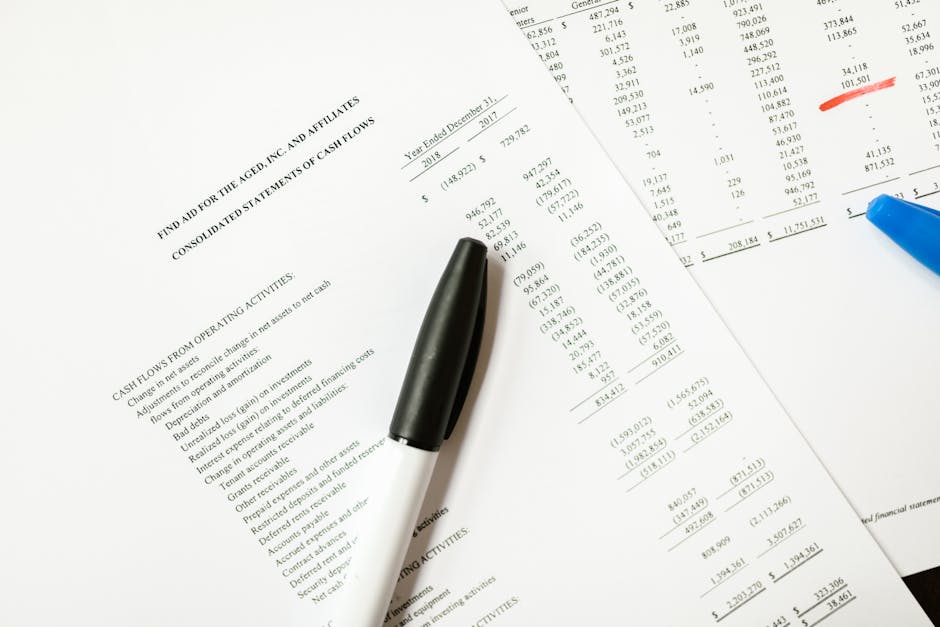
Photo by RDNE Stock project on Pexels
This statement shows a company's revenues and expenses over a period, ultimately calculating its profit or loss. It explains how much money the company made and how much it spent to earn that money.
Key Components:
* Revenue/Sales: The total money earned from selling goods or services.
* Cost of Sales: The direct costs associated with producing the goods or services sold (e.g., raw materials, direct labour).
* Gross Profit: Revenue minus Cost of Sales.
* Operating Expenses: Costs not directly related to production but necessary for running the business (e.g., salaries, rent, utilities, marketing).
* Profit from Operations (Operating Profit): Gross Profit minus Operating Expenses.
* Finance Costs: Interest paid on loans.
* Profit Before Tax: Operating Profit minus Finance Costs.
* Tax Expense: Corporate tax paid on profits.
* Profit for the Year (Net Profit): Profit Before Tax minus Tax Expense.
2.2 Statement of Financial Position (Balance Sheet)

Photo by RDNE Stock project on Pexels
This statement presents a company's assets, liabilities, and equity at a specific point in time. It follows the fundamental accounting equation: Assets = Liabilities + Equity.
Key Components:
* Assets: What the company owns that has future economic benefit.
* Non-Current Assets: Long-term assets used for more than one year (e.g., property, plant, equipment).
* Current Assets: Assets expected to be converted to cash or used up within one year (e.g., inventory, trade receivables, cash).
* Liabilities: What the company owes to others.
* Non-Current Liabilities: Long-term debts due after more than one year (e.g., long-term loans).
* Current Liabilities: Short-term debts due within one year (e.g., trade payables, short-term loans).
* Equity: The owners' claim on the company's assets after all liabilities are paid.
* Share Capital: Money invested by shareholders.
* Retained Earnings: Accumulated profits that have not been distributed to shareholders as dividends.
Here's how the two statements connect:
graph TD
    A["Business Transactions"] --> B["Trial Balance"]
    B --> C["Adjustments (Accruals, Prepayments, Depreciation)"]
    C --> D["Adjusted Trial Balance"]
    D --> E["Statement of Profit or Loss"]
    D --> F["Statement of Financial Position"]
    E --> G["Profit for the Year"]
    G --> H["Retained Earnings (in Statement of Financial Position)"]
2.3 Adjustments
Before preparing final accounts, you often need to make adjustments to ensure revenues and expenses are recognised in the correct period (accrual concept). Common adjustments include:
* Depreciation: Allocating the cost of a non-current asset over its useful life.
* Accruals: Expenses incurred but not yet paid (e.g., electricity bill due next month but covers this period).
* Prepayments: Expenses paid in advance but not yet incurred (e.g., rent paid for the next quarter).
* Bad Debts: Accounts receivable deemed uncollectible.
3. Worked Example
Let's prepare a basic Statement of Profit or Loss and Statement of Financial Position using the following adjusted figures for Alpha Co. for the year ended 31 December 2023:
Adjusted Trial Balance Extract:
* Sales Revenue: \$500,000
* Cost of Sales: \$200,000
* Administrative Expenses: \$120,000
* Selling Expenses: \$50,000
* Finance Costs: \$10,000
* Tax Expense: \$30,000
* Property, Plant & Equipment (PPE): \$300,000
* Inventory: \$40,000
* Trade Receivables: \$60,000
* Cash: \$20,000
* Share Capital: \$250,000
* Retained Earnings (1 Jan 2023): \$50,000
* Long-term Loan: \$100,000
* Trade Payables: \$40,000
Alpha Co.
Statement of Profit or Loss
For the Year Ended 31 December 2023
| \$ | |
|---|---|
| Sales Revenue | 500,000 |
| Less: Cost of Sales | (200,000) |
| Gross Profit | 300,000 |
| Less: Administrative Expenses | (120,000) |
| Less: Selling Expenses | (50,000) |
| Profit from Operations | 130,000 |
| Less: Finance Costs | (10,000) |
| Profit Before Tax | 120,000 |
| Less: Tax Expense | (30,000) |
| Profit for the Year | 90,000 |
Alpha Co.
Statement of Financial Position
As at 31 December 2023
| | \$** | **\$ |
| :----------------------- | -------: | -------: |
| ASSETS | | |
| Non-Current Assets | | |
| Property, Plant & Equipment | | 300,000 |
| Current Assets | | |
| Inventory | 40,000 | |
| Trade Receivables | 60,000 | |
| Cash | 20,000 | 120,000 |
| Total Assets | | 420,000 |
| | | |
| EQUITY AND LIABILITIES | | |
| Equity | | |
| Share Capital | 250,000 | |
| Retained Earnings (1 Jan 2023) | 50,000 | |
| Add: Profit for the Year | 90,000 | |
| Retained Earnings (31 Dec 2023) | | 140,000 |
| Total Equity | | 390,000 |
| Non-Current Liabilities | | |
| Long-term Loan | | 100,000 |
| Current Liabilities | | |
| Trade Payables | | 40,000 |
| Total Liabilities | | 140,000 |
| Total Equity and Liabilities | | 420,000 |
Notice how the Profit for the Year (\$90,000)** from the Income Statement increases the **Retained Earnings** in the Balance Sheet. Also, **Total Assets (\$420,000) equals Total Equity and Liabilities (\$420,000).
4. Key Takeaways
- The Statement of Profit or Loss shows financial performance over a period (revenue, expenses, profit).
- The Statement of Financial Position shows financial position at a point in time (assets, liabilities, equity).
- The accounting equation (Assets = Liabilities + Equity) must always balance in the Statement of Financial Position.
- Profit from the Statement of Profit or Loss increases Retained Earnings in the Statement of Financial Position.
- Adjustments are crucial to ensure financial statements accurately reflect the period's economic activity.
- Non-current items are long-term (over one year); current items are short-term (within one year).
Common Mistakes to Avoid:
* Mixing up current and non-current assets/liabilities.
* Forgetting to incorporate the current period's profit into retained earnings.
* Not ensuring the Statement of Financial Position balances.
* Misclassifying expenses (e.g., putting Cost of Sales under Operating Expenses).
5. Now Try It
Imagine you are given a trial balance for "Beta Ltd." as of 31 December 2024. Your task is to prepare a Statement of Profit or Loss for the year ended 31 December 2024, and a Statement of Financial Position as at 31 December 2024.
Here are some figures:
* Sales: \$700,000
* Cost of Sales: \$350,000
* Salaries Expense: \$100,000
* Rent Expense: \$30,000
* Depreciation Expense: \$20,000
* Bank Loan Interest (Finance Cost): \$5,000
* Income Tax Expense: \$25,000
* Property, Plant & Equipment: \$400,000
* Inventory: \$60,000
* Trade Receivables: \$80,000
* Cash: \$30,000
* Share Capital: \$300,000
* Retained Earnings (1 Jan 2024): \$100,000
* Long-term Bank Loan: \$150,000
* Trade Payables: \
Frequently asked about Company Final Accounts
Study this next
Get the full financial accounting curriculum
Clone the complete plan to your dashboard for unlimited AI-generated notes, practice quizzes, and a personalised revision schedule.
Save this course free