Waktu, Aktivitas, dan Orientasi Ruang
From the bahasa arab curriculum
TL;DR
You'll learn essential Bahasa Arab kosakata (vocabulary) for telling time, describing daily activities, and understanding spatial orientation. We'll cover how to ask and answer questions about "when" and "where," using common phrases and prepositions. Mastering these basics will significantly improve your ability to communicate in everyday Bahasa Arab.
1. The Mental Model
Think of this as building your foundational toolkit for describing your day and your surroundings in Arabic. You're learning the words and structures to place events in time and objects in space, making your conversations much more concrete.
2. The Core Material
2.1. Kosakata Waktu (Time Vocabulary)

Photo by Markus Winkler on Pexels
To talk about time, you'll need numbers and specific words for different periods.
- Jam (Hour/Clock): ساعة (saa'ah)
- Menit (Minute): دقيقة (daqiiqah)
- Pagi (Morning): صباح (sabah)
- Siang (Day/Noon): ظهر (dhuhr) / نهار (nahaar)
- Sore (Afternoon): مساء (masaa')
- Malam (Night): ليل (lail)
Contoh (Examples):
* Jam satu: الساعة الواحدة (as-saa'ah al-waahidah) - literally "the hour, the one"
* Jam tiga sore: الساعة الثالثة مساءً (as-saa'ah ath-thaalithah masaa'an)
* Jam tujuh malam: الساعة السابعة ليلاً (as-saa'ah as-saabi'ah lailan)
2.2. Kosakata Aktivitas (Activity Vocabulary)
Photo by Markus Winkler on Pexels
Here are some common verbs for daily actions. Remember, Arabic verbs change based on the subject. We'll use the basic "he/she does" form here.
- Makan (To eat): يأكل (ya'kul - he eats) / تأكل (ta'kul - she eats)
- Minum (To drink): يشرب (yashrab - he drinks) / تشرب (tashrab - she drinks)
- Tidur (To sleep): ينام (yanaam - he sleeps) / تنام (tanaam - she sleeps)
- Belajar (To study): يدرس (yadrus - he studies) / تدرس (tadrus - she studies)
- Pergi (To go): يذهب (yadhhab - he goes) / تذهب (tadhhab - she goes)
- Bekerja (To work): يعمل (ya'mal - he works) / تعمل (ta'mal - she works)
- Bangun (To wake up): يستيقظ (yastayqidh - he wakes up) / تستيقظ (tastayqidh - she wakes up)
2.3. Kosakata Orientasi Ruang (Spatial Orientation Vocabulary)
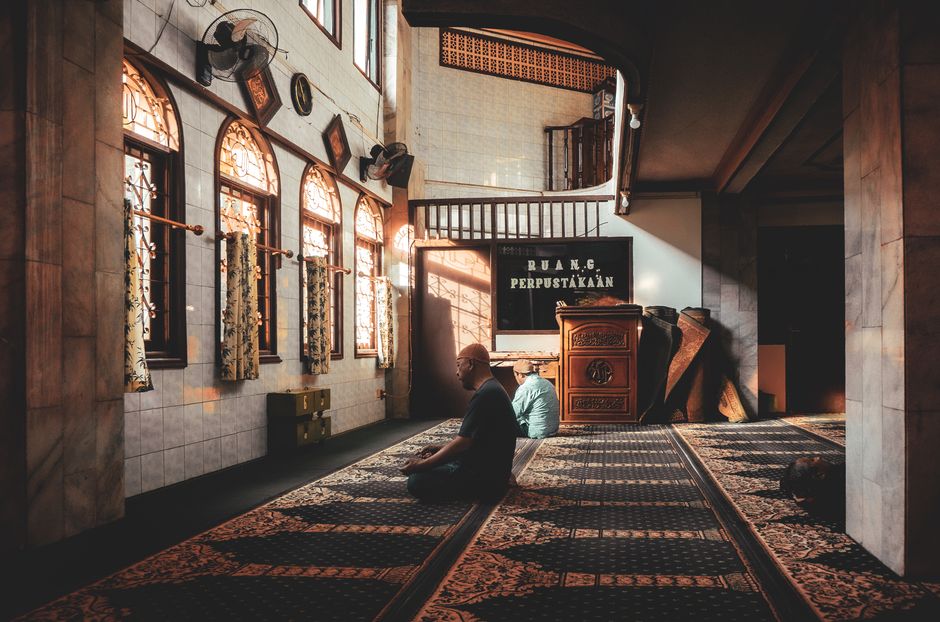
Photo by Imam Efendi on Pexels
These words help you describe where things are.
- Di (In/At): في (fii)
- Di atas (On/Above): فوق (fawqa)
- Di bawah (Under/Below): تحت (tahta)
- Di depan (In front of): أمام (amaama)
- Di belakang (Behind): خلف (khalfa)
- Di samping (Beside/Next to): بجانب (bijaanibi)
- Di antara (Between): بين (baina)
- Kanan (Right): يمين (yamiin)
- Kiri (Left): يسار (yasaar)
- Di sini (Here): هنا (hunaa)
- Di sana (There): هناك (hunaaka)
2.4. Membangun Kalimat (Building Sentences)

Photo by Ann H on Pexels
Here's how you might combine these elements.
graph TD
    A["Waktu (Kapan?)"] --> B["Aktivitas (Apa?)"]
    B --> C["Orientasi Ruang (Di mana?)"]
    A -- "Contoh: Jam 7 pagi" --> B
    B -- "Contoh: Saya makan" --> C
    C -- "Contoh: di dapur" --> D["Kalimat Lengkap"]
    A -- "Pukul berapa sekarang?" --> E["Pertanyaan Waktu"]
    B -- "Apa yang kamu lakukan?" --> F["Pertanyaan Aktivitas"]
    C -- "Di mana buku itu?" --> G["Pertanyaan Lokasi"]
    D["Kalimat Lengkap"]:::mainStyle
    E["Pertanyaan Waktu"]:::quesStyle
    F["Pertanyaan Aktivitas"]:::quesStyle
    G["Pertanyaan Lokasi"]:::quesStyle

    classDef mainStyle fill:#ACE1AF,stroke:#000,stroke-width:2px;
    classDef quesStyle fill:#FFF8DC,stroke:#000,stroke-width:1px;
Contoh Kalimat (Sentence Examples):
* Jam berapa sekarang? (Kam as-saa'ah al-'aan?)
* Sekarang jam sembilan pagi. (As-saa'ah at-taasi'ah sabahan.)
* Apa yang kamu lakukan jam dua siang? (Maadhaa taf'al/taf'aliina as-saa'ah ath-thaaniyah dhuhraan?)
* Saya bekerja di kantor. (A'malu fil maktabi.)
* Di mana buku itu? (Aina al-kitaab?)
* Buku itu di atas meja. (Al-kitaabu fawqa at-tawilah.)
3. Worked Example
Let's imagine a short daily routine description.
Pertanyaan (Question): Describe your morning routine from 6 AM to 8 AM.
Jawaban (Answer):
"Saya bangun jam enam pagi. (Astayqidh as-saa'ah as-saadisah sabahan.)
Kemudian, saya sarapan di dapur jam tujuh. (Thumma, atanaawalu al-fatuur fil matbakh as-saa'ah as-saabi'ah.)
Setelah itu, saya belajar Bahasa Arab di kamar saya jam delapan. (Ba'da dhaalika, adrusu al-lughah al-'arabiyyah fii ghurfati as-saa'ah ath-thaaminah.)"
Terjemahan (Translation):
"I wake up at six in the morning.
Then, I eat breakfast in the kitchen at seven.
After that, I study Arabic in my room at eight."
4. Key Takeaways
- Always state the hour first (as-saa'ah), then the number, then the time of day (sabahan, masaa'an).
- Verbs change based on who is doing the action; "ي" is often for male, "ت" for female or plural you.
- Prepositions like "في" (fii) and "فوق" (fawqa) are crucial for specifying locations.
- Practice combining time, activity, and location to form more complex sentences.
- Don't be afraid to make mistakes; it's how you learn and improve your fluency.
- Arabic uses specific terms for parts of the day (pagi, siang, sore, malam) that are important for context.
Common Mistakes to Avoid:
- Forgetting "as-saa'ah" before the hour when stating the time.
- Using the wrong verb conjugation for the subject (e.g., using "ya'kul" for a female).
- Mixing up "fii" (in/at) with "fawqa" (on) or "tahta" (under).
- Not using the correct time of day suffix like "-an" (e.g., sabahan for morning).
5. Now Try It
Think about your evening routine from 5 PM to 9 PM. Write down 3-4 sentences in Bahasa Arab describing what you do, when you do it, and where. For example, "I eat dinner at 6 PM in the dining room" or "I watch TV at 8 PM in the living room." Once you're done, check if you've used the correct time, activity, and spatial orientation vocabulary.
Frequently asked about Waktu, Aktivitas, dan Orientasi Ruang
More from bahasa arab
Get the full bahasa arab curriculum
Clone the complete plan to your dashboard for unlimited AI-generated notes, practice quizzes, and a personalised revision schedule.
Save this course free