Kalimat Sederhana dan Percakapan Dasar
From the bahasa arab curriculum
TL;DR
You'll learn to construct basic Arabic sentences using a simple Subject-Verb-Object (SVO) or Subject-Predicate structure. This note covers essential vocabulary for greetings and introductions, and shows you how to combine these elements into short, meaningful conversations. Master these basics, and you'll be able to communicate simple ideas in Arabic.
1. The Mental Model
Think of Arabic sentences like building blocks: you pick a person (subject), an action or description (verb/predicate), and sometimes an object. Basic conversations are just strings of these simple sentences, flowing logically.
2. The Core Material
To form simple sentences and engage in basic conversations, you'll need to understand a few key components: subjects, verbs/predicates, and common conversational phrases.
a. Kata Ganti (Pronouns - Subjek)

Photo by Tubagus Alief Leo on Pexels
These are your 'who':
- أنا (Ana) - Saya (I)
- أنتَ (Anta) - Kamu (laki-laki) (You - male)
- أنتِ (Anti) - Kamu (perempuan) (You - female)
- هو (Huwa) - Dia (laki-laki) (He)
- هي (Hiya) - Dia (perempuan) (She)
b. Kata Kerja atau Predikat Sederhana
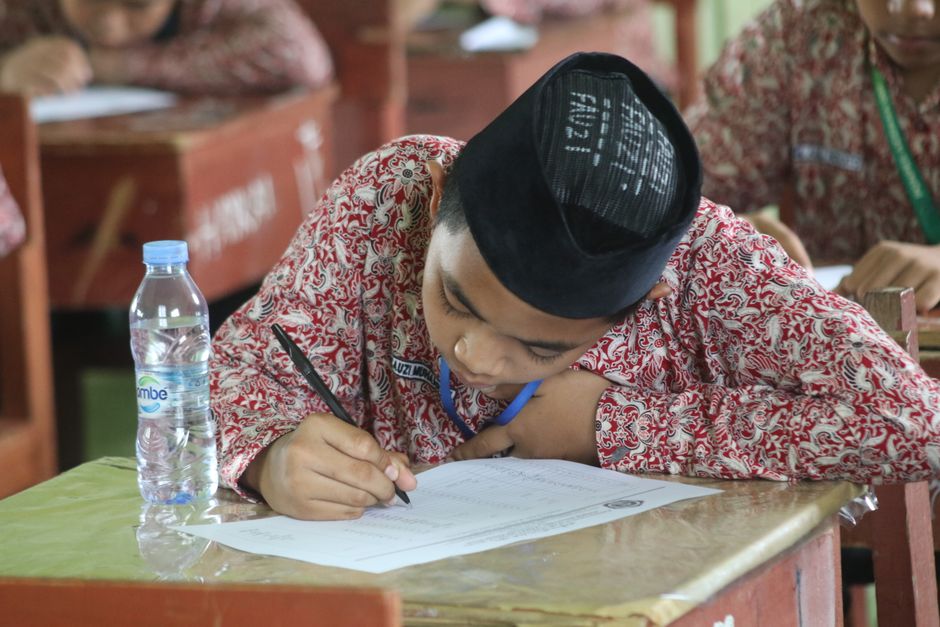
Photo by Muhaimin Abdul Aziz on Pexels
These are your 'what' or 'doing':
- أذهب (Adzhabu) - Saya pergi (I go)
- أدرس (Adrusu) - Saya belajar (I study)
- طالب (Thaalib) - Murid (laki-laki) (Student - male)
- طالبة (Thaalibah) - Murid (perempuan) (Student - female)
- جميل (Jameel) - Cantik/Bagus (male) (Beautiful/Good)
- جميلة (Jameelah) - Cantik/Bagus (female) (Beautiful/Good)
Notice how adjectives often match the gender of the noun.
c. Struktur Kalimat Dasar

Photo by Suzy Hazelwood on Pexels
Arabic often follows a Subject-Verb-Object (SVO) order, especially in simple declarative sentences, but also commonly uses a Subject-Predicate structure for descriptions.
- SVO: أنا أدرس اللغة العربية. (Ana adrusu al-lughah al-'arabiyyah.) - Saya belajar bahasa Arab. (I study Arabic language.)
- Subject-Predicate: هو طالب. (Huwa thaalib.) - Dia adalah murid. (He is a student.)
d. Percakapan Dasar: Salam dan Perkenalan

Photo by Keegan Checks on Pexels
Here are essential phrases for starting and continuing a conversation:
- السلام عليكم (Assalamu 'alaikum) - Semoga keselamatan atas kalian (Peace be upon you) - Balasan: وعليكم السلام (Wa 'alaikum assalam)
- كيف حالك؟ (Kayfa haluk?) - Apa kabarmu? (male) / (Kayfa haluki?) (female) - Balasan: أنا بخير، شكراً. (Ana bi khayr, syukran.) - Saya baik, terima kasih.
- ما اسمك؟ (Ma ismuk?) - Siapa namamu? (male) / (Ma ismuki?) (female) - Balasan: اسمي [Nama Anda]. (Ismi [Nama Anda].) - Nama saya [Your Name].
- من أين أنت؟ (Min ayna ant?) - Dari mana kamu? (male) / (Min ayna anti?) (female) - Balasan: أنا من [Negara/Kota Anda]. (Ana min [Negara/Kota Anda].) - Saya dari [Your Country/City].
graph TD
    A["Mulai Percakapan"] --> B{"Sapaan Awal"}
    B -- "Sapaan (Contoh: Assalamu 'alaikum)" --> C["Balas Sapaan"]
    C --> D{"Tanya Kabar"}
    D -- "Tanya Kabar (Contoh: Kayfa haluk?)" --> E["Jawab Kabar"]
    E --> F{"Tanya Nama"}
    F -- "Tanya Nama (Contoh: Ma ismuk?)" --> G["Jawab Nama"]
    G --> H{"Tanya Asal"}
    H -- "Tanya Asal (Contoh: Min ayna ant?)" --> I["Jawab Asal"]
    I --> J["Selesai/Lanjut Percakapan"]
3. Worked Example
Let's put it all together in a short dialogue:
Ali: السلام عليكم (Assalamu 'alaikum)
Sarah: وعليكم السلام (Wa 'alaikum assalam)
Ali: كيف حالك؟ (Kayfa haluk?)
Sarah: أنا بخير، شكراً. كيف حالك أنت؟ (Ana bi khayr, syukran. Kayfa haluk ant?)
(I'm fine, thank you. How are you?)
Ali: أنا بخير أيضاً. ما اسمك؟ (Ana bi khayr aydhan. Ma ismuk?)
(I'm fine too. What's your name?)
Sarah: اسمي سارة. وأنت؟ (Ismi Sarah. Wa ant?)
(My name is Sarah. And you?)
Ali: اسمي علي. من أين أنت يا سارة؟ (Ismi Ali. Min ayna anti ya Sarah?)
(My name is Ali. Where are you from, Sarah?)
Sarah: أنا من إندونيسيا. (Ana min Indonesia.)
(I'm from Indonesia.)
Ali: أهلاً بك يا سارة! (Ahlan bik ya Sarah!)
(Welcome, Sarah!)
4. Key Takeaways
- Arabic basic sentences use a Subject-Verb-Object (SVO) or Subject-Predicate structure.
- Pronouns like أنا (I), أنتَ (you-m), أنتِ (you-f) are essential subjects.
- Adjectives often change form to match the gender of the noun they describe.
- "السلام عليكم" is the standard greeting, answered with "وعليكم السلام".
- "كيف حالك?" is how you ask "How are you?", with gender-specific endings (-k for male, -ki for female).
- Always respond to greetings and questions politely to keep the conversation flowing.
Common mistakes you should avoid:
* Forgetting to match adjective gender to the noun (e.g., using "جميل" for a female).
* Using "أنتَ" for a female or "أنتِ" for a male when asking questions.
* Not responding to a greeting; it's considered impolite.
* Trying to translate word-for-word from your native language; focus on the general meaning and structure.
5. Now Try It
Imagine you meet a new person named Ahmad. Write a short conversation (4-6 exchanges) where you introduce yourself, ask his name and where he's from, and respond appropriately. Use the phrases and structures you've learned.
Success looks like: A clear, polite conversation with correct use of gender-specific pronouns and responses, demonstrating you can initiate and sustain a basic introduction.
Frequently asked about Kalimat Sederhana dan Percakapan Dasar
Study this next
Get the full bahasa arab curriculum
Clone the complete plan to your dashboard for unlimited AI-generated notes, practice quizzes, and a personalised revision schedule.
Save this course free