Unit 2: Molecular Interactions and Reactions
From the QCE, Chemistry Unit 1 and 2 exam revision curriculum
TL;DR
This unit explores how different types of intermolecular forces influence the physical properties of substances. You'll learn to predict solubility, boiling points, and conductivity based on these forces and chemical bonding. Understanding these interactions is key to explaining why chemicals behave the way they do.
1. The Mental Model
Imagine molecules like tiny magnets; how strongly they stick together (or don't) affects everything from whether they're a gas or a solid to if they dissolve in water. The stronger the "stickiness," the more energy you need to pull them apart.
2. The Core Material
This unit is all about connecting the structure of molecules to their macroscopic properties. It boils down to understanding the types of forces acting between molecules (intermolecular forces, IMF) and within molecules (intramolecular forces, i.e., chemical bonds).
2.1 Intramolecular Forces (Bonds)

Photo by Laszlo Magyar on Pexels
These are the strong forces within a molecule.
* Ionic bonds: Electrostatic attraction between oppositely charged ions (metal + non-metal). They form crystal lattices.
* Covalent bonds: Sharing of electrons between non-metal atoms. Can be polar (unequal sharing) or non-polar (equal sharing).
* Metallic bonds: Delocalised electrons shared among a lattice of positive metal ions.
These bonds are much stronger than IMFs and require significant energy to break, typically involving chemical reactions, not just phase changes.
2.2 Intermolecular Forces (IMFs)

Photo by Nicola Narracci on Pexels
These are the weaker forces between molecules and determine physical properties like boiling point, melting point, and solubility.
- Dispersion forces (London Dispersion Forces, LDF): Present in ALL molecules. Caused by temporary, instantaneous dipoles due to electron movement. Strength increases with the number of electrons (larger molecules have stronger LDFs).
- Dipole-dipole forces: Occur between polar molecules. The positive end of one molecule is attracted to the negative end of another. Stronger than LDFs for molecules of similar size.
- Hydrogen bonding: A special, strong type of dipole-dipole force. Occurs when hydrogen is directly bonded to a highly electronegative atom (N, O, or F). It's crucial for water's unique properties.
2.3 Predicting Properties
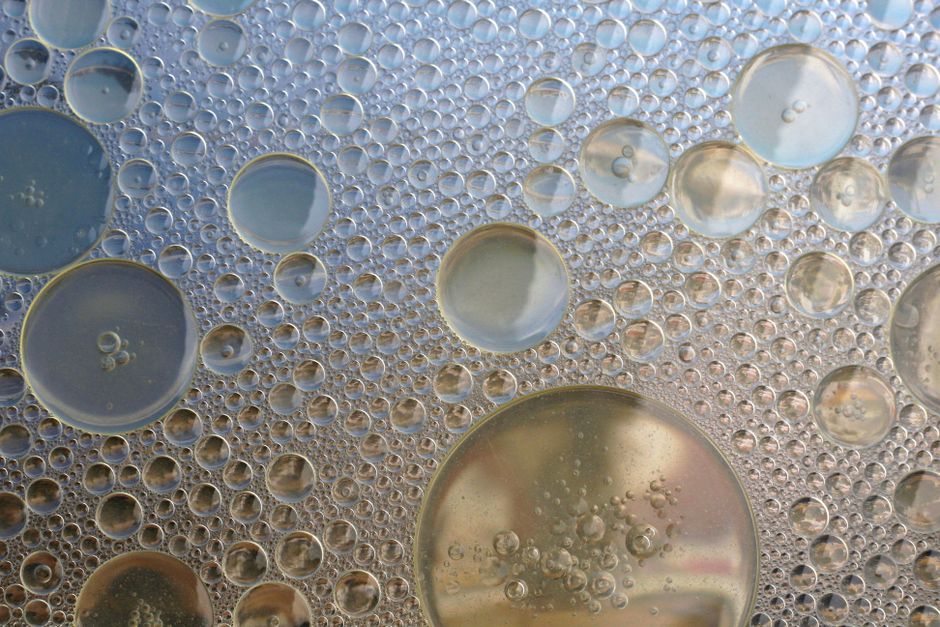
Photo by Landiva Weber on Pexels
- Boiling/Melting Point: Higher IMFs = more energy needed to overcome them = higher boiling/melting point.
- Solubility: "Like dissolves like." Polar solutes dissolve in polar solvents (e.g., sugar in water). Non-polar solutes dissolve in non-polar solvents (e.g., oil in petrol).
- Conductivity: Requires mobile charged particles.
- Ionic compounds: Conduct as liquids or in solution (ions are mobile), but not as solids (ions are fixed).
- Metals: Conduct as solids and liquids (delocalised electrons).
- Covalent compounds: Generally don't conduct (no free-moving charged particles), except for a few exceptions like graphite.
Here's a flowchart to help you classify substances and predict some properties:
graph TD
    A["Substance"] --> B{"Metal?"}
    B -- Yes --> C["Metallic Bonding"]
    C --> C1("Conducts Electricity (Solid/Liquid)")
    C --> C2("High Melting/Boiling Point")

    B -- No --> D{"Ionic (Metal + Non-metal)?"}
    D -- Yes --> E["Ionic Bonding"]
    E --> E1("High Melting/Boiling Point")
    E --> E2("Conducts (Liquid/Aqueous), Not (Solid)")
    E --> E3("Brittle")

    D -- No --> F{"Covalent (Non-metals only)?"}
    F -- Yes --> G{"Giant Covalent Network?"}
    G -- Yes --> H["Strong Covalent Bonds (Network)"]
    H --> H1("Very High Melting/Boiling Point")
    H --> H2("Very Hard")
    H --> H3("Generally Non-conductive (except Graphite)")

    G -- No --> I["Simple Molecular (Discrete Molecules)"]
    I --> J{"Polar Bonds & Asymmetric Shape?"}
    J -- Yes --> K["Polar Molecule"]
    K --> K1{"H-bonded to N, O, or F?"}
    K1 -- Yes --> L["Hydrogen Bonding (Strongest IMF)"]
    K1 -- No --> M["Dipole-Dipole (Medium IMF)"]
    L --> N1("Higher MP/BP")
    M --> N2("Moderate MP/BP")
    K --> N3("Soluble in Polar Solvents")
    K --> N4("Non-conductive")

    J -- No --> O["Non-Polar Molecule"]
    O --> P["Dispersion Forces Only (Weakest IMF)"]
    P --> P1("Lower MP/BP")
    P --> P2("Soluble in Non-Polar Solvents")
    P --> P3("Non-conductive")
3. Worked Example
Question: Compare the boiling points and solubility in water of ammonia (NH₃) and methane (CH₄). Explain your reasoning.
Answer:
1. Identify bonding type: Both are simple molecular covalent compounds.
2. Determine polarity and IMFs for NH₃:
* N is more electronegative than H, so N-H bonds are polar.
* Ammonia has a trigonal pyramidal shape, making it a polar molecule.
* Because H is bonded directly to N, NH₃ exhibits hydrogen bonding (in addition to dipole-dipole and dispersion forces).
3. Determine polarity and IMFs for CH₄:
* C and H have similar electronegativity, so C-H bonds are weakly polar, but the tetrahedral shape of methane is symmetrical.
* Therefore, methane is a non-polar molecule.
* It only exhibits dispersion forces.
4. Compare IMFs: Ammonia has hydrogen bonding (strongest IMF), while methane only has weak dispersion forces.
5. Predict properties:
* Boiling Point: NH₃ will have a significantly higher boiling point than CH₄ because hydrogen bonds require much more energy to overcome than dispersion forces.
* Solubility in Water: Water is a highly polar molecule with hydrogen bonding. Since NH₃ is also polar and can form hydrogen bonds with water, it will be very soluble. CH₄ is non-polar and cannot form strong attractions with water, so it will be largely insoluble.
4. Key Takeaways
- Intramolecular forces (bonds) are stronger than intermolecular forces (IMFs).
- IMFs (dispersion, dipole-dipole, hydrogen bonding) dictate physical properties like melting/boiling points and solubility.
- Hydrogen bonding is the strongest type of IMF and occurs when H is bonded to N, O, or F.
- "Like dissolves like": polar substances dissolve in polar solvents, and non-polar in non-polar.
- For electrical conductivity, you need mobile charged particles (ions or delocalised electrons).
- Always consider molecular shape when determining overall molecular polarity.
- Stronger IMFs mean higher energy is needed to separate molecules, leading to higher boiling/melting points.
5. Now Try It
Choose three common substances (e.g., ethanol, iodine, potassium chloride). For each, identify its type of bonding, predict the dominant intermolecular forces (if any), and then explain how these forces influence its expected melting point and its solubility in water. Spend 15 minutes sketching out your reasoning for each.
Frequently asked about Unit 2: Molecular Interactions and Reactions
Study this next
Get the full QCE, Chemistry Unit 1 and 2 exam revision curriculum
Clone the complete plan to your dashboard for unlimited AI-generated notes, practice quizzes, and a personalised revision schedule.
Save this course free