Introduction to Kirchhoff's Laws
From the Circuit Calculations based Kirchoff's second law curriculum
TL;DR
Kirchhoff's Laws are fundamental rules for analyzing electrical circuits, allowing you to understand how current and voltage behave. Kirchhoff's Current Law (KCL) states that the total current entering a junction must equal the total current leaving it. Kirchhoff's Voltage Law (KVL) states that the sum of all voltage drops and rises around any closed loop in a circuit must be zero.
1. The Mental Model
Imagine electricity flowing through a circuit like water through pipes. KCL is like saying no water is lost or gained at a pipe junction. KVL is like saying if you walk around a complete loop of pipes, your elevation change ends up being zero.
2. The Core Material
Kirchhoff's Laws are two fundamental principles that simplify the analysis of complex electrical circuits. They're based on the conservation of charge and energy.
2.1 Kirchhoff's Current Law (KCL)

Photo by Wolfgang Weiser on Pexels
KCL, also known as Kirchhoff's first law or the junction rule, states that the algebraic sum of currents entering a node (or junction) is equal to the algebraic sum of currents leaving that node. Simply put, current doesn't pile up or get used up at a junction; it just flows through.
Think of a node as a "meeting point" for currents. If current flows into the node, we usually assign it a positive value. If it flows out of the node, we assign it a negative value. Therefore, the sum of all currents at any node must be zero.
∑I_in = ∑I_out or ∑I_node = 0
2.2 Kirchhoff's Voltage Law (KVL)
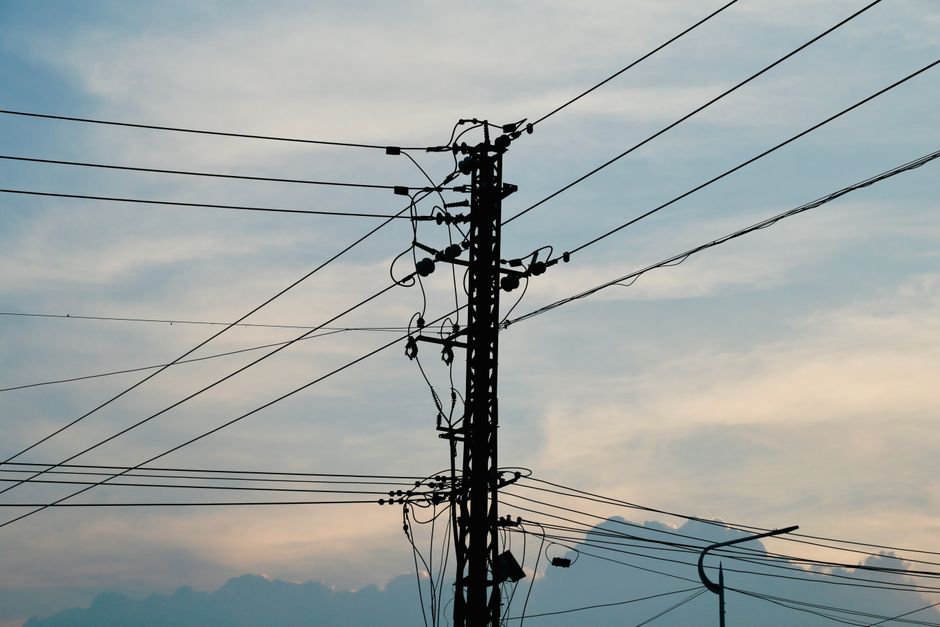
Photo by Andy Lee on Pexels
KVL, also known as Kirchhoff's second law or the loop rule, states that the algebraic sum of all voltages around any closed loop in a circuit is equal to zero. This means that if you trace a path from a point, go through various components, and return to the starting point, the total voltage change you experience will be zero. This reflects the conservation of energy.
When applying KVL, you traverse a loop and sum the voltage changes.
* If you move through a resistor in the direction of current flow, it's a voltage drop (negative). If you move against the current, it's a voltage rise (positive).
* If you move from the negative to the positive terminal of a voltage source, it's a voltage rise (positive). If you move from positive to negative, it's a voltage drop (negative).
∑V_loop = 0
Here's a visual way to think about how these laws apply:
graph TD
    A["Circuit Analysis"] --> B["Kirchhoff's Laws"]
    B --> C["Kirchhoff's Current Law (KCL)"]
    B --> D["Kirchhoff's Voltage Law (KVL)"]
    C --> C1["Conservation of Charge"]
    C --> C2["Current In = Current Out at Node"]
    D --> D1["Conservation of Energy"]
    D --> D2["Sum of Voltages = 0 in Loop"]
    C1 --> C2;
    D1 --> D2;
3. Worked Example
Let's apply KCL to a simple junction.
Imagine a node where three wires meet.
* Wire 1 has 5 Amperes (A) flowing into the node.
* Wire 2 has 2 Amperes (A) flowing into the node.
* Wire 3 is unknown (I3) and is flowing out of the node.
According to KCL:
Currents entering = Currents leaving
I1 + I2 = I3
5A + 2A = I3
7A = I3
So, 7 Amperes must be flowing out of the node through Wire 3.
Now, for KVL, consider a simple series circuit with a 10V battery and two resistors, R1 (3 Ohms) and R2 (7 Ohms). The current (I) flows clockwise.
Applying Ohm's Law, the voltage drop across R1 is V1 = I * R1 and across R2 is V2 = I * R2.
Let's assume we traverse the loop clockwise, starting from the negative terminal of the battery.
* Going from the negative to positive terminal of the 10V battery: +10V (voltage rise).
* Going through R1 in the direction of current: -V1 (voltage drop).
* Going through R2 in the direction of current: -V2 (voltage drop).
According to KVL:
+10V - V1 - V2 = 0
10V = V1 + V2
10V = (I * R1) + (I * R2)
10V = I * (R1 + R2)
10V = I * (3Ω + 7Ω)
10V = I * 10Ω
I = 1A
With I = 1A, then V1 = 1A * 3Ω = 3V and V2 = 1A * 7Ω = 7V.
Checking KVL: 10V - 3V - 7V = 0. It holds true!
4. Key Takeaways
- Kirchhoff's Current Law (KCL) is based on the conservation of charge and states that current entering a node must equal current leaving it.
- Kirchhoff's Voltage Law (KVL) is based on the conservation of energy and states that the sum of voltages around any closed loop is zero.
- KCL helps you find unknown currents at junctions in a circuit.
- KVL helps you find unknown voltages or currents around closed paths in a circuit.
- Remember to assign correct signs (+/-) to currents and voltages when applying the laws.
- These two laws are the foundation for more advanced circuit analysis techniques.
Common mistakes:
- Forgetting to assign a direction to currents before applying KCL, leading to incorrect signs.
- Not choosing a consistent direction (clockwise/counter-clockwise) when traversing a loop for KVL, leading to sign errors.
- Confusing voltage sources with voltage drops across resistors.
- Applying KCL to a loop or KVL to a node – remember, KCL is for nodes, KVL is for loops!
5. Now Try It
Draw a circuit with a 12V battery, a 4Ω resistor (R1), and two 6Ω resistors (R2 and R3) connected in parallel to each other, and this parallel combination is in series with R1 and the battery.
- Identify a node where current splits or combines.
- Apply KCL at that node.
- Identify a closed loop.
- Apply KVL to that loop to find the total current flowing from the battery.
Success looks like: You should be able to write down the KCL equation for the parallel branch and the KVL equation for the main loop, ultimately calculating the total circuit current (which should be 2 Amperes).
Frequently asked about Introduction to Kirchhoff's Laws
Study this next
Get the full Circuit Calculations based Kirchoff's second law curriculum
Clone the complete plan to your dashboard for unlimited AI-generated notes, practice quizzes, and a personalised revision schedule.
Save this course free