Core Concepts
From the High School Biology: Cell Structure curriculum
TL;DR
Cells are the fundamental units of life, acting as tiny, self-contained factories that perform all necessary biological functions. They come in two main types, prokaryotic and eukaryotic, distinguished by the presence or absence of a nucleus and other membrane-bound organelles. Understanding these basic building blocks is key to grasping how all living things work.
1. The Mental Model
Think of a cell like a miniature house. It has walls (the cell membrane), a control room (the nucleus for eukaryotes, or a central area for prokaryotes), and various rooms and appliances (organelles) that each have a specific job to keep the house running.
2. The Core Material
At its heart, biology is about understanding life, and the cell is where life truly begins. Every living thing you've ever seen, from the smallest bacteria to the largest whale, is made of one or more cells.
What is a Cell?

Photo by Monstera Production on Pexels
A cell is the smallest unit of life that can replicate independently. It's essentially a self-contained biological unit.
Two Main Cell Types: Prokaryotes vs. Eukaryotes
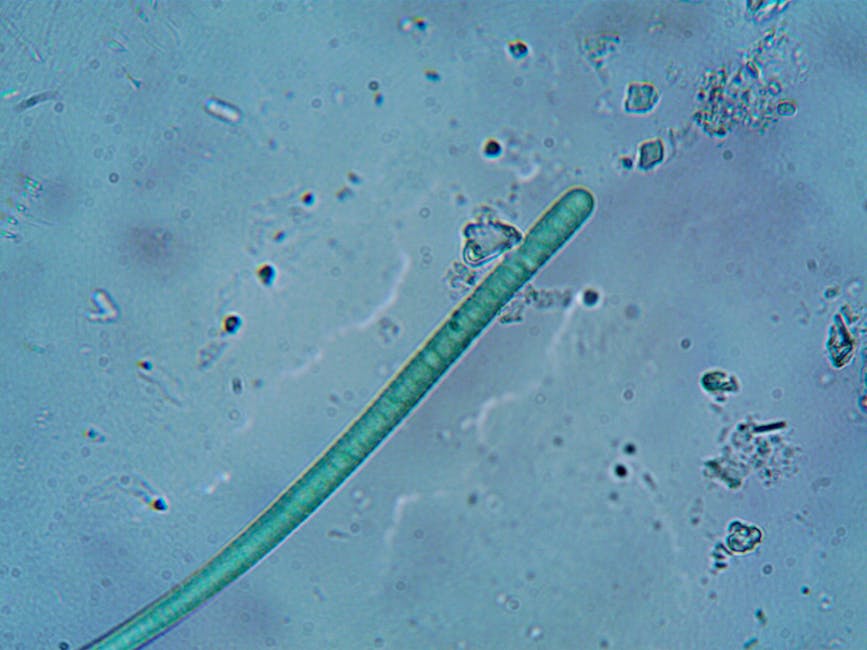
Photo by turek on Pexels
The biggest distinction we make when talking about cells is whether they are prokaryotic or eukaryotic.
Prokaryotic Cells
- These are the oldest and simplest type of cell.
- They lack a true nucleus and other membrane-bound organelles. Their genetic material (DNA) is usually a single circular chromosome floating freely in the cytoplasm.
- Bacteria and Archaea are examples of prokaryotes.
- Think of them as small, efficient, single-room studios.
Eukaryotic Cells
- These cells are more complex and evolved later.
- They have a true nucleus (which houses the DNA) and many other membrane-bound organelles, each performing specific tasks.
- Animals, plants, fungi, and protists are all made of eukaryotic cells.
- Think of them as multi-room houses with specialized areas for different functions.
Here's a diagram to help visualize the key differences:
graph TD
    A["Cell Types"] --> B["Prokaryotic"]
    A --> C["Eukaryotic"]

    B --> D["No true nucleus"]
    B --> E["No membrane-bound organelles"]
    B --> F["DNA in cytoplasm"]
    B --> G["Smaller, simpler"]
    B --> H["Examples: Bacteria, Archaea"]

    C --> I["True nucleus (contains DNA)"]
    C --> J["Membrane-bound organelles (mitochondria, ER, etc.)"]
    C --> K["Larger, more complex"]
    C --> L["Examples: Animals, Plants, Fungi, Protists"]
Universal Cell Components

Photo by Tyler Lastovich on Pexels
Despite their differences, all cells share some fundamental components:
- Cell Membrane: The outer boundary that controls what enters and exits the cell. It's like the walls of our "house."
- Cytoplasm: The jelly-like substance that fills the cell and surrounds the organelles. It's where many chemical reactions happen.
- Ribosomes: Tiny structures responsible for making proteins. All cells need proteins to function, so all cells have ribosomes.
- Genetic Material (DNA): The blueprints for everything the cell does.
3. Worked Example
Imagine you're looking at a microscopic image of a cell. How do you tell if it's prokaryotic or eukaryotic?
Observation: You see a distinct, dark-stained spherical structure in the center of the cell, separate from the rest of the cell's contents. You also notice several smaller, distinct structures floating around.
Analysis: The "distinct, dark-stained spherical structure" is a strong indicator of a nucleus. The "several smaller, distinct structures" suggest the presence of other membrane-bound organelles.
Conclusion: Based on these observations, you can confidently classify this as a eukaryotic cell. If you didn't see a clear nucleus and the DNA seemed to be just in the general cell area, it would likely be prokaryotic.
4. Key Takeaways
- Cells are the basic structural and functional units of all living organisms.
- Prokaryotic cells are simpler, lack a nucleus and membrane-bound organelles, and include bacteria.
- Eukaryotic cells are more complex, possess a nucleus and many organelles, and make up plants, animals, fungi, and protists.
- All cells share a cell membrane, cytoplasm, ribosomes, and genetic material (DNA).
- The presence or absence of a true nucleus is the most significant differentiating factor between cell types.
Common mistakes to avoid:
- Confusing the cytoplasm with the cell membrane; the cytoplasm is the inside jelly, the membrane is the outer boundary.
- Thinking that only eukaryotic cells have DNA; all cells contain genetic material.
- Assuming prokaryotes are "less evolved" or "worse" than eukaryotes; they are just different and incredibly successful in their own ways.
- Forgetting that ribosomes are present in both cell types because protein synthesis is universal.
5. Now Try It
Take a piece of paper and draw two cells side-by-side: one prokaryotic and one eukaryotic. Label the nucleus (if present), cell membrane, cytoplasm, and ribosomes in both. Try to include at least two other organelles you might remember for the eukaryotic cell.
What success looks like: You'll have two clearly distinct drawings. The prokaryotic cell will be simpler with its DNA floating free, and the eukaryotic cell will have a well-defined nucleus and a few other labeled organelles like mitochondria or endoplasmic reticulum.
Frequently asked about Core Concepts
Study this next
Get the full High School Biology: Cell Structure curriculum
Clone the complete plan to your dashboard for unlimited AI-generated notes, practice quizzes, and a personalised revision schedule.
Save this course free