Introduction
From the High School Biology: Cell Structure curriculum
TL;DR
Cells are the basic building blocks of all living things, from tiny bacteria to giant trees and even you! There are two main types of cells: prokaryotic cells, which are simpler and lack a nucleus, and eukaryotic cells, which are more complex with a nucleus and other specialized parts. Understanding cells is key to understanding how life works.
1. The Mental Model
Imagine a LEGO brick. Just like you can build anything from a simple car to a huge castle with LEGO bricks, cells are the fundamental "bricks" that make up all living organisms.
2. The Core Material
Biology is the study of life, and at its most basic level, life starts with the cell. Every living thing you can think of, whether it's a plant, an animal, a fungus, or a bacterium, is made of one or more cells.
Think of cells as tiny, self-contained units that can carry out all the processes necessary for life. This includes things like getting energy, growing, and reproducing.
There are two main categories of cells:
2.1 Prokaryotic Cells

Photo by turek on Pexels
These are the oldest and simplest types of cells. They don't have a nucleus (a membrane-bound compartment that holds the genetic material) or other membrane-bound organelles (tiny structures with specific jobs). Their genetic material (DNA) just floats freely in the cell. Bacteria and archaea are examples of prokaryotic organisms.
2.2 Eukaryotic Cells
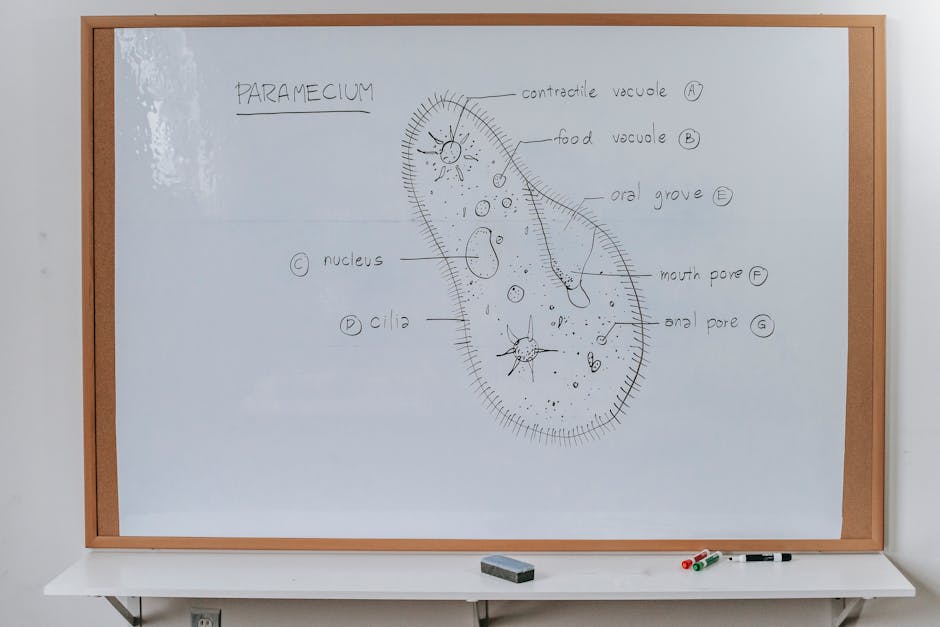
Photo by Katerina Holmes on Pexels
These are more complex and larger than prokaryotic cells. They have a true nucleus that houses their genetic material, and they also contain many different organelles that perform specialized functions. Animals, plants, fungi, and protists are all made of eukaryotic cells.
Here's a simple way to visualize the relationship between these cell types and the organisms they form:
graph TD
    A["Life Forms"] --> B["Made of Cells"]
    B --> C["Prokaryotic Cells"]
    B --> D["Eukaryotic Cells"]
    C --> C1["Bacteria"]
    C --> C2["Archaea"]
    D --> D1["Animals"]
    D --> D2["Plants"]
    D --> D3["Fungi"]
    D --> D4["Protists"]
2.3 Why are Cells Important?

Photo by Monstera Production on Pexels
Understanding cells is fundamental to understanding biology because:
* Structure: They dictate the structure of all organisms.
* Function: They carry out all life processes, from metabolism to reproduction.
* Disease: Many diseases, like cancer or infections, are essentially problems at the cellular level.
3. Worked Example
Let's think about a common organism: a human. You, as a human, are a multicellular organism. This means you are made of trillions of eukaryotic cells working together. Each of your cells, whether it's a muscle cell, a nerve cell, or a skin cell, has a nucleus containing your DNA and various organelles that allow it to perform its specific job to keep you alive and functioning. In contrast, a single bacterium causing a sore throat is a single prokaryotic cell, without a nucleus, simply carrying out its basic life functions.
4. Key Takeaways
- Cells are the fundamental units of all living organisms.
- All living things are composed of one or more cells.
- Prokaryotic cells are simple, lack a nucleus and membrane-bound organelles.
- Eukaryotic cells are complex, possess a nucleus and many specialized organelles.
- The presence or absence of a nucleus is a key distinguishing feature between cell types.
- Understanding cells is essential for grasping how life functions and how diseases develop.
5. Now Try It
Take a look around your room or out your window. Pick three different living things (e.g., a pet, a houseplant, a tree outside). For each one, decide if it's likely made of prokaryotic or eukaryotic cells and explain why based on what you've learned.
Success looks like correctly classifying each organism and providing a brief, accurate reason for your classification related to the presence or absence of a nucleus and complexity.
Frequently asked about Introduction
Study this next
Get the full High School Biology: Cell Structure curriculum
Clone the complete plan to your dashboard for unlimited AI-generated notes, practice quizzes, and a personalised revision schedule.
Save this course free