Understanding Force and Gravity
From the Science curriculum
TL;DR
Force is a push or a pull that can change an object's motion, while gravity is a specific type of attractive force between any two objects with mass. The more mass objects have and the closer they are, the stronger the gravitational pull between them. We experience gravity constantly as the Earth pulls us downwards.
1. The Mental Model
Imagine force as an invisible hand pushing or pulling things. Gravity is a very specific type of this "invisible hand" that always pulls objects with mass towards each other, like a cosmic magnet.
2. The Core Material
What is Force?

Photo by Ann H on Pexels
In physics, a force is simply a push or a pull. Forces can cause an object to speed up, slow down, stop, or change direction. Without a force, an object will either stay still or keep moving at the same speed in a straight line (this is Newton's First Law of Motion, often called inertia).
Forces have both magnitude (how strong they are) and direction. We measure force in Newtons (N).
Here are some common types of forces you might encounter:
* Gravity: The force of attraction between any two objects with mass.
* Friction: A force that opposes motion when two surfaces rub against each other.
* Normal Force: The support force exerted by a surface on an object resting on it.
* Applied Force: A force directly applied by a person or object.
* Tension: The pulling force transmitted axially by a string, cable, chain, or similar one-dimensional continuous object.
What is Gravity?
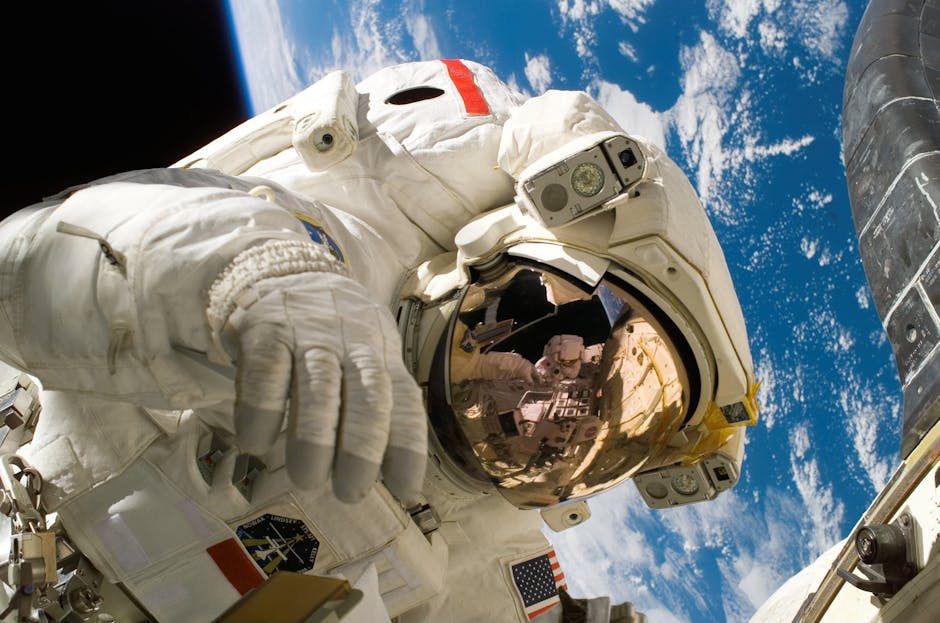
Photo by Pixabay on Pexels
Gravity is a fundamental force of nature that causes any two objects with mass to attract each other. You feel Earth's gravity constantly pulling you towards its center. The strength of this gravitational pull depends on two main things:
1. Mass: The more mass an object has, the stronger its gravitational pull. That's why the massive Earth pulls you much more strongly than a small rock.
2. Distance: The closer two objects are, the stronger the gravitational pull between them. The pull weakens very quickly as distance increases.
Think of it like this:
graph TD
    A["Object 1 (Mass)"] -->|Gravitational Pull| B["Object 2 (Mass)"]
    A -- "Increases with" --> C["More Mass"]
    B -- "Increases with" --> C
    A -- "Increases with" --> D["Less Distance"]
    B -- "Increases with" --> D
On Earth, the force of gravity causes all objects to accelerate downwards at approximately 9.8 meters per second squared (m/s²), assuming no air resistance. This is often called the "acceleration due to gravity" and is represented by the letter g.
Weight vs. Mass

Photo by Ylanite Koppens on Pexels
It's important to distinguish between mass and weight:
* Mass: This is a measure of how much "stuff" is in an object. It's an intrinsic property and doesn't change regardless of where you are (e.g., your mass is the same on Earth as it is on the Moon). We measure mass in kilograms (kg).
* Weight: This is the force of gravity acting on an object's mass. Your weight would be less on the Moon because the Moon has less mass than Earth, so its gravitational pull is weaker. Weight is a force, so it's measured in Newtons (N).
You can calculate weight using the formula:
Weight = mass × acceleration due to gravity (g)
F_g = m × g
3. Worked Example
Let's say you have a textbook with a mass of 2 kg. We want to find out its weight on Earth.
-
Identify the given values:
- Mass (m) = 2 kg
- Acceleration due to gravity on Earth (g) = 9.8 m/s²
-
Use the formula for weight:
- Weight = m × g
-
Plug in the values and calculate:
- Weight = 2 kg × 9.8 m/s²
- Weight = 19.6 N
So, a 2 kg textbook has a weight of 19.6 Newtons on Earth. This means the Earth's gravity pulls on it with a force of 19.6 N.
4. Key Takeaways
- Force is a push or pull that can change an object's motion.
- Gravity is a specific attractive force between any two objects with mass.
- The strength of gravity increases with more mass and decreases with more distance between objects.
- On Earth, the acceleration due to gravity (g) is approximately 9.8 m/s².
- Weight is the force of gravity acting on an object's mass, measured in Newtons.
- Mass is the amount of matter in an object and is measured in kilograms; it doesn't change with location.
Common Mistakes to Avoid

Photo by KATRIN BOLOVTSOVA on Pexels
- Don't confuse mass and weight; they are different concepts and measured in different units.
- Don't think gravity only applies to planets; it applies to all objects with mass, even tiny ones.
- Don't forget that force, including gravity, has a direction, not just a magnitude.
- Don't assume constant speed means no forces are acting; it just means the net force is zero.
5. Now Try It
Imagine you're on the Moon, where the acceleration due to gravity (g) is about 1.6 m/s². If you have a bag of apples with a mass of 5 kg, what would its weight be on the Moon?
* What to do: Calculate the weight using the mass and the Moon's gravity.
* What success looks like: You should have a value for weight in Newtons, which is significantly less than its weight on Earth.
Frequently asked about Understanding Force and Gravity
Study this next
Get the full Science curriculum
Clone the complete plan to your dashboard for unlimited AI-generated notes, practice quizzes, and a personalised revision schedule.
Save this course free