Science Fundamentals (Physical & Life Sciences)
From the my study guide curriculum
TL;DR
Science is a systematic way of understanding the natural world through observation and experimentation, broken into physical sciences (non-living things) and life sciences (living things). Both rely on the scientific method to develop and test hypotheses. Understanding these basics helps you critically evaluate information and solve problems.
1. The Mental Model
Think of science as a detective's toolkit. You observe clues (data), form ideas (hypotheses), test them rigorously, and then refine your understanding. Physical and life sciences are just two different "cases" you're investigating with similar tools.
2. The Core Material
Science is fundamentally about exploring and explaining the natural world. It's not just a collection of facts; it's a process for discovering those facts and understanding how they fit together.
The Scientific Method
Photo by Markus Winkler on Pexels
The scientific method is the backbone of all scientific inquiry. It's a structured approach to solving problems and gaining knowledge.
graph TD
    A["Observation/Question"] --> B["Form Hypothesis"]
    B --> C["Design Experiment"]
    C --> D["Collect & Analyze Data"]
    D --> E{Does data support hypothesis?}
    E -- Yes --> F["Draw Conclusion"]
    E -- No --> B
    F --> G["Communicate Results"]
- Observation/Question: It starts with noticing something or asking "why" or "how."
- Form Hypothesis: You propose a testable explanation for your observation. It's an educated guess, not a definite answer.
- Design Experiment: You create a way to test your hypothesis, usually involving variables.
- Independent Variable: The thing you change.
- Dependent Variable: The thing you measure (it depends on the independent variable).
- Controlled Variables: Things you keep the same to ensure a fair test.
- Collect & Analyze Data: You gather information from your experiment and look for patterns or relationships.
- Draw Conclusion: You decide if your data supports or refutes your hypothesis. If it doesn't, you might revise your hypothesis and try again.
- Communicate Results: Share your findings with others.
Physical Sciences

Photo by cottonbro studio on Pexels
These branches study non-living systems and phenomena. They often deal with energy, matter, forces, and Earth's processes.
- Physics: Deals with matter and energy and their interactions. Think motion, light, heat, electricity.
- Chemistry: Studies the composition, structure, properties, and reactions of matter. It's about what things are made of and how they change.
- Astronomy: The study of celestial objects and phenomena beyond Earth's atmosphere.
- Earth Science: Encompasses geology (Earth's structure), meteorology (weather), oceanography (oceans), and environmental science.
Life Sciences (Biology)
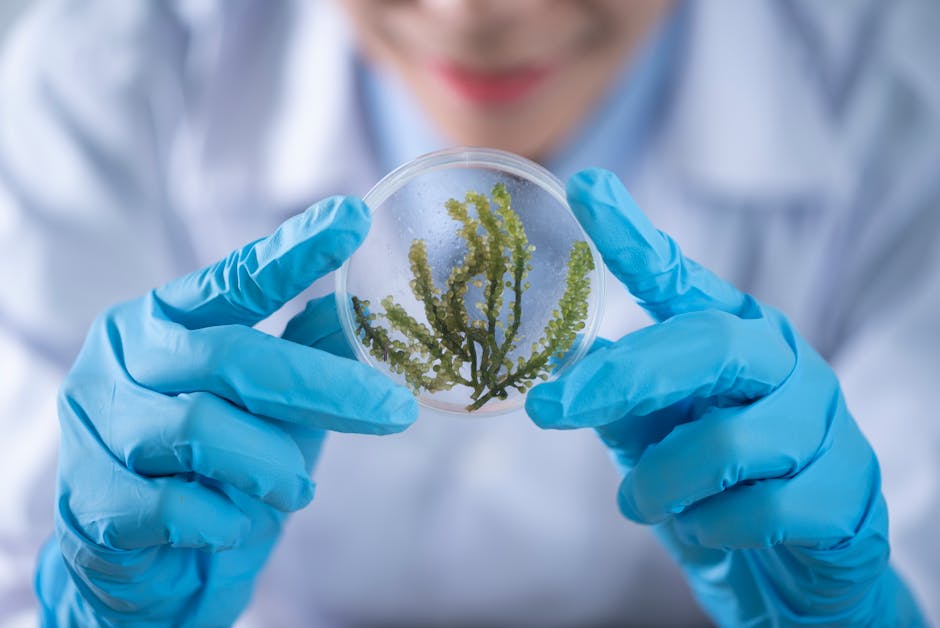
Photo by Chokniti Khongchum on Pexels
These branches focus on living organisms and their processes.
- Biology: The overarching study of life.
- Botany: The study of plants.
- Zoology: The study of animals.
- Ecology: The study of how organisms interact with their environment and each other.
- Genetics: The study of heredity and genes.
- Anatomy & Physiology: The study of body structure and how it functions.
Both physical and life sciences use similar principles and logical thinking. For example, understanding chemical reactions (physical science) is crucial for understanding how cells work (life science).
3. Worked Example
Let's say you notice that your houseplant isn't growing as well as your friend's, even though they both get the same amount of water. You wonder if the amount of sunlight affects growth.
- Observation/Question: My plant is smaller; does sunlight affect plant growth?
- Hypothesis: If a plant receives more sunlight, then it will grow taller.
- Design Experiment:
- Get three identical plants, pots, and soil.
- Independent Variable: Amount of sunlight (Place Plant A in bright sun, Plant B in partial sun, Plant C in shade).
- Dependent Variable: Plant height (Measure weekly).
- Controlled Variables: Water amount, soil type, pot size, temperature, initial plant size.
- Duration: 4 weeks.
- Collect & Analyze Data: You measure heights weekly. After 4 weeks, Plant A (bright sun) is 15cm, Plant B (partial sun) is 10cm, and Plant C (shade) is 5cm.
- Draw Conclusion: The data supports your hypothesis; plants receiving more sunlight grew taller.
- Communicate Results: You share your findings with your friend.
4. Key Takeaways
- Science is a systematic way of gaining knowledge about the natural world.
- The scientific method is a cyclical process of observing, hypothesizing, experimenting, and concluding.
- Physical sciences study non-living matter and energy (e.g., physics, chemistry).
- Life sciences study living organisms and their processes (e.g., biology, ecology).
- Variables in an experiment include independent (what you change), dependent (what you measure), and controlled (what you keep the same).
- A hypothesis is a testable explanation, not just a guess.
- Scientific conclusions are based on evidence and can be revised with new data.
Common Mistakes to Avoid

Photo by KATRIN BOLOVTSOVA on Pexels
- Confusing correlation with causation: Just because two things happen together doesn't mean one causes the other.
- Ignoring controlled variables: If you change too many things in an experiment, you won't know what caused the result.
- Assuming your hypothesis is always correct: The goal is to test, not just prove your idea.
- Not being specific enough in observations or hypotheses: Vague statements make it hard to test or interpret results.
5. Now Try It
Think of a common observation you've made about something in nature or daily life (e.g., why some foods spoil faster, why one type of battery lasts longer, how different cleaning products work). Formulate a testable hypothesis about it, identify the independent, dependent, and at least two controlled variables you'd use in an experiment, and outline the basic steps of how you'd test it.
Success looks like: A clear observation, a specific "if...then..." hypothesis, and a well-defined set of variables for a simple experiment.
Frequently asked about Science Fundamentals (Physical & Life Sciences)
Study this next
Get the full my study guide curriculum
Clone the complete plan to your dashboard for unlimited AI-generated notes, practice quizzes, and a personalised revision schedule.
Save this course free