Chemistry Fundamentals for A&P
From the BIOL-2201-153:Human Anatomy & Physiology I • 39409.202630 curriculum
TL;DR
Understanding basic chemistry is crucial for A&P because your body is a complex chemical system. You'll need to know about atoms, molecules, and chemical bonds to grasp how physiological processes work. This foundation will help you make sense of everything from cell function to organ systems.
1. The Mental Model
Think of your body as an incredibly complex, constantly running chemical factory. Everything that happens inside you—from breathing to thinking—is the result of chemical reactions involving specific elements and molecules.
2. The Core Material
To understand A&P, you need a basic grasp of matter, atomic structure, chemical bonding, and how water and pH are vital to life.
Elements and Atoms

Photo by Google DeepMind on Pexels
Matter is anything that has mass and takes up space. All matter is made of elements, which are unique substances that can't be broken down further by ordinary chemical means. In the body, four elements—oxygen (O), carbon (C), hydrogen (H), and nitrogen (N)—make up about 96% of your body mass.
The smallest unit of an element that retains its properties is an atom. Each atom has a central nucleus containing positively charged protons and neutral neutrons. Orbiting the nucleus are negatively charged electrons. The number of protons determines the element (atomic number), while electrons are key to how atoms interact.
Chemical Bonds
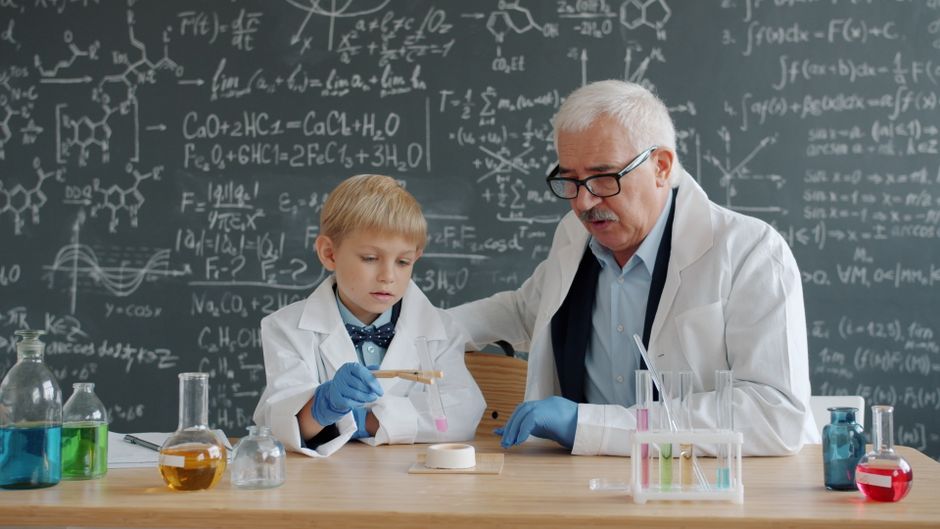
Photo by Vitaly Gariev on Pexels
Atoms try to achieve a stable outer electron shell, which drives them to form chemical bonds with other atoms.
- Ionic bonds: Form when one atom transfers electrons to another, creating charged ions that are attracted to each other (e.g., NaCl).
- Covalent bonds: Form when atoms share electrons. These are strong bonds and are very common in biological molecules (e.g., water, glucose). They can be polar (unequal sharing, creating slight charges) or nonpolar (equal sharing).
- Hydrogen bonds: Weak attractions between a partially positive hydrogen atom in one molecule and a partially negative atom (like oxygen or nitrogen) in another molecule. These are crucial for water's properties and protein structure.
Molecules and Compounds
Photo by Google DeepMind on Pexels
When two or more atoms bond together, they form a molecule. If the atoms are from different elements, it's also a compound (e.g., H₂O, C₆H₁₂O₆).
The Importance of Water

Photo by Engin Akyurt on Pexels
Water (H₂O) is the most abundant inorganic compound in your body and is essential for life. Its polarity (due to polar covalent bonds and a bent shape) allows it to:
- Act as a universal solvent, dissolving many substances.
- Have a high heat capacity, helping to regulate body temperature.
- Participate in chemical reactions.
Acids, Bases, and pH
Acids release hydrogen ions (H⁺) in solution, making the solution more acidic. Bases accept H⁺ ions or release hydroxide ions (OH⁻), making the solution more alkaline (basic).
The pH scale measures the concentration of H⁺ ions.
* pH 7 is neutral (e.g., pure water).
* pH below 7 is acidic.
* pH above 7 is basic/alkaline.
Your body maintains a very narrow pH range (around 7.35-7.45) in the blood using buffer systems, which are crucial to prevent enzyme denaturation and maintain normal physiological function.
graph TD
    A["Matter (anything with mass/volume)"] --> B{"Made of..."}
    B --> C["Elements (unique substances)"]
    C --> D["Atoms (smallest unit of element)"]
    D --> E["Protons (+)"]
    D --> F["Neutrons (neutral)"]
    D --> G["Electrons (-)"]
    G -- "Outer shell drives" --> H{"Chemical Bonds"}
    H --> I["Ionic (transfer e⁻)"]
    H --> J["Covalent (share e⁻)"]
    H --> K["Hydrogen (weak attraction)"]
    J -- "Forms" --> L["Molecules (e.g., H₂O, CO₂)\n(if different elements, also a compound)"]
    L -- "Water's polarity is key to" --> M["Life (solvent, temp. regulation)"]
    M -- "Biological processes depend on" --> N["pH Balance (acids/bases/buffers)"]
3. Worked Example
Let's consider how a molecule like glucose (C₆H₁₂O₆) is fundamental. It's a compound made of carbon, hydrogen, and oxygen atoms. These atoms are joined by covalent bonds, sharing electrons. Because glucose has many hydrogen and oxygen atoms, it can form hydrogen bonds with water molecules, which is why it readily dissolves in your blood. When your cells use glucose for energy, they break these covalent bonds through a series of chemical reactions, releasing energy. If your blood's pH shifts too far from neutral, the enzymes that perform these reactions won't work correctly, illustrating the importance of pH balance.
4. Key Takeaways
- Your body is composed of elements, with O, C, H, and N being the most abundant.
- Atoms interact by forming ionic, covalent, and hydrogen bonds to create molecules.
- Covalent bonds are the backbone of organic molecules like proteins, carbohydrates, and fats.
- Water's unique polar properties make it essential as a solvent and temperature regulator.
- The pH scale measures acidity/alkalinity, and your body tightly regulates pH using buffers.
- Chemical reactions are constantly occurring in your body, driven by these fundamental principles.
- Understanding these basics helps explain how medicines work and what happens in diseases.
- Common mistake: Confusing ionic and covalent bonds; remember "transfer" vs. "share."
- Common mistake: Underestimating the importance of hydrogen bonds; they're weak individually but powerful in large numbers.
- Common mistake: Not realizing how critical pH balance is for enzyme function.
5. Now Try It
Spend 15 minutes looking up three common biological molecules (e.g., amino acids, fatty acids, ATP). For each, identify which major elements it contains (O, C, H, N, P, S), and describe how covalent and/or hydrogen bonds play a role in its structure or function. What would happen if your body couldn't maintain the correct pH for these molecules to function?
Frequently asked about Chemistry Fundamentals for A&P
More from BIOL-2201-153:Human Anatomy & Physiology I • 39409.202630
Get the full BIOL-2201-153:Human Anatomy & Physiology I • 39409.202630 curriculum
Clone the complete plan to your dashboard for unlimited AI-generated notes, practice quizzes, and a personalised revision schedule.
Save this course free