Mechanism of pH Measurement: Acidic and Alkaline Solutions
From the Engineering Chemistry curriculum
TL;DR
pH measurement primarily relies on potentiometry, using a glass electrode that generates a voltage proportional to the hydrogen ion concentration. This voltage is compared to a reference electrode, and the difference is converted into a pH reading. For accurate results, the instrument needs regular calibration with buffer solutions of known pH.
1. The Mental Model
Think of pH measurement as a tiny battery whose voltage changes based on how many hydrogen ions are floating around in a solution. More hydrogen ions mean a stronger "acidic" signal, while fewer mean a weaker "alkaline" signal. This electrical signal is then translated into the pH value you read.
2. The Core Material
pH, which stands for "potential of hydrogen," is a scale used to specify the acidity or basicity of an aqueous solution. It's inversely related to the concentration of hydrogen ions (H⁺) in the solution. A lower pH indicates a higher concentration of H⁺ ions (acidic), while a higher pH indicates a lower concentration of H⁺ ions (alkaline or basic).
The most common method for measuring pH is using a pH meter, which consists of two main parts: a measuring electrode (typically a glass electrode) and a reference electrode. These are often combined into a single combination electrode.
The Glass Electrode

Photo by Ron Lach on Pexels
The glass electrode is the heart of pH measurement. It's a special type of ion-selective electrode that's sensitive to H⁺ ions. It has a thin, H⁺-sensitive glass membrane at its tip. Inside this membrane is a solution of known pH (often a buffer solution like 0.1 M HCl) and an internal reference electrode (e.g., Ag/AgCl).
When the glass membrane comes into contact with the solution whose pH you want to measure, H⁺ ions in the solution exchange with ions on the surface of the glass membrane. This exchange creates an electrical potential difference across the glass membrane that is proportional to the difference in H⁺ ion concentration between the internal solution and the external test solution. This potential difference is described by the Nernst equation.
The Reference Electrode

Photo by Jonathan Cooper on Pexels
The reference electrode provides a stable, constant potential that doesn't change with the pH of the solution. A common type is the silver-silver chloride (Ag/AgCl) electrode, which consists of a silver wire coated with silver chloride immersed in a potassium chloride (KCl) solution. It ensures that any change in the overall measured potential is solely due to the glass electrode's response to H⁺ ions.
How They Work Together

Photo by Edu Raw on Pexels
The pH meter measures the potential difference (voltage) between the glass electrode and the reference electrode. This voltage is directly related to the pH of the solution. The meter then converts this voltage into a pH reading.
Here's a simplified breakdown:
graph TD
    A["Glass Electrode"] --> B["Potential across glass membrane (V_glass)"]
    C["Reference Electrode"] --> D["Constant Reference Potential (V_ref)"]
    B --> E["pH Meter (measures V_diff)"]
    D --> E
    E --> F["Conversion to pH reading"]
    F --> G["Displayed pH Value"]

    subgraph External Solution
        H["H+ Ions in Sample"] --> A
    end
Calibration
Before accurate measurements can be made, a pH meter must be calibrated. This involves immersing the electrode in at least two, but preferably three, buffer solutions of known pH (e.g., pH 4.00, 7.00, and 10.00). Buffers are solutions that resist changes in pH when small amounts of acid or base are added.
Calibration adjusts the meter's internal circuitry to account for variations in the electrode's response and temperature, ensuring that the measured voltage accurately corresponds to the actual pH.
Acidic vs. Alkaline Solutions
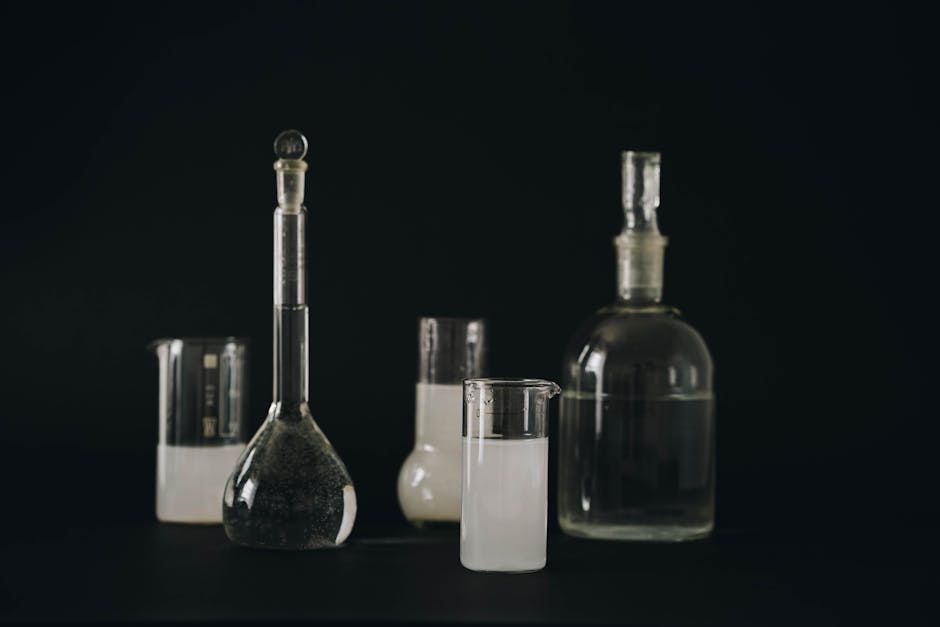
Photo by olia danilevich on Pexels
- Acidic Solutions (pH < 7): Have a higher concentration of H⁺ ions than OH⁻ ions. The glass electrode will generate a different potential compared to alkaline solutions, indicating a lower pH.
- Alkaline/Basic Solutions (pH > 7): Have a higher concentration of OH⁻ ions than H⁺ ions. This means a lower H⁺ concentration, leading to a different potential at the glass electrode and a higher pH reading.
3. Worked Example
Let's say you're measuring the pH of a solution.
- Preparation: You turn on your pH meter and rinse the electrode with distilled water.
- Calibration:
- First, you immerse the electrode in a pH 7.00 buffer solution. The meter is adjusted until it reads exactly 7.00. This sets the "zero point" of the measurement.
- Next, you rinse the electrode and immerse it in a pH 4.00 buffer solution. The meter is adjusted until it reads exactly 4.00. This sets the "slope" or sensitivity of the electrode. (For highly accurate work, you'd also calibrate with a pH 10.00 buffer).
- Measurement: After rinsing the electrode again, you immerse it in your unknown sample solution.
- The glass electrode and reference electrode generate a combined potential difference, say, -0.118 V (relative to the reference, for instance).
- The pH meter's internal processor, using the calibration data, converts this voltage into a pH value. For example, it might calculate that -0.118 V corresponds to a pH of 5.0.
- Result: The meter displays "5.0". Since 5.0 is less than 7, you know the solution is acidic.
4. Key Takeaways
- pH measurement relies on a voltage difference generated by a glass electrode that's sensitive to hydrogen ions.
- The glass electrode's voltage changes based on the H⁺ concentration of the solution being tested.
- A stable reference electrode provides a constant comparison point for the voltage measurement.
- The pH meter converts the measured voltage difference into a pH value.
- Calibration with known buffer solutions is essential for accurate pH readings.
- Acidic solutions have a higher H⁺ concentration and lower pH; alkaline solutions have a lower H⁺ concentration and higher pH.
5. Now Try It
Take a common household liquid like vinegar, baking soda solution, and distilled water. Using a pH meter (if you have access to one) or even pH indicator paper, measure and record the approximate pH of each. For each liquid, classify it as acidic, neutral, or alkaline based on its pH. What to do: Calibrate your pH meter first using at least two buffer solutions. Success looks like: You have a clear understanding of how the pH values relate to acidity/alkalinity for each substance.
Frequently asked about Mechanism of pH Measurement: Acidic and Alkaline Solutions
Study this next
Get the full Engineering Chemistry curriculum
Clone the complete plan to your dashboard for unlimited AI-generated notes, practice quizzes, and a personalised revision schedule.
Save this course free