Chemistry of Life: Properties of Water
From the Biology exam prep curriculum
TL;DR
Water's unique properties, like cohesion, adhesion, and high specific heat, are essential for life and result from its polar structure and hydrogen bonding. These properties allow water to act as an excellent solvent, regulate temperature, and facilitate transport in living organisms. Understanding water's chemistry is fundamental to comprehending biological processes.
1. The Mental Model
Think of a water molecule like a tiny, lopsided magnet. This "lopsidedness" means it loves to stick to itself and other charged things, which gives it superpowers vital for all living things.
2. The Core Material
Water (H₂O) is the most abundant molecule in living organisms, and its unique properties are crucial for life. These properties stem from its polarity and the ability to form hydrogen bonds.
2.1 Polarity
A water molecule is polar because the oxygen atom is more electronegative than the hydrogen atoms. This means oxygen pulls electrons closer to itself, giving it a partial negative charge (δ-) and leaving the hydrogen atoms with partial positive charges (δ+). This uneven distribution of charge makes water a polar molecule.
2.2 Hydrogen Bonding

Photo by Steve A Johnson on Pexels
The partial positive charge of a hydrogen atom in one water molecule is attracted to the partial negative charge of an oxygen atom in an adjacent water molecule. This attraction is called a hydrogen bond. While individual hydrogen bonds are weak, the cumulative effect of many hydrogen bonds gives water its special properties.
2.3 Key Properties of Water
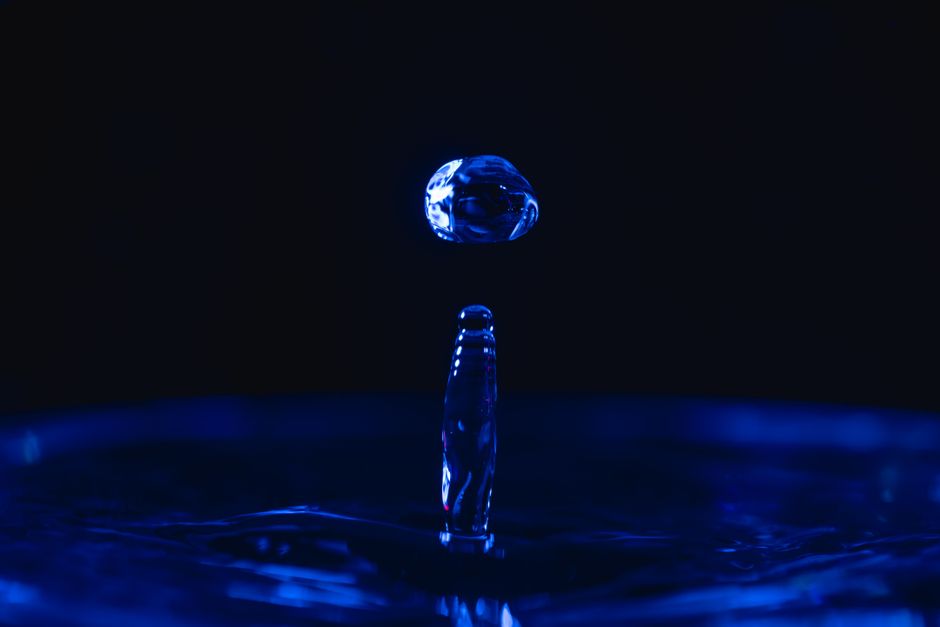
Photo by Rafael Minguet Delgado on Pexels
Here's how water's polarity and hydrogen bonding lead to its essential properties:
graph TD
    A["Water Molecule Polarity (δ+ and δ- ends)"] --> B["Hydrogen Bonding (attraction between molecules)"]

    B --> C1["Cohesion (water sticks to itself)"]
    B --> C2["Adhesion (water sticks to other polar surfaces)"]
    B --> C3["High Specific Heat (absorbs/releases much heat)"]
    B --> C4["High Heat of Vaporization (requires much energy to evaporate)"]
    B --> C5["Lower Density of Ice (hydrogen bonds push molecules apart)"]
    B --> C6["Excellent Solvent (dissolves polar and ionic substances)"]

    C1 --> D1["Surface Tension (e.g., insects walk on water)"]
    C1 & C2 --> D2["Capillary Action (e.g., water moving up plants)"]
    C3 --> D3["Temperature Regulation (e.g., stable body temp, climate)"]
    C4 --> D4["Evaporative Cooling (e.g., sweating)"]
    C5 --> D5["Insulation for Aquatic Life (ice floats)"]
    C6 --> D6["Medium for Biochemical Reactions"]
- Cohesion: Water molecules stick to each other due to hydrogen bonding. This creates surface tension, allowing some insects to walk on water.
- Adhesion: Water molecules stick to other polar surfaces. This, combined with cohesion, leads to capillary action, which is how water moves up narrow tubes, like the xylem in plants.
- High Specific Heat: Water can absorb or release a large amount of heat energy with only a slight change in its own temperature. This is because much of the absorbed energy is used to break hydrogen bonds before the molecules move faster (increasing temperature). This property helps regulate Earth's climate and organisms' body temperatures.
- High Heat of Vaporization: A lot of energy is required to turn liquid water into water vapor (evaporation) because hydrogen bonds must be broken. This allows for evaporative cooling, like sweating, to remove excess heat.
- Lower Density of Ice: Unlike most substances, solid water (ice) is less dense than liquid water. As water freezes, hydrogen bonds stabilize, forming an open, crystalline structure where molecules are farther apart than in liquid water. This is why ice floats, insulating aquatic life below.
- Excellent Solvent: Water is often called the "universal solvent" because its polarity allows it to dissolve many substances. It forms hydration shells around ions and other polar molecules, separating them and keeping them in solution. This is crucial for transporting nutrients and waste in organisms.
3. Worked Example
Imagine a tall tree. How does water get from its roots all the way up to its leaves against gravity? This is a perfect example of water's properties in action.
- Adhesion: Water molecules adhere (stick) to the walls of the xylem vessels (tiny tubes in the plant stem).
- Cohesion: As water evaporates from the leaves (transpiration), it pulls on the adjacent water molecules in the xylem due to their cohesive hydrogen bonds. This creates a continuous column of water.
- Capillary Action: The combined forces of adhesion (water to xylem walls) and cohesion (water to water) allow this continuous column of water to be drawn upward, defying gravity, much like water rising in a narrow straw.
This "transpiration-cohesion-tension" mechanism, driven by water's unique properties, is vital for plant survival.
4. Key Takeaways
- Water's polarity, due to uneven electron sharing, is the foundation for all its unique properties.
- Hydrogen bonds, formed between water molecules, are the direct cause of its special characteristics.
- Cohesion allows water to stick to itself, creating surface tension and facilitating transport.
- Adhesion allows water to stick to other polar surfaces, crucial for capillary action.
- Water's high specific heat and heat of vaporization help regulate temperature in organisms and ecosystems.
- Ice floats because it's less dense than liquid water, providing insulation for aquatic life.
- Water is an excellent solvent, enabling nutrient and waste transport in biological systems.
Common Mistakes to Avoid:

Photo by KATRIN BOLOVTSOVA on Pexels
- Confusing cohesion (water-water) with adhesion (water-other surface).
- Forgetting that hydrogen bonds are intermolecular forces (between molecules), not intramolecular (within a molecule).
- Not connecting water's properties back to its fundamental molecular structure (polarity and hydrogen bonds).
- Assuming all substances become denser when they freeze; water is an important exception.
5. Now Try It
Take 15 minutes to think about how three different biological processes would be impossible or severely hindered if water did not have its high specific heat, its ability to dissolve solutes, or its lower density as a solid. For each process, briefly explain the role of that specific water property and what would go wrong without it.
What success looks like: You should be able to clearly identify a biological process for each property and articulate the direct consequence of that property being absent, demonstrating a link between water's chemistry and life.
Frequently asked about Chemistry of Life: Properties of Water
More from Biology exam prep
Get the full Biology exam prep curriculum
Clone the complete plan to your dashboard for unlimited AI-generated notes, practice quizzes, and a personalised revision schedule.
Save this course free