Specific Heat Capacity
From the Calorimetry - Grade 10 ICSE curriculum
TL;DR
Specific heat capacity tells you how much energy a substance needs to change its temperature. Substances with high specific heat capacity heat up and cool down slowly. It's a key property for understanding how different materials behave when heated or cooled.
1. The Mental Model
Imagine you have two different types of buckets: one small, one large. To raise the water level by the same amount in both, you'd need to pour much more water into the large bucket. Specific heat capacity is like that – it's how much heat "water" a substance "bucket" needs to "raise its level" (temperature).
2. The Core Material
Specific Heat Capacity (c) is the amount of heat energy required to raise the temperature of 1 unit mass of a substance by 1 degree Celsius (or 1 Kelvin).
Think about it this way:
* High specific heat capacity: The substance needs a lot of heat energy to change its temperature even a little. Water is a great example; it heats up and cools down slowly.
* Low specific heat capacity: The substance needs less heat energy to change its temperature significantly. Metals like copper heat up and cool down quickly.
The formula that connects heat energy (Q), mass (m), specific heat capacity (c), and change in temperature ($\Delta$T) is:
Q = mcΔT
Where:
* Q = Heat energy absorbed or released (in Joules, J)
* m = Mass of the substance (in kilograms, kg)
* c = Specific heat capacity of the substance (in Joules per kilogram per degree Celsius, J kg⁻¹ °C⁻¹)
* ΔT = Change in temperature (Final temperature - Initial temperature, in °C or K)
Units of Specific Heat Capacity

Photo by John Hill on Pexels
The standard SI unit is Joules per kilogram per degree Celsius (J kg⁻¹ °C⁻¹) or Joules per kilogram per Kelvin (J kg⁻¹ K⁻¹). Since a change of 1°C is the same as a change of 1 K, these units are interchangeable for ΔT.
Why is Specific Heat Capacity Important?
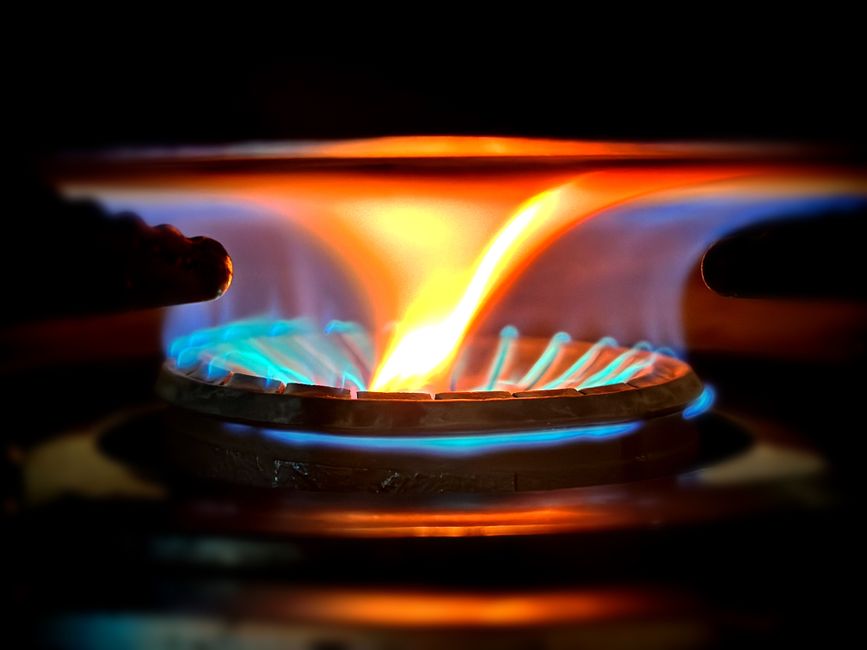
Photo by Kenny Fotos CR on Pexels
It explains many everyday phenomena:
* Water as a coolant: Water has a very high specific heat capacity, making it excellent for cooling engines. It can absorb a lot of heat without a drastic temperature rise.
* Land and sea breezes: Land heats up and cools down faster than water due to their different specific heat capacities, leading to air pressure differences that cause breezes.
* Cooking utensils: Pans are often made of metals (low specific heat) so they heat up quickly, while handles might be made of materials like wood or plastic (higher specific heat) to stay cooler.
graph TD
    A["Heat Energy Input (Q)"] --> B{"Substance Property?"}
    B --> C["High Specific Heat Capacity (c)"]
    B --> D["Low Specific Heat Capacity (c)"]
    C --> E["Temperature Change (ΔT) is Small"]
    D --> F["Temperature Change (ΔT) is Large"]
    E --> G["Good for Coolants/Stabilizers (e.g., Water)"]
    F --> H["Good for Quick Heating/Cooling (e.g., Metals)"]
3. Worked Example
Let's say you have 500g of copper, and you want to raise its temperature from 20°C to 70°C. The specific heat capacity of copper is approximately 390 J kg⁻¹ °C⁻¹. How much heat energy is needed?
-
Identify given values:
- Mass (m) = 500g = 0.5 kg (always convert to kg for J kg⁻¹ °C⁻¹)
- Initial temperature = 20°C
- Final temperature = 70°C
- Specific heat capacity (c) = 390 J kg⁻¹ °C⁻¹
-
Calculate change in temperature (ΔT):
- ΔT = Final temperature - Initial temperature = 70°C - 20°C = 50°C
-
Apply the formula Q = mcΔT:
- Q = (0.5 kg) * (390 J kg⁻¹ °C⁻¹) * (50 °C)
- Q = 195 * 50 J
- Q = 9750 J
So, 9750 Joules of heat energy are needed to raise the temperature of 500g of copper by 50°C.
4. Key Takeaways
- Specific heat capacity (c) is a measure of how much energy a substance needs to change its temperature.
- The formula Q = mcΔT links heat energy, mass, specific heat capacity, and temperature change.
- A higher specific heat capacity means a substance requires more energy for a given temperature change.
- Water has a very high specific heat capacity, which is why it's used as a coolant and helps moderate Earth's climate.
- Units for specific heat capacity are typically J kg⁻¹ °C⁻¹ or J kg⁻¹ K⁻¹.
- You must use consistent units (e.g., mass in kg, temperature in °C or K, energy in J).
Common mistakes to avoid:
* Forgetting to convert mass to kilograms from grams.
* Mixing up initial and final temperatures when calculating ΔT.
* Not understanding that a high 'c' means slow temperature change and vice-versa.
* Using inconsistent units in the calculation.
5. Now Try It
You have a 2 kg block of aluminum (specific heat capacity ≈ 900 J kg⁻¹ °C⁻¹). It absorbs 180,000 J of heat energy. If its initial temperature was 25°C, what will its final temperature be? Calculate the final temperature, showing your steps. You're successful if your final temperature is correctly calculated to one decimal place.
Frequently asked about Specific Heat Capacity
Study this next
Get the full Calorimetry - Grade 10 ICSE curriculum
Clone the complete plan to your dashboard for unlimited AI-generated notes, practice quizzes, and a personalised revision schedule.
Save this course free