Intentional Torts Against Land and Goods (Trespass)
From the Law of Torts curriculum
TL;DR
Intentional torts against land and goods protect your rights to exclusive possession of property. Trespass to land involves an unauthorised entry onto someone's property, while trespass to goods protects against direct interference with your personal property. Both require direct, intentional acts, but don't necessarily need proof of damage.
1. The Mental Model
Think of these torts as legal "keep out" signs for your stuff and your space. They're about protecting your right to control what happens on your land and with your possessions, even if there's no actual harm. The law respects your boundary.
2. The Core Material
When we talk about trespass in tort law, we're focusing on direct and intentional interference with property rights. Unlike negligence, you don't need to prove that the defendant acted carelessly; you just need to show they acted deliberately.
Trespass to Land

Photo by Marek Piwnicki on Pexels
This tort protects your right to exclusive possession of land. It's not about ownership, but about who currently has the right to occupy or control the land.
Elements:
1. Direct Interference: The defendant's act must directly lead to the entry onto the plaintiff's land. If someone pushes another person onto your land, the pusher is the direct interferer, not the person who was pushed.
2. Intentional Act: The defendant must have intended to enter the land, or at least intended the act that resulted in the entry. They don't need to know they're trespassing, just that they meant to do the act.
3. Land in Exclusive Possession of the Plaintiff: You must have the legal right to exclude others from the land. This includes not just the surface, but also a reasonable height above and depth below.
4. Absence of Lawful Justification: There must be no legal right (like a warrant or easement) or consent (like an invitation) for the defendant's entry.
Examples: Walking onto someone's property without permission, throwing objects onto their land, or even remaining on their land after permission has been revoked.
Trespass to Goods
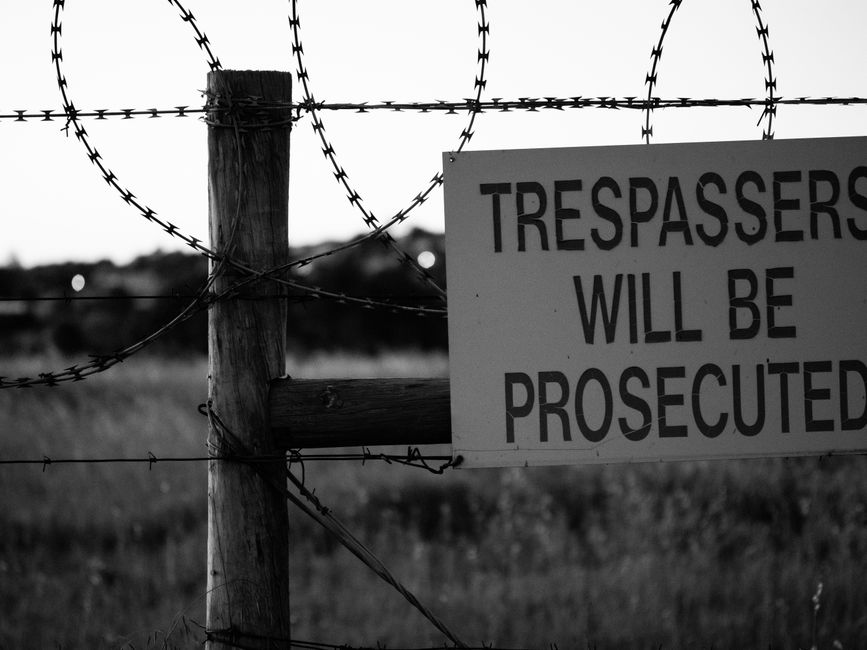
Photo by Ryan Lansdown on Pexels
This tort protects your right to possession of personal property (goods). Like trespass to land, it's about direct, intentional interference.
Elements:
1. Direct Interference: The defendant's act must directly interfere with the plaintiff's goods.
2. Intentional Act: The defendant must have intended to perform the act that caused the interference. Again, they don't need to know they're trespassing.
3. Goods in Possession of the Plaintiff: You must have actual or constructive possession of the goods at the time of the interference.
4. Absence of Lawful Justification: No legal right or consent for the defendant's actions.
Examples: Taking someone's book, scratching their car, or even just touching an item without permission (though minimal touching might not meet the "interference" threshold depending on context). Damage isn't necessary; the mere interference is enough.
Here's a breakdown of the elements for each:
graph TD
    A["Intentional Torts Against Property"] --> B["Trespass to Land"]
    A --> C["Trespass to Goods"]

    B --> B1["Direct Interference with Land"]
    B --> B2["Intentional Act (to enter)"]
    B --> B3["Land in Exclusive Possession"]
    B --> B4["Absence of Lawful Justification"]

    C --> C1["Direct Interference with Goods"]
    C --> C2["Intentional Act (re: goods)"]
    C --> C3["Goods in Possession"]
    C --> C4["Absence of Lawful Justification"]

    B1 --> B1a{"Physical Entry/Object Thrown"}
    B2 --> B2a{"Intended to enter/perform act"}
    B3 --> B3a{"Surface, reasonable air/subsoil"}
    B4 --> B4a{"No permission/legal right"}

    C1 --> C1a{"Touching, taking, moving"}
    C2 --> C2a{"Intended to touch/take/move"}
    C3 --> C3a{"Actual or constructive possession"}
    C4 --> C4a{"No permission/legal right"}
Key Defences

Photo by Ingo Joseph on Pexels
Common defences for both torts include:
* Consent: If the plaintiff gave permission.
* Necessity: Acting to prevent a greater harm (e.g., entering land to extinguish a fire).
* Self-defence/Defence of property: Using reasonable force to protect yourself or your property.
* Lawful authority: Acting under a legal right (e.g., police officer with a warrant).
3. Worked Example
Sarah owns a small cottage with a garden. One afternoon, her neighbour, Tom, decides to retrieve his football which has rolled into Sarah's garden. Without asking, Tom steps over the low fence, walks across Sarah's lawn, picks up his ball, and returns to his own property. No damage was done to Sarah's lawn.
Analysis:
- Trespass to Land? Yes.
- Direct Interference: Tom directly stepped onto Sarah's land.
- Intentional Act: Tom intentionally stepped over the fence and walked onto the lawn. His motive (retrieving the ball) doesn't negate the intent to enter.
- Land in Exclusive Possession: Sarah owns the cottage and garden, giving her exclusive possession.
- Absence of Lawful Justification: Tom did not have Sarah's permission and had no other legal right to enter her garden.
Despite no damage being caused, Tom has committed trespass to land.
4. Key Takeaways
- These torts protect your right to exclusive possession of land and goods, not necessarily ownership.
- The act must be direct and intentional (meaning the act itself was intended, not necessarily the trespass).
- Damage is not a necessary element for trespass to land or goods – the mere unauthorised interference is enough.
- If you revoke permission for someone to be on your land and they don't leave within a reasonable time, they become a trespasser.
- Understanding the difference between possession and ownership is crucial for these torts.
Common mistakes you should avoid:
* Assuming "intent" means intending to cause harm or knowing you're trespassing; it just means intending the action that led to the trespass.
* Believing damage must be proven for a trespass action to succeed.
* Confusing trespass to land (real property) with trespass to goods (personal property).
* Forgetting that consent or lawful authority can be valid defences.
5. Now Try It
Imagine you lend your friend, Alex, your favourite textbook. Alex then lends it to another classmate, Ben, without your permission. Ben accidentally spills coffee on it, damaging several pages.
What to do: Identify whether a trespass to goods occurred when Alex lent the book to Ben, and again when Ben damaged it. Explain your reasoning for each element of trespass to goods.
What success looks like: You should be able to clearly state whether trespass occurred in each scenario and justify your answer by applying all four elements of trespass to goods for both Alex's and Ben's actions. Remember to consider if your possession was interfered with at the time of the action.
Frequently asked about Intentional Torts Against Land and Goods (Trespass)
Study this next
Get the full Law of Torts curriculum
Clone the complete plan to your dashboard for unlimited AI-generated notes, practice quizzes, and a personalised revision schedule.
Save this course free