Introduction to Measurements and Units
From the Measurements in physics curriculum
TL;DR
Measurements are how we quantify the physical world, and units give these quantities meaning by providing a standard for comparison. Understanding these is crucial for accurate scientific work and avoids confusion. All measurements have some degree of uncertainty, which is important to acknowledge and communicate.
1. The Mental Model
Think of measurements as speaking a special language about the world. Without units, your "words" (numbers) are meaningless. Just like saying "I need 5," you'd ask, "5 what?" — 5 meters, 5 kilograms, 5 seconds?
2. The Core Material
When you measure something, you're essentially comparing an unknown quantity to a known standard. That standard is called a unit. Units are fundamental because they provide context and allow for communication and comparison of measurements across different contexts.
What is a Measurement?
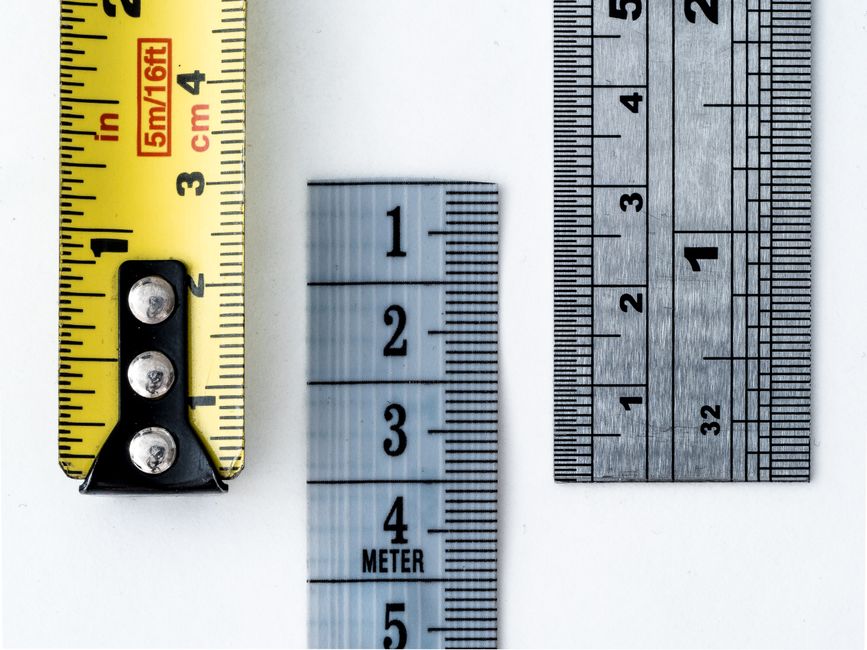
Photo by William Warby on Pexels
A measurement is a process of determining the size, quantity, or degree of something by using an instrument or device. For example, using a ruler to find the length of a table, or a stopwatch to time a race. Every measurement has two parts: a numerical value and a unit.
Why are Units Important?

Photo by Ann H on Pexels
Units ensure that everyone understands the magnitude of a measurement. If you say a room is "3 long," it's ambiguous. Is it 3 feet, 3 meters, 3 miles? Units remove this ambiguity. The international system of units (SI) provides a globally recognized set of units, making scientific communication consistent.
The SI Base Units

Photo by Freek Wolsink on Pexels
The SI system defines seven base units from which all other units can be derived. These are the building blocks:
graph LR
    A["Physical Quantity"] --> B["Base Unit"];
    B --> C["Symbol"];
    C --> D["Example"];

    B["Length"] --> C1["Meter"];
    C1 --> D1["m"];
    D1 --> E1["Distance from A to B is 10 m."];

    B["Mass"] --> C2["Kilogram"];
    C2 --> D2["kg"];
    D2 --> E2["The apple weighs 0.2 kg."];

    B["Time"] --> C3["Second"];
    C3 --> D3["s"];
    D3 --> E3["It took 5 s to run."];

    B["Electric Current"] --> C4["Ampere"];
    C4 --> D4["A"];
    D4 --> E4["Current in circuit is 2 A."];

    B["Thermodynamic Temperature"] --> C5["Kelvin"];
    C5 --> D5["K"];
    D5 --> E5["Boiling point is 373 K."];

    B["Amount of Substance"] --> C6["Mole"];
    C6 --> D6["mol"];
    D6 --> E6["1 mol of carbon."];

    B["Luminous Intensity"] --> C7["Candela"];
    C7 --> D7["cd"];
    D7 --> E7["A 2000 cd light bulb."];
Derived Units
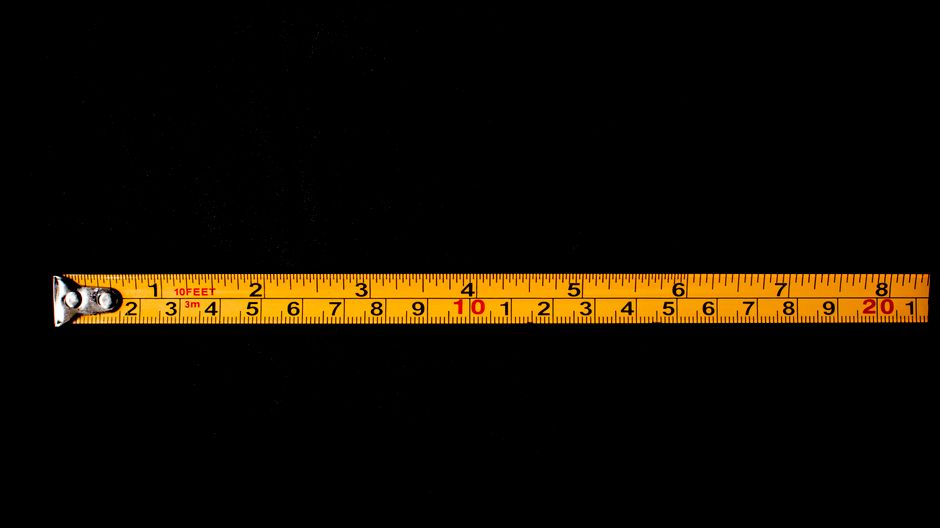
Photo by Nothing Ahead on Pexels
Many other units are combinations of these base units. For instance, speed is measured in meters per second (m/s), which combines the base units of length (meter) and time (second). Area is in square meters (m$^2$), and volume in cubic meters (m$^3$).
Measurement Uncertainty
No measurement is perfectly exact. There's always some level of uncertainty due to the limitations of the measuring instrument, the observer, or the variability of the thing being measured. You'll often see this expressed as a $\pm$ value (e.g., $10.5 \pm 0.1$ cm). This tells you the range within which the true value likely lies.
3. Worked Example
Let's say you're measuring the length of a piece of string with a ruler.
- Identify the quantity: Length.
- Choose an appropriate instrument: A ruler marked in millimeters.
- Perform the measurement: You align the string with the ruler. The end of the string falls between the 15.3 cm and 15.4 cm marks.
- Estimate the uncertainty: You can reasonably estimate to half of the smallest division on the ruler. If the smallest division is 1 mm (0.1 cm), you can estimate to $\pm$ 0.5 mm (0.05 cm).
- State the measurement: You estimate the string's length to be exactly on the 15.35 cm mark. So, the measurement is $15.35 \pm 0.05$ cm.
This means you're confident the string's true length is somewhere between 15.30 cm and 15.40 cm.
4. Key Takeaways
- Every measurement needs both a number and a unit to be meaningful.
- The SI system provides a standardized set of base units for global consistency.
- Derived units are combinations of these base units (e.g., m/s for speed).
- All measurements inherently have some uncertainty due to various factors.
- Always include units in your calculations and final answers.
- Understanding units helps you check if your answers make sense (dimensional analysis).
- The uncertainty in a measurement reflects the precision of your method and instrument.
5. Now Try It
Measure the length of your phone or a pen using any ruler or measuring tape you have. State your measurement including the numerical value, the unit, and an estimated uncertainty. For example, if you use a ruler marked in millimeters, your uncertainty might be $\pm$ 0.5 mm.
Frequently asked about Introduction to Measurements and Units
Study this next
Get the full Measurements in physics curriculum
Clone the complete plan to your dashboard for unlimited AI-generated notes, practice quizzes, and a personalised revision schedule.
Save this course free