Money, Banking, and Monetary Policy
From the Macroeconomics curriculum
TL;DR
Money, banking, and monetary policy are all about how a country's money supply is managed to influence its economy. Central banks use tools like interest rates and reserve requirements to control how much money is available. This control impacts economic growth, inflation, and employment.
1. The Mental Model
Think of the central bank as the economy's "financial steering wheel." It adjusts things like the cost of borrowing money to speed up or slow down the economy, aiming for a smooth ride without too many bumps (like high inflation or unemployment).
2. The Core Material
What is Money?

Photo by Jonathan Borba on Pexels
Money isn't just paper bills; it's anything widely accepted as payment. It serves three main functions:
1. Medium of Exchange: You use it to buy things instead of bartering.
2. Store of Value: You can save it and spend it later (though inflation can erode its value).
3. Unit of Account: It provides a common measure of value for goods and services.
The Banking System
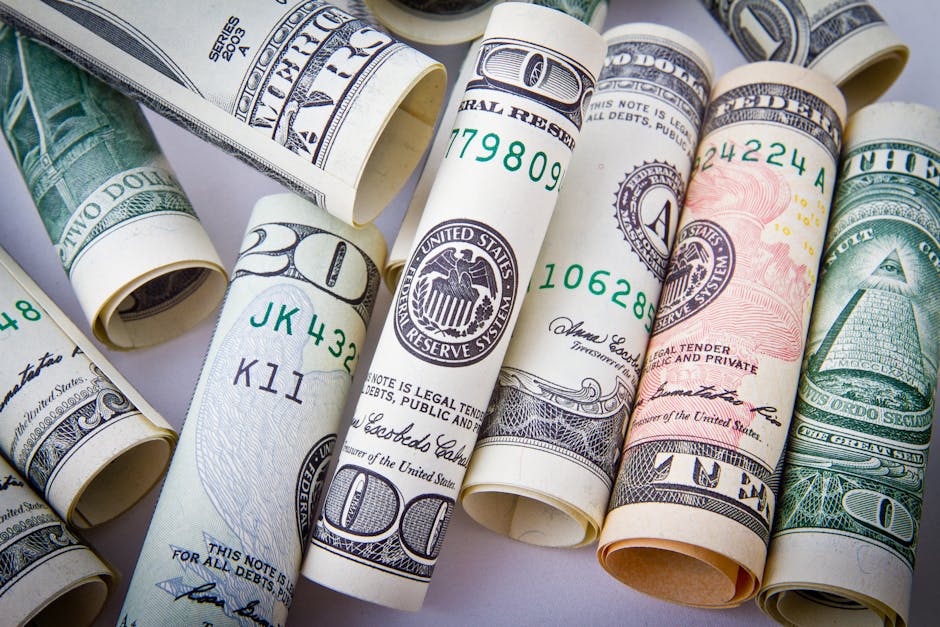
Photo by Pixabay on Pexels
Commercial banks are crucial intermediaries. They take deposits from savers and lend them out to borrowers, creating new money in the process (this is called the money multiplier effect). Banks must keep a fraction of deposits as reserves, either in their vaults or at the central bank.
Central Banks and Monetary Policy

Photo by Emilia Siedlaczek on Pexels
A country's central bank (like the Federal Reserve in the U.S. or the European Central Bank in the Eurozone) is responsible for monetary policy. Its main goals usually include:
* Maximizing employment
* Maintaining stable prices (controlling inflation)
* Promoting moderate long-term interest rates
Here are the main tools central banks use:
- Interest Rate Adjustments (e.g., the policy rate): This is the rate at which commercial banks can borrow from the central bank. Lowering this rate makes it cheaper for banks to borrow, encouraging them to lend more, which increases the money supply. Raising it does the opposite.
- Open Market Operations (OMOs): Buying or selling government bonds to commercial banks.
- When the central bank buys bonds, it injects money into the banking system, increasing bank reserves and the money supply.
- When it sells bonds, it withdraws money, decreasing reserves and the money supply.
- Reserve Requirements: The fraction of deposits banks must hold in reserve. Lowering this allows banks to lend more, increasing the money supply. Raising it restricts lending.
- Quantitative Easing (QE) / Quantitative Tightening (QT): These are larger-scale OMOs, often used during crises. QE involves massive purchases of various assets to lower long-term interest rates and inject liquidity. QT is the reverse.
Monetary policy can be expansionary (loose) to stimulate the economy (lower interest rates, buy bonds) or contractionary (tight) to cool down an overheating economy and fight inflation (raise interest rates, sell bonds).
graph TD
    A["Central Bank Action"] --> B{{"Policy Decision (e.g., raise/lower interest rates)"}}
    B --> C1["Lower Policy Rate (Expansionary)"]
    B --> C2["Raise Policy Rate (Contractionary)"]

    C1 --> D1["Banks borrow cheaper"]
    C1 --> E1["Banks lend more"]
    C1 --> F1["Money supply increases"]
    F1 --> G1["Investment & Consumption ↑"]
    F1 --> H1["Economic Growth ↑"]
    F1 --> I1["Inflationary Pressure ↑"]

    C2 --> D2["Banks borrow costlier"]
    C2 --> E2["Banks lend less"]
    C2 --> F2["Money supply decreases"]
    F2 --> G2["Investment & Consumption ↓"]
    F2 --> H2["Economic Growth ↓"]
    F2 --> I2["Inflationary Pressure ↓"]
3. Worked Example
Let's say the economy is slowing down, and the central bank wants to stimulate growth.
- Initial Situation: The central bank sets its policy rate (e.g., the federal funds rate in the U.S.) at 2%. Commercial banks are lending, but business investment is sluggish.
- Central Bank Action: The central bank's policy committee decides to implement an expansionary monetary policy. They announce they're lowering their policy rate target from 2% to 1%. They also might conduct open market operations by buying government bonds from commercial banks.
- Impact on Banks:
- With the lower policy rate, it's now cheaper for commercial banks to borrow from the central bank if they need to. This encourages them to lend more to consumers and businesses.
- When the central bank buys bonds, it pays commercial banks, which increases the reserves banks hold. These excess reserves enable banks to make more loans.
- Impact on Economy:
- As banks lend more, interest rates for consumers (e.g., mortgages, car loans) and businesses (e.g., investment loans) tend to fall.
- Lower borrowing costs encourage businesses to invest more in new equipment and expansion, creating jobs.
- Lower interest rates can also encourage consumers to spend more (e.g., buying houses, cars on credit).
- This increased investment and consumption boosts overall Aggregate Demand, leading to higher economic growth and potentially lower unemployment.
- Potential Side Effect: If not managed carefully, too much expansionary policy can lead to higher inflation as "too much money chases too few goods."
4. Key Takeaways
- Money acts as a medium of exchange, store of value, and unit of account, facilitating economic activity.
- Commercial banks create money through lending, subject to reserve requirements.
- Central banks manage the money supply to achieve macroeconomic goals like stable prices and full employment.
- The primary tools of monetary policy are interest rate adjustments, open market operations, and reserve requirements.
- Expansionary policy aims to stimulate growth, while contractionary policy aims to curb inflation.
- Monetary policy affects aggregate demand, influencing inflation, employment, and economic output.
- The effectiveness of monetary policy can be influenced by factors like consumer confidence and the state of the financial system.
Common Mistakes to Avoid:
- Confusing monetary policy (central bank actions) with fiscal policy (government spending and taxation).
- Thinking that money is only physical currency; deposits in banks are a large part of the money supply.
- Believing central banks directly control all interest rates; they primarily influence a key short-term rate, which then ripples through the economy.
- Assuming monetary policy has an immediate and precise effect; there are often time lags and uncertain outcomes.
- Overlooking the money multiplier effect; a small change in reserves can lead to a much larger change in the money supply.
5. Now Try It
Imagine the economy is experiencing high inflation. You are the head of the central bank. Describe, in 3-4 sentences, what monetary policy action you would take using two different tools, and explain why these actions would help reduce inflation.
Success looks like: Your explanation clearly outlines specific policy tools and logically connects their use to a decrease in the money supply, leading to reduced aggregate demand and thus lower inflationary pressure.
Frequently asked about Money, Banking, and Monetary Policy
Study this next
Get the full Macroeconomics curriculum
Clone the complete plan to your dashboard for unlimited AI-generated notes, practice quizzes, and a personalised revision schedule.
Create Free Account