Introduction to Biological Energy and Transport
From the Bio curriculum
Introduction to Biological Energy and Transport
TL;DR
You'll learn how living things get and use energy to power their cells, focusing on the molecule ATP. We'll also cover how cells move essential substances like nutrients and waste across their boundaries. Understanding these processes is key to how all life functions.
1. The Mental Model
Think of a cell as a tiny city. It needs a power plant (energy) and a transportation system (transport) to keep everything running smoothly. Without these, the city can't operate.
2. The Core Material
Every living cell, from the smallest bacteria to the cells in your body, needs energy to survive and function. This energy powers everything from building complex molecules to moving things around.
2.1 ATP: The Cell's Energy Currency
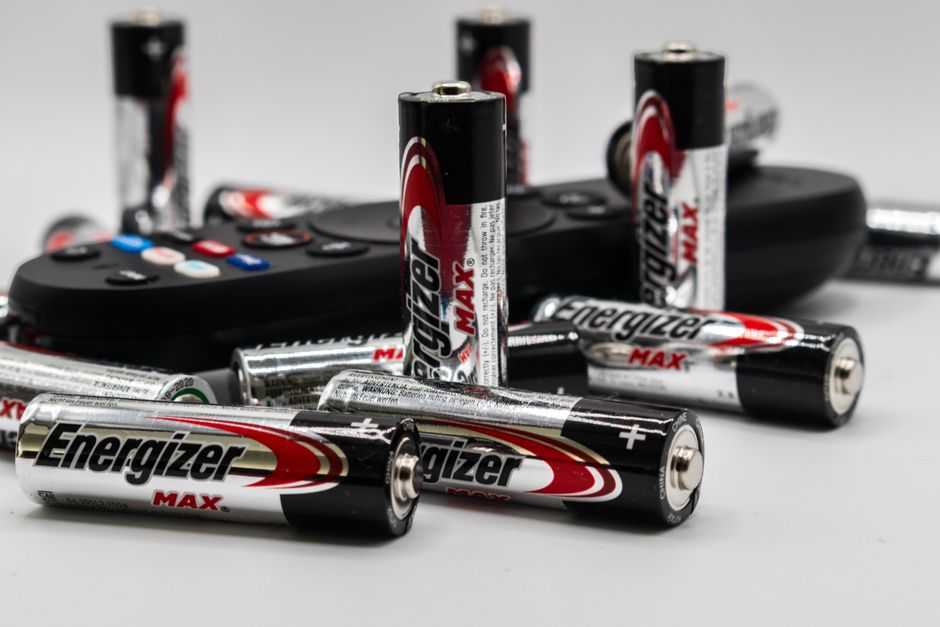
Photo by Terrance Barksdale on Pexels
The primary energy currency for cells is a molecule called adenosine triphosphate (ATP). Imagine ATP as a fully charged battery. It stores a lot of energy in its phosphate bonds. When a cell needs energy, it breaks off one of these phosphate groups, releasing energy and turning ATP into adenosine diphosphate (ADP), which is like a partially discharged battery.
This process is reversible: ADP can be recharged back into ATP by adding a phosphate group, using energy from food (cellular respiration) or sunlight (photosynthesis).
2.2 Energy Release from ATP

Photo by https://kaboompics.com/ on Pexels
When ATP breaks down to ADP, it releases about 7.3 kcal/mol of energy. This energy can then be used to:
* Power chemical reactions: Like building proteins from amino acids.
* Perform mechanical work: Such as muscle contraction or flagella movement.
* Facilitate active transport: Moving substances against their concentration gradient.
2.3 Cellular Transport Mechanisms
Photo by Pixabay on Pexels
Cells are surrounded by a cell membrane which acts as a selective barrier, controlling what goes in and out. There are two main types of transport:
2.3.1 Passive Transport
This type of transport doesn't require the cell to expend energy. Substances move down their concentration gradient (from an area of higher concentration to an area of lower concentration).
- Diffusion: Small, nonpolar molecules (like oxygen and carbon dioxide) can directly pass through the lipid bilayer of the membrane.
- Facilitated Diffusion: Larger or charged molecules (like glucose or ions) need help from specific transport proteins (channel proteins or carrier proteins) in the membrane. It's still passive because it follows the concentration gradient.
- Osmosis: This is the diffusion of water across a selectively permeable membrane. Water moves from an area of high water concentration (low solute concentration) to an area of low water concentration (high solute concentration).
2.3.2 Active Transport
This type of transport requires energy (usually from ATP) because substances are moved against their concentration gradient (from an area of lower concentration to an area of higher concentration). This is like pushing a ball uphill.
- Primary Active Transport: Uses ATP directly to power a pump protein. A classic example is the sodium-potassium pump, which moves three sodium ions out of the cell and two potassium ions into the cell for each ATP molecule consumed.
- Secondary Active Transport (Cotransport): Uses the energy stored in an ion concentration gradient (which was established by primary active transport) to move another substance. For example, a protein might allow sodium to flow down its gradient into the cell, and use that energy to simultaneously pull glucose into the cell against its gradient.
graph TD
    A["Cell Needs Energy"] --> B{Does it need to move a substance?};
    B -->|No| C["Perform Metabolic Reaction"];
    C --> D["ATP -> ADP + P (Energy Released)"];
    B -->|Yes| E{Is it against a gradient?};
    E -->|No (Passive Transport)| F{Is it water?};
    F -->|Yes| G["Osmosis (No ATP)"];
    F -->|No| H{Is it a small, nonpolar molecule?};
    H -->|Yes| I["Simple Diffusion (No ATP)"];
    H -->|No| J["Facilitated Diffusion (Channel/Carrier Protein, No ATP)"];
    E -->|Yes (Active Transport)| K{Does it directly use ATP?};
    K -->|Yes| L["Primary Active Transport (e.g., Na+/K+ pump)"];
    K -->|No| M["Secondary Active Transport (Cotransport, uses established gradient)"];
    L --> D;
    M --> D;
3. Worked Example
Let's look at how your muscle cells get potassium. Inside a muscle cell, potassium concentration is typically much higher than outside the cell. For the cell to maintain this high internal concentration, it must continuously pump potassium into the cell, even though it's already more concentrated there. This is moving potassium against its gradient.
So, the cell uses a sodium-potassium pump, which is a primary active transport protein. For every cycle, it uses one molecule of ATP to:
1. Pump three sodium ions (Na+) out of the cell (against their gradient).
2. Pump two potassium ions (K+) into the cell (against their gradient).
The breakdown of one ATP molecule provides the energy to power this entire transport event. Without constant ATP supply, the pump would stop, and the crucial concentration gradients for Na+ and K+ would quickly dissipate, leading to cell dysfunction.
4. Key Takeaways
- ATP is the cell's main energy currency, releasing energy when its terminal phosphate bond is broken.
- Cells obtain ATP from processes like cellular respiration (breaking down food) or photosynthesis (using light).
- Cellular transport moves substances across the cell membrane, which is a selectively permeable barrier.
- Passive transport doesn't require cellular energy and moves substances down their concentration gradients.
- Examples of passive transport include simple diffusion, facilitated diffusion, and osmosis.
- Active transport requires energy (often ATP) to move substances against their concentration gradients.
- Primary active transport directly uses ATP, while secondary active transport uses an established ion gradient.
5. Now Try It
Imagine a cell that's just eaten a huge meal. It has lots of glucose outside, but also some inside. Design a brief explanation (2-3 sentences) describing how glucose would enter the cell under these conditions if it's following its concentration gradient. Then, consider a different scenario: what if the cell already has a higher concentration of glucose inside than outside, but desperately needs more? Explain how it might get glucose in, specifying the type of transport and energy source. What success looks like: You've correctly identified the transport types and explained the energy requirements for each scenario.
Frequently asked about Introduction to Biological Energy and Transport
More from Bio
Get the full Bio curriculum
Clone the complete plan to your dashboard for unlimited AI-generated notes, practice quizzes, and a personalised revision schedule.
Create Free Account