intermediate

Bio — Introduction to Biological Energy and Transport + 6 more topics

Comprehensive AI-generated study curriculum with 8 detailed note modules.

0 students cloned 8 views 8 notes

Course Syllabus

  1. Introduction to Biological Energy and Transport
  2. The Upper Respiratory Tract: Air Intake and Conditioning
  3. The Lower Respiratory Tract: Airway Structure and Protection
  4. The Lungs: Bronchial Tree and Alveolar Structure
  5. Gas Exchange: Mechanism and Efficiency
  6. Respiratory System Overview and Functional Integration
  7. Respiratory Mechanics and Regulation (Basic Concepts)
Study Notes

The Lungs: Bronchial Tree and Alveolar Structure

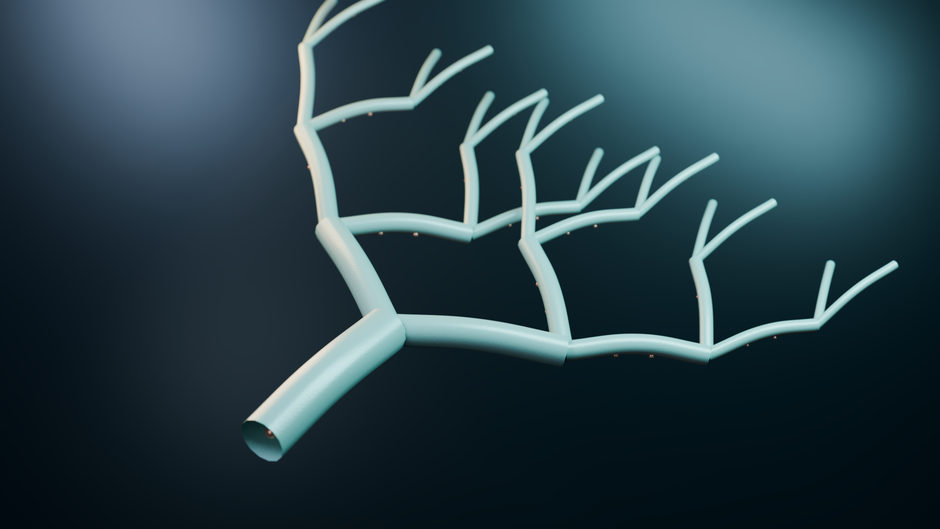
First, the main bronchi divide into lobar bronchi (also called secondary bronchi), which go to different lobes of your lungs. Then, these split into segmental bronchi (tertiary bronchi). As they get smaller, the tubes lose their cartilage support and become bronchioles. The tiniest bronchioles are called terminal bronchioles, and these then lead into respiratory bronchioles.

Read full note →

The Upper Respiratory Tract: Air Intake and Conditioning

When you breathe in through your nose, the air first encounters your nostrils, which are lined with hairs (vibrissae). These hairs act as a coarse filter, trapping larger particles. Deeper inside, the nasal cavity is complex, with bony structures called conchae (or turbinates) that create turbulence. This turbulence forces air to swirl, increasing its contact with the moist, sticky mucus lining.

Read full note →

Gas Exchange: Mechanism and Efficiency

Gas exchange is the process by which gases move across a membrane. For living organisms, this usually means taking in oxygen (O2) from the environment and releasing carbon dioxide (CO2), a waste product of cellular respiration. This movement always happens via diffusion, which is the net movement of particles from an area of higher concentration to an area of lower concentration.

Read full note →