Supercomputers: Architecture and Applications
From the computer science curriculum
Supercomputers: Architecture and Applications
TL;DR
Supercomputers are specialized machines designed for massive calculations, achieved by linking thousands of powerful processors together. They excel at problems too complex for regular computers, like climate modeling or drug discovery, using parallel processing to break down huge tasks. Their main strength lies in their ability to perform many operations simultaneously rather than just very fast individual ones.
1. The Mental Model
Think of a supercomputer not as one incredibly fast CPU, but as a giant team of many standard CPUs working together on different parts of the same huge problem. It's about teamwork and coordination on a massive scale, letting you solve problems that are just too big for a single brain, no matter how smart.
2. The Core Material
Supercomputers are essentially clusters of many individual computers (nodes) connected by a high-speed network. Each node has its own processors (CPUs and often GPUs), memory, and storage. The magic happens in how these nodes communicate and cooperate to tackle a single, enormous problem.
2.1 Parallel Processing: The Core Idea

Photo by Pixabay on Pexels
The fundamental principle behind supercomputing is parallel processing. Instead of doing tasks one after another (serial processing), supercomputers break a large problem into many smaller pieces and process them all at the same time across different processors.
There are two main ways this is often organized:
- Shared Memory Parallelism (e.g., OpenMP): Multiple processors can directly access the same piece of memory. This is good for tasks where different parts of the problem frequently need to see or modify the same data.
- Distributed Memory Parallelism (e.g., MPI): Each processor has its own private memory. They communicate by sending messages to each other over the network. This is common in supercomputers because it scales to thousands of processors.
2.2 Supercomputer Architecture: A High-Level View
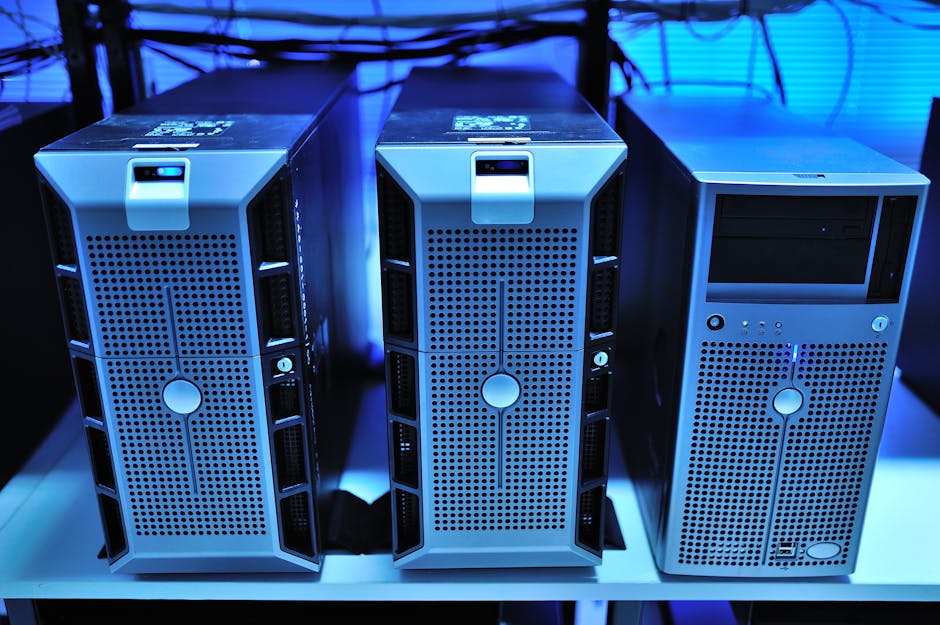
Photo by panumas nikhomkhai on Pexels
Here's how the different parts fit together:
graph TD
    User["User/Job Submission"] --> Scheduler["Job Scheduler (e.g., Slurm)"]
    Scheduler --> "Login Nodes"
    "Login Nodes" --> "Head Node/Management"
    "Head Node/Management" --> "Compute Nodes (CPUs + GPUs)"
    "Compute Nodes (CPUs + GPUs)" -- "High-Speed Interconnect (e.g., InfiniBand)" --- "Other Compute Nodes"
    "Compute Nodes (CPUs + GPUs)" -- "Data Access" --> "Parallel File System (e.g., Lustre)"
    "Parallel File System (e.g., Lustre)" --> "Archive Storage"
- Compute Nodes: These are the workhorses. Each node is like a powerful server with multiple CPUs (often many cores per CPU) and frequently multiple GPUs. GPUs are particularly good at highly parallel calculations common in machine learning and scientific simulations.
- High-Speed Interconnect: This is crucial. It's a specialized, extremely fast network that allows compute nodes to exchange data quickly. Without it, the processors would spend more time waiting for data than computing.
- Parallel File System: Regular file systems can't handle the data demands of thousands of nodes. A parallel file system (like Lustre) spreads data across many storage devices, allowing many nodes to read and write data simultaneously at very high speeds.
- Job Scheduler: You don't directly run programs on compute nodes. Instead, you submit your "job" to a scheduler (like Slurm). The scheduler finds available nodes, allocates them to your job, and manages its execution.
- Login Nodes: These are where you log in, compile your code, and submit jobs to the scheduler. They aren't for computation.
2.3 Applications: Where Supercomputers Shine
Photo by panumas nikhomkhai on Pexels
Supercomputers are vital for problems that require immense computational power. Examples include:
- Climate and Weather Modeling: Simulating Earth's complex atmosphere and oceans over time to predict weather and understand climate change.
- Drug Discovery: Simulating molecular interactions to design new drugs and understand disease mechanisms.
- Astrophysics: Simulating galaxy formation, black holes, and other cosmic phenomena.
- Material Science: Designing new materials by simulating atomic and molecular properties.
- Aerospace Engineering: Simulating airflow over aircraft or spacecraft to optimize design.
- Artificial Intelligence: Training very large neural networks for advanced AI applications.
3. Worked Example
Let's imagine you want to simulate the weather for the next 24 hours across a large region.
Standard Computer Approach: A normal computer might try to calculate the conditions (temperature, pressure, wind) for one small area, then move to the next, then the next. This would take an impossibly long time, as each calculation depends on its neighbors.
Supercomputer Approach:
- Divide the Problem: The supercomputer divides the entire geographical region into millions of tiny grid cells.
- Distribute Tasks: Each compute node (or even each CPU core/GPU) is assigned a small group of these grid cells.
- Parallel Calculation: All nodes simultaneously start calculating the weather conditions for their assigned cells for the first time step.
- Exchange Data: Once their local calculations are done, nodes use the high-speed interconnect to share their results (e.g., wind speed at their boundaries) with neighboring nodes. This is crucial because a cell's weather depends on its neighbors.
- Iterate: This process repeats for hundreds or thousands of time steps (e.g., every 10 seconds of simulated time) until the 24-hour forecast is complete.
The parallel file system handles saving intermediate results and the final forecast data efficiently. The job scheduler ensures your simulation gets the resources it needs across potentially thousands of nodes. This massive parallel effort delivers a complex forecast in a reasonable amount of time.
4. Key Takeaways
- Supercomputers achieve speed by coordinating thousands of processors, not just by having one super-fast processor.
- Parallel processing is the core concept, breaking large problems into many smaller, simultaneously solvable tasks.
- Key architectural components include compute nodes (CPUs/GPUs), high-speed interconnects, and parallel file systems.
- They are essential for computationally intensive scientific and engineering problems like climate modeling and drug design.
- Programming for supercomputers often involves distributed memory models (like MPI) where processors explicitly send messages to each other.
Common Mistakes to Avoid:
- Thinking a supercomputer is just one incredibly powerful PC; it's a networked cluster.
- Assuming your regular code will automatically run faster on a supercomputer; it usually needs specific parallel programming.
- Underestimating the importance of the high-speed network; it's critical for efficient data sharing between nodes.
- Confusing a supercomputer with a mainframe; mainframes are for high-volume transaction processing, not large-scale scientific computation.
5. Now Try It
Think of a real-world problem that a supercomputer would be well-suited to solve, other than the ones mentioned. Briefly describe the problem and explain why it would benefit from parallel processing and a supercomputer's architecture, specifically mentioning which components (e.g., GPUs, high-speed interconnect) would be most critical for that problem. Your answer should be about 3-5 sentences.
Frequently asked about Supercomputers: Architecture and Applications
Study this next
Get the full computer science curriculum
Clone the complete plan to your dashboard for unlimited AI-generated notes, practice quizzes, and a personalised revision schedule.
Create Free Account