Accounting for Merchandising Operations
From the principal accounting 1 curriculum
Accounting for Merchandising Operations
TL;DR
Merchandising businesses buy goods to resell them, unlike service businesses. You'll learn two main inventory systems—perpetual and periodic—and how they track inventory and costs. Understanding these systems is crucial for accurately reporting sales revenue and cost of goods sold.
1. The Mental Model
Think of merchandising accounting as tracking the flow of products. You buy stuff, you sell stuff. The key is knowing how much you bought, how much you sold, and what’s left over to determine your profit from those sales.
2. The Core Material
Merchandising companies make money by buying goods (inventory) and selling them at a higher price. This differs from service companies that provide intangible services. The main challenge is accounting for inventory and the related cost of goods sold (COGS).
There are two primary inventory systems:
Perpetual Inventory System
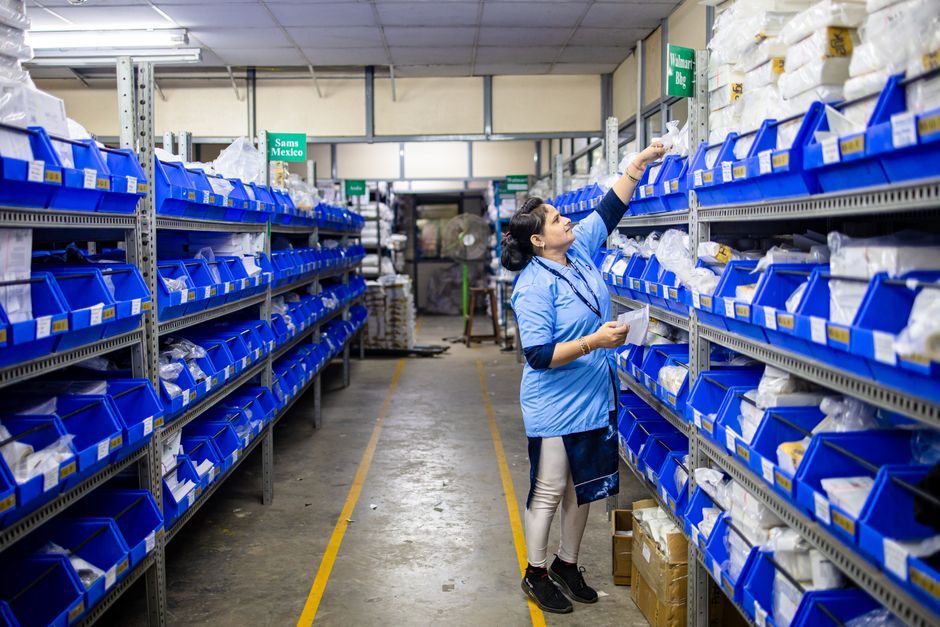
Photo by EqualStock IN on Pexels
This system keeps a continuous record of inventory balances and COGS. Every time you buy or sell an item, the inventory records are updated immediately. It's like having a running tally of every item in your store.
- Purchases: When you buy inventory, you debit Inventory and credit Accounts Payable (or Cash).
- Sales: When you sell inventory, you make two entries:
- Debit Accounts Receivable (or Cash) and credit Sales Revenue for the selling price.
- Debit Cost of Goods Sold and credit Inventory for the cost of the goods sold.
- Advantages: Provides up-to-date inventory levels, helps manage stock, and can detect shrinkage.
- Disadvantages: Requires more detailed record-keeping and often specialized software.
Periodic Inventory System
Photo by EqualStock IN on Pexels
This system doesn't keep continuous track of inventory. Instead, it determines inventory balances and COGS only at the end of an accounting period through a physical count. It's like having to count everything in your store once a month or quarter.
- Purchases: When you buy inventory, you debit Purchases and credit Accounts Payable (or Cash). (Note: There's no direct debit to Inventory until year-end).
- Sales: When you sell inventory, you only make one entry:
- Debit Accounts Receivable (or Cash) and credit Sales Revenue for the selling price.
- Determining COGS and Ending Inventory (at period-end): You'll use a formula:
- Beginning Inventory + Net Purchases - Ending Inventory = Cost of Goods Sold
- Advantages: Simpler to operate, less data entry.
- Disadvantages: Doesn't provide real-time inventory data, harder to detect shrinkage.
Sales Returns, Allowances, and Discounts

Photo by Tamanna Rumee on Pexels
These affect your net sales revenue:
- Sales Returns and Allowances: When customers return goods or get a price reduction. You debit Sales Returns and Allowances (a contra-revenue account) and credit Accounts Receivable (or Cash). If using perpetual, you also debit Inventory and credit Cost of Goods Sold.
- Sales Discounts: Offered to customers for early payment (e.g., 2/10, n/30 means 2% discount if paid within 10 days, otherwise full amount due in 30 days). You debit Cash for the discounted amount, debit Sales Discounts (a contra-revenue account) for the discount, and credit Accounts Receivable for the full amount.
graph TD
    A["Merchandising Business Operations"] --> B{"Inventory System?"}
    B -- "Perpetual" --> C["Record Inventory & COGS continuously"]
    C --> D["Purchase: Dr. Inventory, Cr. A/P"]
    C --> E["Sale: 1. Dr. A/R, Cr. Sales Rev. \n 2. Dr. COGS, Cr. Inventory"]
    B -- "Periodic" --> F["Record Inventory & COGS at period-end"]
    F --> G["Purchase: Dr. Purchases, Cr. A/P"]
    F --> H["Sale: Dr. A/R, Cr. Sales Rev. (only one entry)"]
    F --> I["Period-End: Physical Count \n Calc. COGS = BI + NP - EI"]
    D --> J["Adjustments for Returns/Discounts"]
    E --> J
    G --> J
    H --> J
    J --> K["Net Sales Revenue Calculation"]
    K --> L["Gross Profit Calculation"]
3. Worked Example
Let's track a few transactions using the perpetual inventory system.
On June 1, you purchase 100 units of product X for $10 each on credit.
* June 1 Purchase:
* Debit Inventory $1,000 (100 units * $10)
* Credit Accounts Payable $1,000
On June 5, you sell 60 units of product X for $25 each on credit.
* June 5 Sale (Sales Revenue part):
* Debit Accounts Receivable $1,500 (60 units * $25)
* Credit Sales Revenue $1,500
* June 5 Sale (Cost of Goods Sold part):
* Debit Cost of Goods Sold $600 (60 units * $10)
* Credit Inventory $600
On June 8, a customer returns 5 units of product X from the June 5 sale. You accept the return and reduce their balance.
* June 8 Return (Revenue part):
* Debit Sales Returns and Allowances $125 (5 units * $25)
* Credit Accounts Receivable $125
* June 8 Return (Inventory part):
* Debit Inventory $50 (5 units * $10)
* Credit Cost of Goods Sold $50
After these transactions, your Inventory account would show a balance of $450 ($1,000 - $600 + $50 = $450), and Cost of Goods Sold would be $550 ($600 - $50 = $550). You have 45 units remaining in inventory (100 - 60 + 5).
4. Key Takeaways
- Merchandising businesses distinguish themselves by buying and reselling physical goods.
- The perpetual inventory system continuously updates inventory and cost of goods sold with every transaction.
- The periodic inventory system only updates inventory and cost of goods sold at the end of an accounting period, typically after a physical count.
- Sales returns, allowances, and discounts reduce your net sales revenue.
- Gross profit is calculated as Net Sales Revenue minus Cost of Goods Sold.
- Understanding the flow of inventory and its cost is fundamental to profitability analysis.
Common Mistakes:
- Forgetting the second entry (COGS) when recording a sale under the perpetual system.
- Not adjusting inventory for sales returns when using the perpetual system.
- Confusing the Purchases account (periodic) with the Inventory account (perpetual).
- Incorrectly calculating COGS under the periodic system (Beginning Inventory + Purchases - Ending Inventory).
5. Now Try It
Imagine you own a small shop. On July 1, you have 50 shirts in stock that cost you $15 each. During July, you buy 100 more shirts for $16 each, and you sell 80 shirts for
Frequently asked about Accounting for Merchandising Operations
More from principal accounting 1
Get the full principal accounting 1 curriculum
Clone the complete plan to your dashboard for unlimited AI-generated notes, practice quizzes, and a personalised revision schedule.
Create Free Account