Foundational Concepts of Heredity
From the Mendelian genetics curriculum
Foundational Concepts of Heredity
TL;DR
You inherit traits from your parents through specific units called genes, which come in different versions. These gene versions, or alleles, combine to determine your observable characteristics. We can predict how traits pass from one generation to the next using these basic rules.
1. The Mental Model
Think of your traits (like eye color or hair type) as being built from instruction manuals you got from your parents. These manuals aren't one big book; they're made of tiny, specific instruction cards.
2. The Core Material
Heredity is all about how characteristics, or traits, are passed down from parents to their offspring. This happens through segments of DNA called genes. Each gene has a specific job, like coding for eye color.
You get two copies of every gene, one from your mom and one from your dad. These copies aren't always identical; different versions of the same gene are called alleles. For example, for the eye color gene, there might be an allele for blue eyes and an allele for brown eyes.
When you have two identical alleles for a trait (e.g., two brown eye alleles), you're homozygous for that gene. If you have two different alleles (e.g., one brown, one blue), you're heterozygous.
Sometimes, one allele is dominant and will show up even if there's only one copy. The other allele is recessive and only shows up if you have two copies of it. For instance, if brown eye color (B) is dominant and blue eye color (b) is recessive, someone with 'Bb' will have brown eyes. Only 'bb' would result in blue eyes.
Your complete set of alleles is your genotype (e.g., Bb). The observable trait that results from your genotype is your phenotype (e.g., brown eyes).
Here's how these concepts link together:
graph TD
    A["Parents' Genes"] --> B["Alleles Passed to Offspring"];
    B --> C["Combination of Alleles (Genotype)"];
    C --> D["Observable Trait (Phenotype)"];
    D -- "Influenced by" --> E["Environment"];
    A -- "Via" --> F["Reproduction"];
2.1 Dominant vs. Recessive Alleles
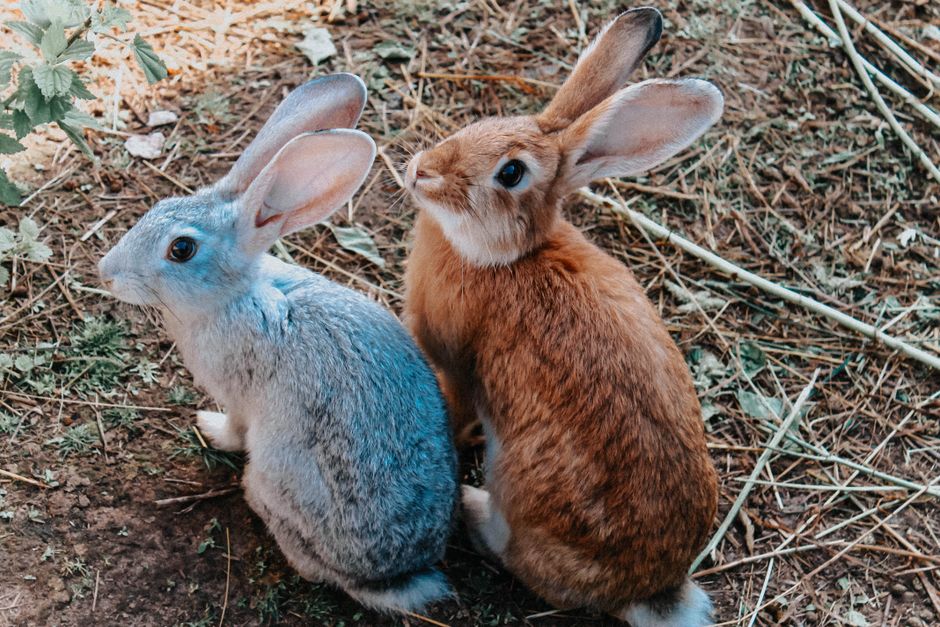
Photo by Мария on Pexels
- Dominant alleles are like the "loud" instructions; you only need one copy for the trait to show up. We usually represent them with a capital letter (e.g., B for brown eyes).
- Recessive alleles are the "quiet" instructions; you need two copies for the trait to show up. They're represented by a lowercase letter (e.g., b for blue eyes).
2.2 Genotype vs. Phenotype
Photo by Pragyan Bezbaruah on Pexels
It's crucial to distinguish these:
* Genotype: The actual genetic makeup (e.g., BB, Bb, or bb). It's what's written in your "instruction manual."
* Phenotype: The observable physical characteristic (e.g., brown eyes or blue eyes). It's what you actually "see."
2.3 Homozygous vs. Heterozygous

Photo by Andris Bergmanis on Pexels
- Homozygous: Having two identical alleles for a gene (e.g., BB or bb).
- Heterozygous: Having two different alleles for a gene (e.g., Bb).
3. Worked Example
Let's consider a classic example: pea plant height. Assume tall (T) is dominant over short (t).
Imagine you cross a pea plant that is homozygous dominant for tallness (TT) with a pea plant that is homozygous recessive for shortness (tt).
- Parent Genotypes: TT (tall) and tt (short).
- Alleles Parents Can Pass On:
- The TT parent can only pass on 'T' alleles.
- The tt parent can only pass on 't' alleles.
- Offspring Genotypes (F1 generation): Every offspring will receive one 'T' from the first parent and one 't' from the second parent. So, all offspring will have the genotype Tt.
- Offspring Phenotypes (F1 generation): Since 'T' (tall) is dominant over 't' (short), all offspring with the 'Tt' genotype will be tall.
So, a cross between a pure tall plant and a pure short plant will always result in all tall offspring in the first generation.
4. Key Takeaways
- Genes are the fundamental units of heredity, carrying instructions for traits.
- Alleles are different versions of a gene, like options for a specific trait.
- Your genotype is your genetic code (e.g., Tt), while your phenotype is the observable trait (e.g., tall).
- Dominant alleles mask recessive alleles when present together.
- You inherit one allele for each gene from each parent, making you diploid.
- Homozygous means having two identical alleles (TT or tt); heterozygous means having two different alleles (Tt).
Common Mistakes to Avoid:
- Confusing gene (the trait itself) with allele (the version of the trait).
- Mixing up genotype (the letters) with phenotype (what you see).
- Assuming a dominant allele means it's more common in the population.
- Forgetting that recessive traits only appear if two recessive alleles are present.
5. Now Try It
You're studying another pea plant trait: seed color. Yellow seeds (Y) are dominant over green seeds (y). If you cross two pea plants that are both heterozygous for seed color (Yy x Yy), what are the possible genotypes and phenotypes of their offspring, and in what proportions would you expect to see them? What percentage of the offspring would you expect to have green seeds?
Frequently asked about Foundational Concepts of Heredity
Study this next
Get the full Mendelian genetics curriculum
Clone the complete plan to your dashboard for unlimited AI-generated notes, practice quizzes, and a personalised revision schedule.
Create Free Account