Introduction to Civilizational Studies
From the ssst curriculum
Introduction to Civilizational Studies
TL;DR
Civilizational studies is about understanding large-scale human societies over long periods, focusing on their shared culture, institutions, and development. It explores how civilizations rise, interact, and decline, offering insights into complex historical patterns. You'll learn to analyze civilizations as distinct units, rather than just countries or empires.
1. The Mental Model
Think of a civilization as a very large, long-lived "cultural ecosystem." It's a vast web of shared beliefs, technologies, art, and ways of life that connect many different peoples or states over centuries or even millennia. It's bigger than a single nation but smaller than humanity itself.
2. The Core Material
Civilizational studies looks at human history through the lens of civilizations. These aren't just political entities like empires, but broader cultural spheres that share fundamental characteristics.
What is a Civilization?

Photo by Jorge Soto Farias on Pexels
It's tricky to define precisely, but generally, a civilization involves:
- Shared Culture: Common language, religion, values, artistic styles, and ways of thinking.
- Complex Institutions: Organized government, legal systems, economic structures, and social hierarchies.
- Urban Centers: Cities as hubs of trade, administration, and innovation.
- Technological Advancement: Development of tools, infrastructure, and scientific knowledge.
- Literacy/Writing: A means to record and transmit knowledge and history.
- Sense of Identity: People within it often feel a connection to this larger cultural unit.
Key Approaches

Photo by Bastian Riccardi on Pexels
Historians and scholars often compare, contrast, and analyze the lifecycles of different civilizations. Some key aspects they examine include:
- Origins and Formation: How do civilizations first come together?
- Development and Expansion: What drives their growth and influence?
- Interaction and Conflict: How do different civilizations meet, trade, and clash?
- Decline and Collapse: Why do some civilizations weaken or disappear?
- Continuity and Legacy: What parts of a civilization endure even after its political structures are gone?
Major Civilizations (Examples)
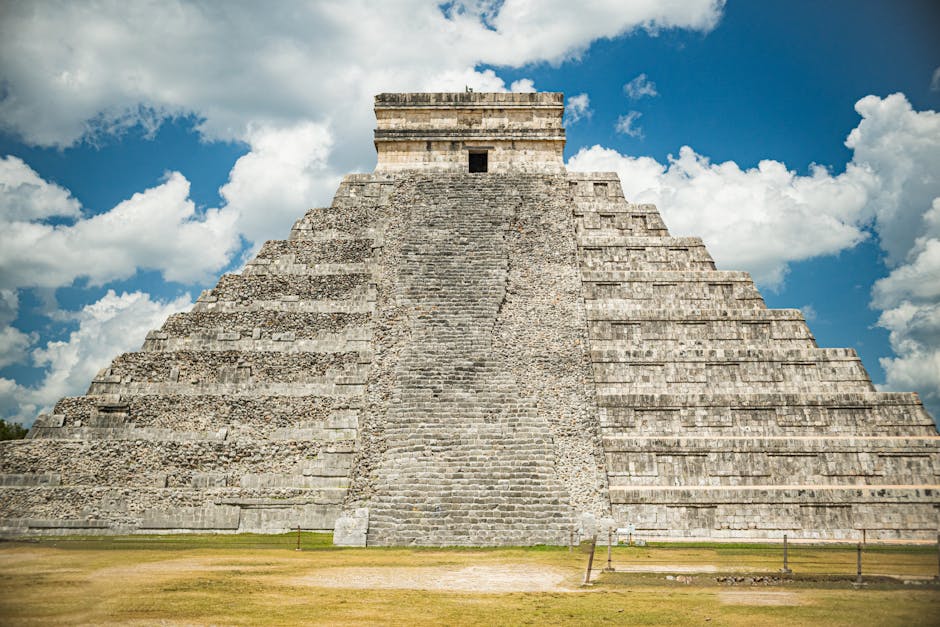
Photo by Vintage Lenses on Pexels
It's helpful to see how these concepts apply to actual historical examples. Here's a simplified look at how some major civilizations are often categorized and studied:
graph TD
    A["Civilizational Studies"] --> B["Focuses On"]
    B --> C["Shared Culture (Religion, Values)"]
    B --> D["Complex Institutions (Gov't, Law)"]
    B --> E["Urban Centers (Cities)"]
    B --> F["Technological Advancement"]
    B --> G["Writing/Literacy"]
    B --> H["Sense of Shared Identity"]

    C --> I["Examples: Confucianism"]
    C --> J["Examples: Christianity"]
    D --> K["Examples: Roman Law"]
    D --> L["Examples: Chinese Bureaucracy"]
    I --> M["East Asian Civilization"]
    J --> N["Western Civilization"]
    K --> N
    L --> M
    M --> P["Distinct Unit for Analysis"]
    N --> P
Why Study Civilizations?

Photo by Boris Hamer on Pexels
Studying civilizations helps you:
* Understand long-term historical processes, not just short-term events.
* See patterns in human development across different regions and eras.
* Appreciate the diversity and interconnectedness of human societies.
* Gain perspective on contemporary global challenges by looking at historical precedents.
3. Worked Example
Let's consider "Western Civilization." This isn't a country, but a broad cultural sphere.
You can trace its roots back to Ancient Greece and Rome, inheriting their philosophies, legal systems, and artistic styles. Christianity became a dominant unifying religious force. During the Middle Ages, new political structures like feudalism emerged, but the underlying cultural thread remained. The Renaissance saw a "rebirth" of classical ideas, while the Enlightenment brought new ways of thinking about governance and science. Later, industrialization and globalization further shaped this civilization.
While modern nations like the USA, Germany, or France are distinct, they largely share a common historical narrative, legal principles, philosophical traditions, and often religious heritage rooted in this "Western" context. They interact, and often clash, but within a broadly similar framework. Its study isn't about promoting one culture over another, but understanding its unique historical development and impact.
4. Key Takeaways
- Civilizations are broad cultural units, larger than nations, characterized by shared identity, institutions, and values over long periods.
- They provide a framework for analyzing vast swathes of human history beyond individual political states.
- Key aspects studied include their origins, growth, interactions, and eventual decline or transformation.
- Understanding civilizations helps reveal long-term patterns and connections in human development globally.
- They aren't static; civilizations evolve, absorb new influences, and can even split or merge.
Common mistakes you should avoid:
* Confusing a civilization with a single country or empire; they're much broader.
* Thinking that civilizations have clear, sharp borders; they often have fuzzy edges and overlap.
* Assuming that "decline" means complete disappearance; elements often persist as legacies.
* Viewing civilizational studies as endorsing cultural superiority; it's an analytical framework, not a judgment.
5. Now Try It
Choose two distinct civilizations (e.g., Islamic Civilization, Indic Civilization, Mesoamerican Civilization, or any from the examples). Spend 15 minutes researching them briefly. Identify one key shared cultural element (like a religion or philosophy) and one key institutional feature (like a specific form of government or economic system) for each. What success looks like: You can articulate how these two chosen civilizations demonstrate the core characteristics discussed, highlighting at least one unique cultural and one unique institutional aspect for each.
Frequently asked about Introduction to Civilizational Studies
More from ssst
Get the full ssst curriculum
Clone the complete plan to your dashboard for unlimited AI-generated notes, practice quizzes, and a personalised revision schedule.
Create Free Account