Nombor Bulat dan Operasi
From the matematik ujian akhir sesi akedemik tahun 6 curriculum
Nombor Bulat dan Operasi
TL;DR
You'll learn about whole numbers, how to read and write them, and how to perform basic math operations like addition, subtraction, multiplication, and division. Mastering these basics is crucial for all future math topics. We'll also cover order of operations to make sure your calculations are always correct.
1. The Mental Model
Think of whole numbers as the building blocks of math; they're the simple counting numbers you use every day. Operations are just the rules for combining or splitting these blocks. Understanding how they work together is like knowing the rules to a game – it lets you solve problems.
2. The Core Material
Nombor bulat (whole numbers) are simply 0, 1, 2, 3, and so on, without any fractions or decimals. Operasi (operations) are the actions we perform on these numbers.
2.1 Membaca dan Menulis Nombor Bulat

Photo by Mark Stebnicki on Pexels
Reading and writing large numbers can seem tricky, but it's just about understanding place values.
You read numbers from left to right, grouping digits in threes from the right (e.g., thousands, millions).
- Contoh:
- 345 dibaca "tiga ratus empat puluh lima"
- 1 234 dibaca "seribu dua ratus tiga puluh empat"
- 56 789 dibaca "lima puluh enam ribu tujuh ratus lapan puluh sembilan"
- 1 234 567 dibaca "satu juta dua ratus tiga puluh empat ribu lima ratus enam puluh tujuh"
2.2 Bundarkan Nombor Bulat

Photo by Black ice on Pexels
Bundarkan (rounding) means simplifying a number to a certain place value. You look at the digit to the right of the place value you're rounding to.
* If it's 5 or more, round up (add 1 to the digit at the specified place value, turn all digits to its right into 0).
* If it's 4 or less, round down (keep the digit at the specified place value the same, turn all digits to its right into 0).
- Contoh:
- Bundarkan 4 567 kepada ratus terdekat: Digit di tempat puluh ialah 6 (5 atau lebih), jadi bundarkan 4567 kepada 4 600.
- Bundarkan 12 345 kepada ribu terdekat: Digit di tempat ratus ialah 3 (4 atau kurang), jadi bundarkan 12345 kepada 12 000.
2.3 Operasi Asas: Tambah, Tolak, Darab, Bahagi
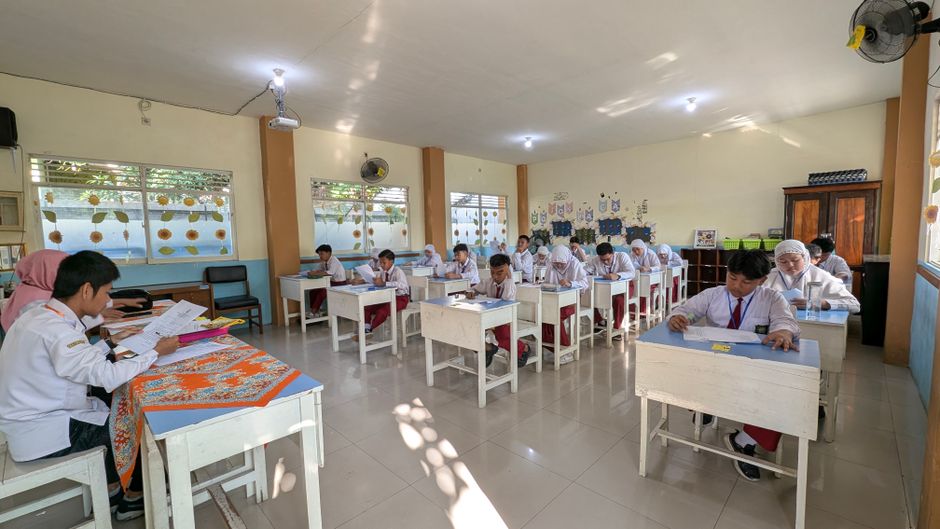
Photo by Haidar Azmi on Pexels
These are your four fundamental operations. You should be comfortable performing these with multiple-digit numbers, including carrying over and borrowing.
- Tambah (Addition): Menyatukan dua atau lebih nombor.
- Contoh: 123 + 45 = 168
- Tolak (Subtraction): Mencari perbezaan antara dua nombor.
- Contoh: 98 - 23 = 75
- Darab (Multiplication): Penambahan berulang.
- Contoh: 15 x 3 = 45 (sama dengan 15 + 15 + 15)
- Bahagi (Division): Memecahkan nombor kepada kumpulan yang sama.
- Contoh: 60 ÷ 5 = 12 (60 dibahagi kepada 5 kumpulan yang sama, setiap kumpulan ada 12)
2.4 Gabungan Operasi (Order of Operations)

Photo by setengah lima sore on Pexels
When you have a problem with more than one operation, you need a specific order to solve it. In Malay, we often use DMAS (Darab, Bahagi, Tambah, Tolak). It's similar to BODMAS/PEMDAS.
- Darab (Multiplication) and Bahagi (Division) from left to right.
- Tambah (Addition) and Tolak (Subtraction) from left to right.
If there are parentheses () in the problem, you always solve what's inside them first.
graph TD
    A[Mula] --> B{"Ada kurungan ( )?"}
    B -- Ya --> C["Selesaikan operasi dalam kurungan dahulu"]
    C --> D[Selesaikan operasi Darab dan Bahagi dari kiri ke kanan]
    D --> E[Selesaikan operasi Tambah dan Tolak dari kiri ke kanan]
    E --> F[Tamat]
    B -- Tidak --> D
3. Worked Example
Mari kita selesaikan masalah ini:
Soalan: (25 + 5) x 3 - 60 ÷ 10
-
Langkah 1: Selesaikan operasi dalam kurungan dahulu.
(25 + 5) = 30
Jadi, masalah menjadi: 30 x 3 - 60 ÷ 10 -
Langkah 2: Selesaikan operasi darab dan bahagi dari kiri ke kanan.
- Pertama, darab: 30 x 3 = 90
- Kemudian, bahagi: 60 ÷ 10 = 6
Sekarang, masalah menjadi: 90 - 6
-
Langkah 3: Selesaikan operasi tambah dan tolak dari kiri ke kanan.
- Tolak: 90 - 6 = 84
Jawapan akhir adalah 84.
4. Key Takeaways
- You read and write whole numbers by understanding their place values, especially for large numbers.
- Rounding simplifies numbers; remember the rule: 5 or more, round up; 4 or less, round down.
- Mastering basic operations (tambah, tolak, darab, bahagi) is fundamental for all math.
- Always follow the DMAS rule (or BODMAS/PEMDAS) for combined operations: kurungan first, then Darab/Bahagi (left to right), then Tambah/Tolak (left to right).
- Practice multi-digit operations regularly to build speed and accuracy.
Common mistakes to avoid:
- Forgetting to carry over or borrow correctly in addition and subtraction.
- Not knowing your multiplication tables well, which slows down multiplication and division.
- Ignoring the order of operations, leading to incorrect answers for multi-operation problems.
- Rounding incorrectly, especially when the digit to the right is 5.
5. Now Try It
Cuba selesaikan masalah gabungan operasi ini dalam masa 15 minit. Tuliskan setiap langkah pengiraan anda dengan jelas.
Masalah: 150 ÷ (10 - 5) + 8 x 2 - 25
What success looks like: You arrive at the correct final answer by showing each step according to the DMAS rule, clearly explaining what you did in each step.
Frequently asked about Nombor Bulat dan Operasi
More from matematik ujian akhir sesi akedemik tahun 6
Get the full matematik ujian akhir sesi akedemik tahun 6 curriculum
Clone the complete plan to your dashboard for unlimited AI-generated notes, practice quizzes, and a personalised revision schedule.
Create Free Account