Microbes in Human Welfare
From the Biology curriculum
Microbes in Human Welfare
TL;DR
Microbes, tiny living things, aren't just bad guys; many are incredibly useful, playing key roles in making food, treating wastewater, producing medicines, and helping agriculture. You'll see how these microscopic powerhouses impact your daily life, often in ways you don't even realize. Understanding their beneficial roles highlights their immense importance beyond disease.
1. The Mental Model
Think of microbes not as invisible enemies, but as microscopic workers: some build things (like cheese), some clean things up (like sewage), and some produce helpful chemicals (like antibiotics). They're tiny, but their collective impact is huge across many industries and natural processes.
2. The Core Material
When you hear "microbe," you might think of sickness. But that's only part of the story. Microbes – bacteria, fungi, protozoa, and even viruses – are everywhere, and many are essential for our survival and well-being. Let's look at some key beneficial roles.
2.1 Microbes in Household Products

Photo by Jonathan Borba on Pexels
Many foods you enjoy are made with microbes.
* Curd (Yogurt): Lactobacillus bacteria in milk convert lactose (milk sugar) into lactic acid, which coagulates milk proteins, giving curd its texture and tangy taste.
* Bread: Yeast (Saccharomyces cerevisiae) ferments sugars in flour, producing carbon dioxide gas that makes dough rise and gives bread its airy texture.
* Cheese: Specific bacteria and fungi are used to ripen cheese, developing its unique flavors and textures. The holes in Swiss cheese, for example, are from CO2 produced by Propionibacterium shermanii.
* Fermented Drinks: Beer, wine, and other alcoholic beverages rely on yeast to ferment sugars into ethanol.
2.2 Microbes in Industrial Production

Photo by Monstera Production on Pexels
Microbes are like tiny chemical factories.
* Antibiotics: Penicillin, the first widely used antibiotic, comes from the fungus Penicillium notatum. Many other antibiotics are derived from bacteria (like Streptomyces). They kill or inhibit the growth of harmful bacteria.
* Organic Acids: Microbes produce useful acids: Aspergillus niger makes citric acid (used in food and drinks), Acetobacter aceti makes acetic acid (vinegar), and Clostridium butylicum makes butyric acid.
* Alcohols: Ethanol, besides being in drinks, is also an industrial solvent and biofuel, largely produced by yeast fermentation.
* Enzymes & Bioactive Molecules: Enzymes like lipases (used in detergents to remove oily stains) and pectinases/proteases (used to clarify fruit juices) are microbially produced. Cyclosporin A (an immunosuppressant drug) comes from the fungus Trichoderma polysporum, and statins (cholesterol-lowering drugs) from Monascus purpureus.
2.3 Microbes in Sewage Treatment

Photo by 逐光 创梦 on Pexels
Wastewater (sewage) is full of organic matter and pathogens. Microbes are crucial for cleaning it up before it's released into natural water bodies.
* Primary Treatment: Physical removal of large solids.
* Secondary Treatment (Biological Treatment): This is where microbes shine. Aerobic bacteria grow in large tanks (aeration tanks), consuming organic waste and forming flocs (masses of bacteria and fungal filaments). These flocs settle, reducing the Biological Oxygen Demand (BOD) – a measure of organic pollution. The treated water then goes for further purification.
* Anaerobic Digesters: Sludge from the secondary treatment is broken down by anaerobic bacteria, producing biogas (methane, CO2, H2S), which can be used as energy.
graph TD
    A["Raw Sewage (High BOD)"] --> B["Primary Treatment (Sedimentation)"]
    B --> C["Effluent (Still High BOD)"]
    C --> D["Secondary Treatment (Aeration Tank)"]
    D --> E["Microbial Flocs (Aerobic Bacteria/Fungi)"]
    E --> F["Settling Tank"]
    F --> G["Treated Effluent (Low BOD)"]
    G --> H["Discharge to River/Further Treatment"]
    F --> I["Activated Sludge (to Aeration Tank/Digester)"]
    I --> J["Anaerobic Sludge Digester"]
    J --> K["Biogas (Methane)"]
2.4 Microbes in Biogas Production
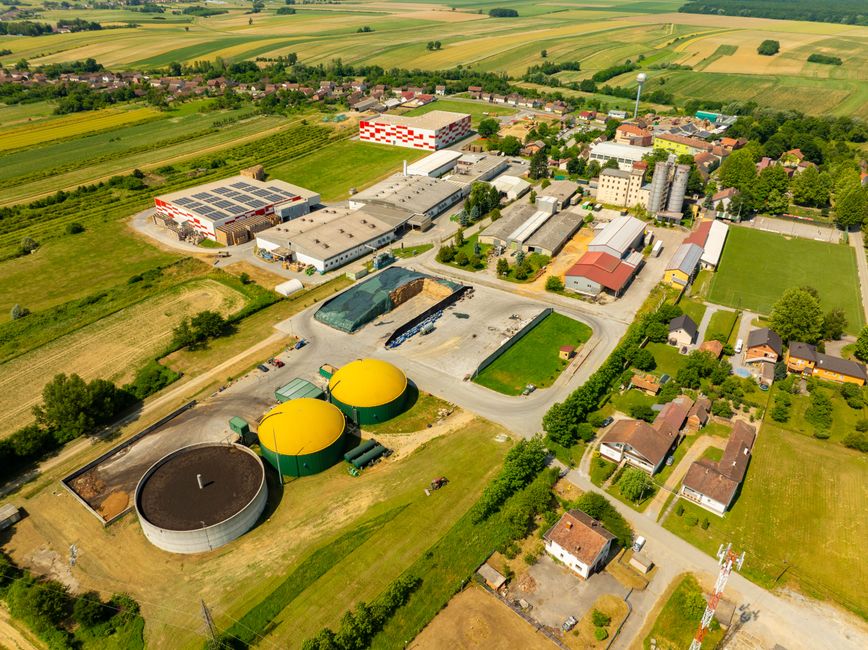
Photo by Vladimir Srajber on Pexels
Biogas plants use anaerobic microbes to break down organic waste (like animal dung, agricultural waste) to produce methane-rich biogas. This is a renewable energy source, particularly important in rural areas.
2.5 Microbes as Biocontrol Agents
Instead of chemical pesticides, microbes can be used to control plant diseases and pests.
* Bacillus thuringiensis (Bt): Bacteria that produce a toxin harmful to certain insect larvae but safe for humans and other animals. It's used in organic farming and even in genetically modified Bt crops.
* Trichoderma: A fungus used to control plant pathogens.
* Baculoviruses: Pathogens that attack insects and other arthropods, used for species-specific pest control.
2.6 Microbes as Biofertilizers
Microbes can enrich soil nutrients, reducing the need for chemical fertilizers.
* Nitrogen-fixing bacteria: Rhizobium forms symbiotic relationships with leguminous plants, converting atmospheric nitrogen into usable forms for the plant. Free-living bacteria like Azotobacter and Azospirillum also fix nitrogen.
* Mycorrhiza: Fungi that form symbiotic associations with plant roots, helping plants absorb phosphorus and water.
3. Worked Example
Imagine a small village decides to implement a biogas plant to manage their animal waste and provide cooking fuel. They collect 500 kg of fresh cow dung daily. This dung is fed into an anaerobic digester. Inside, a consortium of anaerobic bacteria first break down complex organic matter into simpler organic acids (acidogenesis), then other bacteria convert these acids into acetic acid and hydrogen (acetogenesis), and finally, methanogenic bacteria (like Methanobacterium and Methanosarcina) convert the acetic acid and hydrogen into methane (biogas).
If 1 kg of fresh cow dung can typically produce about 0.03-0.05 m³ of biogas, then 500 kg of dung could yield:
500 kg * 0.04 m³/kg = 20 m³ of biogas per day (using an average estimate).
This 20 m³ of biogas, primarily methane, can then be piped directly to homes for cooking, generating electricity, or heating, providing a clean, renewable energy source directly from waste, all thanks to microbial activity.
4. Key Takeaways
- Microbes are vital in producing common household items like curd, bread, and cheese through fermentation.
- They are critical in industry for manufacturing antibiotics, organic acids, and enzymes.
- Microbes efficiently treat wastewater by breaking down organic pollutants in sewage treatment plants.
- Biogas, a renewable energy source, is produced by anaerobic microbial degradation of organic waste.
- Microbes serve as environmentally friendly biocontrol agents and biofertilizers in agriculture.
- Always remember that "microbe" doesn't automatically mean "disease-causing" – most are harmless or beneficial.
- Don't underestimate the collective power of tiny organisms; their global impact is immense.
Common Mistakes to Avoid:
- Assuming all microbes are harmful or pathogenic.
- Confusing fermentation with putrefaction; both involve microbes but yield different products.
- Believing chemical treatments are always superior to microbial solutions in environmental management.
- Overlooking the role of specific microbial species in industrial processes.
5. Now Try It
Think about your daily routine. List at least five different items you use or consume where microbes played a direct, beneficial role in their production or processing. For each item, briefly explain how microbes were involved (e.g., specific process like fermentation, or product like an enzyme).
What success looks like: You'll have a list of five distinct items, each with a concise, correct explanation of the microbial involvement. For example, "Bread: Yeast ferments sugars, producing CO2 to make it rise."
Frequently asked about Microbes in Human Welfare
More from Biology
Get the full Biology curriculum
Clone the complete plan to your dashboard for unlimited AI-generated notes, practice quizzes, and a personalised revision schedule.
Create Free Account